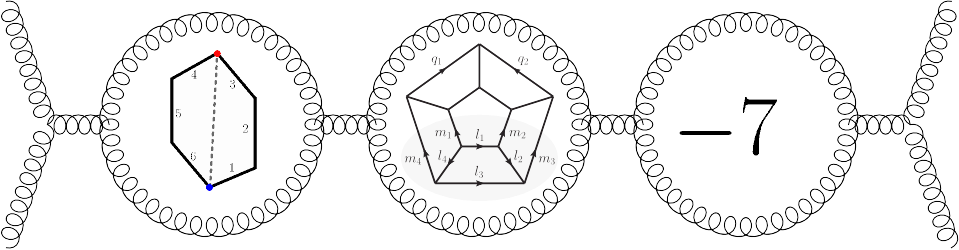
There are two kinds of theoretical physicists. Some, called phenomenologists, make predictions about the real world. Others, the so-called “formal theorists”, don’t. They work with the same kinds of theories as the phenomenologists, quantum field theories of the sort that have been so successful in understanding the subatomic world. But the specific theories they use are different: usually, toy models that aren’t intended to describe reality.
Most people get this is valuable. It’s useful to study toy models, because they help us tackle the real world. But they stumble on another point. Sure, they say, you can study toy models…but then you should call yourself a mathematician, not a physicist.
I’m a “formal theorist”. And I’m very much not a mathematician, I’m definitely a physicist. Let me explain why, with an analogy.
As an undergrad, I spent some time working in a particle physics lab. The lab had developed a new particle detector chip, designed for a future experiment: the International Linear Collider. It was my job to test this chip.
Naturally, I couldn’t test the chip by flinging particles at it. For one, the collider it was designed for hadn’t been built yet! Instead, I had to use simulated input: send in electrical signals that mimicked the expected particles, and see what happens. In effect, I was using a kind of toy model, as a way to understand better how the chip worked.
I hope you agree that this kind of work counts as physics. It isn’t “just engineering” to feed simulated input into a chip. Not when the whole point of that chip is to go into a physics experiment. This kind of work is a large chunk of what an experimental physicist does.
As a formal theorist, my work with toy models is an important part of what a theoretical physicist does. I test out the “devices” of theoretical physics, the quantum-field-theoretic machinery that we use to investigate the world. Without that kind of careful testing on toy models, we’d have fewer tools to work with when we want to understand reality.
Ok, but you might object: an experimental physicist does eventually build the real experiment. They don’t just spend their career on simulated input. If someone only works on formal theory, shouldn’t that at least make them a mathematician, not a physicist?
Here’s the thing, though: after those summers in that lab, I didn’t end up as an experimental physicist. After working on that chip, I didn’t go on to perfect it for the International Linear Collider. But it would be rather bizarre if that, retroactively, made my work in that time “engineering” and not “physics”.
Oh, I should also mention that the International Linear Collider might not ever be built. So, there’s that.
Formal theory is part of physics because it cares directly about the goals of physics: understanding the real world. It is just one step towards that goal, it doesn’t address the real world alone. But neither do the people testing out chips for future colliders. Formal theory isn’t always useful, similarly, planned experiments don’t always get built. That doesn’t mean it’s not physics.

 beers, and you get
 close, where epsilon is the Greek letter we use for really small numbers.
 you choose, no matter how small, I can pick a (finite!)
  ) form what mathematicians view as the foundations of calculus. They’re immortalized in story and
 is deep and important enough that there are
 instead of “rest mass” $m_0$, related like this:

 over
over  . You can write:

 , what do you know about this sum?
 and
and  and
and  , or
, or  and
and  . You could even use different letters in each term, if you wanted to. You could even just pick one term, and swap
 is zero.
 4 gravitons