
When I first heard about this year’s Nobel Prize in Physics, I didn’t feel the need to post on it. The prize went to Isamu Akasaki, Hiroshi Amano and Shuji Nakamura, whose discoveries enabled blue LEDs. It’s a more impressive accomplishment than it might seem: while red LEDs have been around since the 60’s and 70’s, blue LEDs were only developed in the 90’s, and only with both can highly efficient, LED-based white light sources be made. Still, I didn’t consider posting on it because it’s pretty much entirely outside my field.
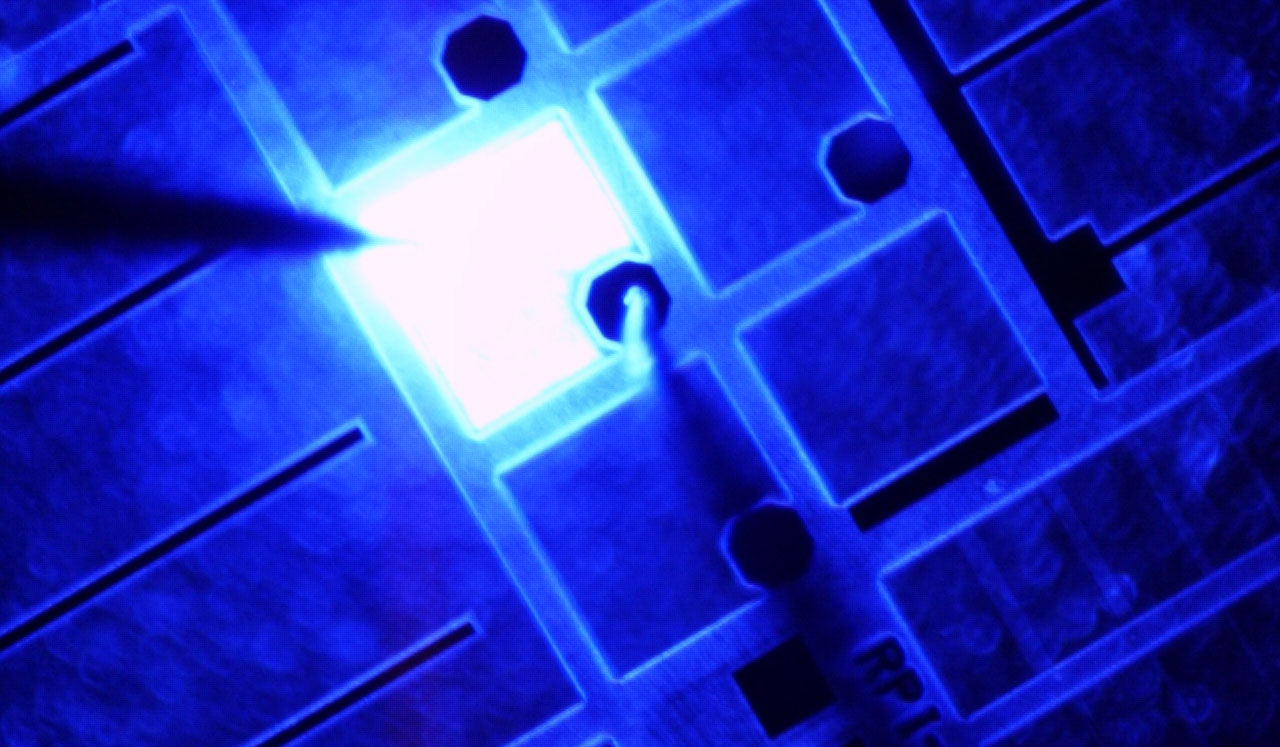
Shiny, though
It took a conversation with another PI postdoc to point out one way I can comment on the Nobel, and it started when we tried to figure out what type of physicists Akasaki, Amano, and Nakamura are. After tossing around terms like “device physicist” and “condensed matter”, someone wondered whether the development of blue LEDs wasn’t really a matter of engineering.
At that point I realized, I’ve talked about something like this before.
Physicists work on lots of different things, and many of them don’t seem to have much to do with physics. They study geometry and topology, biological molecules and the nature of evolution, income inequality and, yes, engineering.
On the surface, these don’t have much to do with physics. A friend of mine used to quip that condensed matter physicists seem to just “pick whatever they want to research”.
There is something that ties all of these topics together, though. They’re all things that physicists are good at.
Physics grad school gives you a wide variety of tools with which to understand the world. Thermodynamics gives you a way to understand large, complicated systems with statistics, while quantum field theory lets you understand everything with quantum properties, not just fundamental particles but materials as well. This batch of tools can be applied to “traditional” topics, but they’re equally applicable if you’re researching something else entirely, as long as it obeys the right kinds of rules.
In the end, the best definition of physics is the most useful one. Physicists should be people who can benefit from being part of physics organizations, from reading physics journals, and especially from training (and having been) physics grad students. The whole reason we have scientific disciplines in the first place is to make it easier for people with common interests to work together. That’s why Akasaki, Amano, and Nakamura aren’t “just” engineers, and why I and my fellow string theorists aren’t “just” mathematicians. We use our knowledge of physics to do our jobs, and that, more than anything else, makes us physicists.
Edit: It has been pointed out to me that there’s a bit more to this story than the main accounts have let on. Apparently another researcher named Herbert Paul Maruska was quite close to getting a blue LED up and running back in the early 1970’s, getting far enough to have a working prototype. There’s a whole fascinating story about the quest for a blue LED, related here. Maruska seems to be on friendly terms with Akasaki, Amano, and Nakamura, and doesn’t begrudge them their recognition.





 4 gravitons