Science Journalism Tasting Notes

When you’ve done a lot of science communication you start to see patterns. You notice the choices people make when they write a public talk or a TV script, the different goals and practical constraints that shape a piece. I’ve likened it to watching an old kung fu movie and seeing where the wires are.

I don’t have a lot of experience doing science journalism, I can’t see the wires yet. But I’m starting to notice things, subtle elements like notes at a wine-tasting. Just like science communication by academics, science journalism is shaped by a variety of different goals.

First, there’s the need for news to be “new”. A classic news story is about something that happened recently, or even something that’s happening right now. Historical stories usually only show up as new “revelations”, something the journalist or a researcher recently dug up. This isn’t a strict requirement, and it seems looser in science journalism than in other types of journalism: sometimes you can have a piece on something cool the audience might not know, even if it’s not “new”. But it shapes how things are covered, it means that a piece on something old will often have something tying it back to a recent paper or an ongoing research topic.

Then, a news story should usually also be a “story”. Science communication can sometimes involve a grab-bag of different topics, like a TED talk that shows off a few different examples. Journalistic pieces often try to deliver one core message, with details that don’t fit the narrative needing to wait for another piece where they fit better. You might be tempted to round this off to saying that journalists are better writers than academics, since it’s easier for a reader to absorb one message than many. But I think it also ties to the structure. Journalists do have content with multiple messages, it just usually is not published as one story, but a thematic collection of stories.

Combining those two goals, there’s a tendency for news to focus on what happened. “First they had the idea, then there were challenges, then they made their discovery, now they look to the future.” You can’t just do that, though, because of another goal: pedagogy. Your audience doesn’t know everything you know. In order for them to understand what happened, there are often other things they have to understand. In non-science news, this can sometimes be brief, a paragraph that gives the background for people who have been “living under a rock”. In science news, there’s a lot more to explain. You have to teach something, and teaching well can demand a structure very different from the one-step-at a time narrative of what happened. Balancing these two is tricky, and it’s something I’m still learning how to do, as can be attested by the editors who’ve had to rearrange some of my pieces to make the story flow better.

News in general cares about being independent, about journalists who figure out the story and tell the truth regardless of what the people in power are saying. Science news is strange because, if a scientist gets covered at all, it’s almost always positive. Aside from the occasional scandal or replication crisis, science news tends to portray scientific developments as valuable, “good news” rather than “bad news”. If you’re a politician or a company, hearing from a journalist might make you worry. If you say the wrong thing, you might come off badly. If you’re a scientist, your biggest worry is that a journalist might twist your words into a falsehood that makes your work sound too good. On the other hand, a journalist who regularly publishes negative things about scientists would probably have a hard time finding scientists to talk to! There are basic journalistic ethics questions here that one probably learns about at journalism school and we who sneak in with no training have to learn another way.

These are the flavors I’ve tasted so far: novelty and narrative vs. education, positivity vs. accuracy. I’ll doubtless see more over the years, and go from someone who kind of knows what they’re doing to someone who can mentor others. With that in mind, I should get to writing!
Ways Freelance Journalism Is Different From Academic Writing

A while back, I was surprised when I saw the writer of a well-researched webcomic assume that academics are paid for their articles. I ended up writing a post explaining how academic publishing actually works.

Now that I’m out of academia, I’m noticing some confusion on the other side. I’m doing freelance journalism, and the academics I talk to tend to have some common misunderstandings. So academics, this post is for you: a FAQ of questions I’ve been asked about freelance journalism. Freelance journalism is more varied than academia, and I’ve only been doing it a little while, so all of my answers will be limited to my experience.

Q: What happens first? Do they ask you to write something? Do you write an article and send it to them?

Academics are used to writing an article, then sending it to a journal, which sends it out to reviewers to decide whether to accept it. In freelance journalism in my experience, you almost never write an article before it’s accepted. (I can think of one exception I’ve run into, and that was for an opinion piece.)

Sometimes, an editor reaches out to a freelancer and asks them to take on an assignment to write a particular sort of article. This happens more freelancers that have been working with particular editors for a long time. I’m new to this, so the majority of the time I have to “pitch”. That means I email an editor describing the kind of piece I want to write. I give a short description of the topic and why it’s interesting. If the editor is interested, they’ll ask some follow-up questions, then tell me what they want me to focus on, how long the piece should be, and how much they’ll pay me. (The last two are related, many places pay by the word.) After that, I can write a draft.

Q: Wait, you’re paid by the word? Then why not make your articles super long, like Victor Hugo?

I’m paid per word assigned, not per word in the finished piece. The piece doesn’t have to strictly stick to the word limit, but it should be roughly the right size, and I work with the editor to try to get it there. In practice, places seem to have a few standard size ranges and internal terminology for what they are (“blog”, “essay”, “short news”, “feature”). These aren’t always the same as the categories readers see online. Some places have a web page listing these categories for prospective freelancers, but many don’t, so you have to either infer them from the lengths of articles online or learn them over time from the editors.

Q: Why didn’t you mention this important person or idea?

Because pieces pay more by the word, it’s easier as a freelancer to sell shorter pieces than longer ones. For science news, favoring shorter pieces also makes some pedagogical sense. People usually take away only a few key messages from a piece, if you try to pack in too much you run a serious risk of losing people. After I’ve submitted a draft, I work with the editor to polish it, and usually that means cutting off side-stories and “by-the-ways” to make the key points as vivid as possible.

Q: Do you do those cool illustrations?

Academia has a big focus on individual merit. The expectation is that when you write something, you do almost all of the work yourself, to the extent that more programming-heavy fields like physics and math do their own typesetting.

Industry, including journalism, is more comfortable delegating. Places will generally have someone on-staff to handle illustrations. I suggest diagrams that could be helpful to the piece and do a sketch of what they could look like, but it’s someone else’s job to turn that into nice readable graphic design.

Q: Why is the title like that? Why doesn’t that sound like you?

Editors in journalistic outlets are much more involved than in academic journals. Editors won’t just suggest edits, they’ll change wording directly and even input full sentences of their own. The title and subtitle of a piece in particular can change a lot (in part because they impact SEO), and in some places these can be changed by the editor quite late in the process. I’ve had a few pieces whose title changed after I’d signed off on them, or even after they first appeared.

Q: Are your pieces peer-reviewed?

The news doesn’t have peer review, no. Some places, like Quanta Magazine, do fact-checking. Quanta pays independent fact-checkers for longer pieces, while for shorter pieces it’s the writer’s job to verify key facts, confirming dates and the accuracy of quotes.

Q: Can you show me the piece before it’s published, so I can check it?

That’s almost never an option. Journalists tend to have strict rules about showing a piece before it’s published, related to more political areas where they want to preserve the ability to surprise wrongdoers and the independence to find their own opinions. Science news seems like it shouldn’t require this kind of thing as much, it’s not like we normally write hit pieces. But we’re not publicists either.

In a few cases, I’ve had people who were worried about something being conveyed incorrectly, or misleadingly. For those, I offer to do more in the fact-checking stage. I can sometimes show you quotes or paraphrase how I’m describing something, to check whether I’m getting something wrong. But under no circumstances can I show you the full text.

Q: What can I do to make it more likely I’ll get quoted?

Pieces are short, and written for a general, if educated, audience. Long quotes are harder to use because they eat into word count, and quotes with technical terms are harder to use because we try to limit the number of terms we ask the reader to remember. Quotes that mention a lot of concepts can be harder to find a place for, too: concepts are introduced gradually over the piece, so a quote that mentions almost everything that comes up will only make sense to the reader at the very end.

In a science news piece, quotes can serve a couple different roles. They can give authority, an expert’s judgement confirming that something is important or real. They can convey excitement, letting the reader see a scientist’s emotions. And sometimes, they can give an explanation. This last only happens when the explanation is very efficient and clear. If the journalist can give a better explanation, they’re likely to use that instead.

So if you want to be quoted, keep that in mind. Try to say things that are short and don’t use a lot of technical jargon or bring in too many concepts at once. Convey judgement, which things are important and why, and convey passion, what drives you and excited you about a topic. I am allowed to edit quotes down, so I can take a piece of a longer quote that’s cleaner or cut a long list of examples from an otherwise compelling statement. I can correct grammar and get rid of filler words and obvious mistakes. But I can’t put words in your mouth, I have to work with what you actually said, and if you don’t say anything I can use then you won’t get quoted.

Government Science Funding Isn’t a Precision Tool

People sometimes say there is a crisis of trust in science. In controversial subjects, from ecology to health, increasingly many people are rejecting not only mainstream ideas, but the scientists behind them.

I think part of the problem is media literacy, but not in the way you’d think. When we teach media literacy, we talk about biased sources. If a study on cigarettes is funded by the tobacco industry or a study on climate change is funded by an oil company, we tell students to take a step back and consider that the scientists might be biased.

That’s a worthwhile lesson, as far as it goes. But it naturally leads to another idea. Most scientific studies aren’t funded by companies, most studies are funded by the government. If you think the government is biased, does that mean the studies are too?

I’m going to argue here that government science funding is a very different thing than corporations funding individual studies. Governments do have an influence on scientists, and a powerful one, but that influence is diffuse and long-term. They don’t have control over the specific conclusions scientists reach.

If you picture a stereotypical corrupt scientist, you might imagine all sorts of perks. They might get extra pay from corporate consulting fees. Maybe they get invited to fancy dinners, go to corporate-sponsored conferences in exotic locations, and get gifts from the company.

Grants can’t offer any of that, because grants are filtered through a university. When a grant pays a scientist’s salary, the university pays less to compensate, instead reducing their teaching responsibilities or giving them a slightly better chance at future raises. Any dinners or conferences have to obey not only rules from the grant agency (a surprising number of grants these days can’t pay for alcohol) but from the university as well, which can set a maximum on the price of a dinner or require people to travel economy using a specific travel agency. They also have to be applied for: scientists have to write their planned travel and conference budget, and the committee evaluating grants will often ask if that budget is really necessary.

Actual corruption isn’t the only thing we teach news readers to watch out for. By funding research, companies can choose to support people who tend to reach conclusions they agree with, keep in contact through the project, then publicize the result with a team of dedicated communications staff.

Governments can’t follow up on that level of detail. Scientific work is unpredictable, and governments try to fund a wide breadth of scientific work, so they have to accept that studies will not usually go as advertised. Scientists pivot, finding new directions and reaching new opinions, and government grant agencies don’t have the interest or the staff to police them for it. They also can’t select very precisely, with committees that often only know bits and pieces about the work they’re evaluating because they have to cover so many different lines of research. And with the huge number of studies funded, the number that can be meaningfully promoted by their comparatively small communications staff is only a tiny fraction.

In practice, then, governments can’t choose what conclusions scientists come to. If a government grant agency funds a study, that doesn’t tell you very much about whether the conclusion of the study is biased.

Instead, governments have an enormous influence on the general type of research that gets done. This doesn’t work on the level of conclusions, but on the level of topics, as that’s about the most granular that grant committees can get. Grants work in a direct way, giving scientists more equipment and time to do work of a general type that the grant committees are interested in. It works in terms of incentives, not because researchers get paid more but because they get to do more, hiring more students and temporary researchers if they can brand their work in terms of the more favored type of research. And it works by influencing the future: by creating students and sustaining young researchers who don’t yet have temporary positions, and by encouraging universities to hire people more likely to get grants for their few permanent positions.

So if you’re suspicious the government is biasing science, try to zoom out a bit. Think about the tools they have at their disposal, about how they distribute funding and check up on how it’s used. The way things are set up currently, most governments don’t have detailed control over what gets done. They have to filter that control through grant committees of opinionated scientists, who have to evaluate proposals well outside of their expertise. Any control you suspect they’re using has to survive that.

Freelancing in [Country That Includes Greenland]

(Why mention Greenland? It’s a movie reference.)

I figured I’d give an update on my personal life.

A year ago, I resigned from my position in France and moved back to Denmark. I had planned to spend a few months as a visiting researcher in my old haunts at the Niels Bohr Institute, courtesy of the spare funding of a generous friend. There turned out to be more funding than expected, and what was planned as just a few months was extended to almost a year.

I spent that year learning something new. It was still an amplitudes project, trying to make particle physics predictions more efficient. But this time I used Python. I looked into reinforcement learning and PyTorch, played with using a locally hosted Large Language Model to generate random code, and ended up getting good results from a classic genetic programming approach. Along the way I set up a SQL database, configured Docker containers, and puzzled out interactions with CUDA. I’ve got a paper in the works, I’ll post about it when it’s out.

All the while, on the side, I’ve been seeking out stories. I’ve not just been a writer, but a journalist, tracking down leads and interviewing experts. I had three pieces in Quanta Magazine and one in Ars Technica.

Based on that, I know I can make money doing science journalism. What I don’t know yet is whether I can make a living doing it. This year, I’ll figure that out. With the project at the Niels Bohr Institute over, I’ll have more time to seek out leads and pitch to more outlets. I’ll see whether I can turn a skill into a career.

So if you’re a scientist with a story to tell, if you’ve discovered something or accomplished something or just know something that the public doesn’t, and that you want to share: do reach out. There’s a lot that can be of interest, passion that can be shared.

At the same time, I don’t know yet whether I can make a living as a freelancer. Many people try and don’t succeed. So I’m keeping my CV polished and my eyes open. I have more experience now with Data Science tools, and I’ve got a few side projects cooking that should give me a bit more. I have a few directions in mind, but ultimately, I’m flexible. I like being part of a team, and with enthusiastic and competent colleagues I can get excited about pretty much anything. So if you’re hiring in Copenhagen, if you’re open to someone with ten years of STEM experience who’s just starting to see what industry has to offer, then let’s chat. Even if we’re not a good fit, I bet you’ve got a good story to tell.

Newtonmas and the Gift of a Physics Background

This week, people all over the world celebrated the birth of someone whose universally attractive ideas spread around the globe. I’m talking, of course about Isaac Newton.

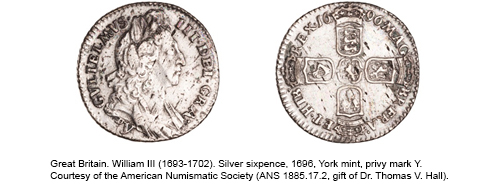
For Newtonmas this year, I’ve been pondering another aspect of Newton’s life. There’s a story you might have heard that physicists can do basically anything, with many people going from a career in physics to a job in a variety of other industries. It’s something I’ve been trying to make happen for myself. In a sense, this story goes back to the very beginning, when Newton quit his academic job to work at the Royal Mint.

On the surface, there are a lot of parallels. At the Mint, a big part of Newton’s job was to combat counterfeiting and “clipping”, where people would carve small bits of silver off of coins. This is absolutely a type of job ex-physicists do today, at least in broad strokes. Working as Data Scientists for financial institutions, people look for patterns in transactions that give evidence of fraud.

Digging deeper, though, the analogy falls apart a bit. Newton didn’t apply any cunning statistical techniques to hunt down counterfeiters. Instead, the stories that get told about his work there are basically detective stories. He hung out in bars to catch counterfeiter gossip and interviewed counterfeiters in prison, not exactly the kind of thing you’d hire a physicist to do these days. The rest of the role was administrative: setting up new mint locations and getting people to work overtime to replace the country’s currency. Newton’s role at the mint was less like an ex-physicist going into Data Science and more like Steven Chu as Secretary of Energy: someone with a prestigious academic career appointed to a prestigious government role.

If you’re looking for a patron saint of physicists who went to industry, Newton’s contemporary Robert Hooke may be a better bet. Unlike many other scientists of the era, Hooke wasn’t independently wealthy, and for a while he was kept quite busy working for the Royal Society. But a bit later he had another, larger source of income: working as a surveyor and architect, where he designed several of London’s iconic buildings. While Newton’s work at the Mint drew on his experience as a person of power and influence, working as an architect drew much more on skills directly linked to Hooke’s work as a scientist: understanding the interplay of forces in quantitative detail.

While Newton and Hooke’s time was an era of polymaths, in some sense the breadth of skills imparted by a physics education has grown. Physicists learn statistics (which barely existed in Newton’s time) programming (which did not exist at all) and a wider range of mathematical and physical models. Having a physics background isn’t the ideal way to go into industry (that would be having an industry background). But for those of us making the jump, it’s still a Newtonmas gift to be grateful for.

How Small Scales Can Matter for Large Scales

For a certain type of physicist, nothing matters more than finding the ultimate laws of nature for its tiniest building-blocks, the rules that govern quantum gravity and tell us where the other laws of physics come from. But because they know very little about those laws at this point, they can predict almost nothing about observations on the larger distance scales we can actually measure.

“Almost nothing” isn’t nothing, though. Theoretical physicists don’t know nature’s ultimate laws. But some things about them can be reasonably guessed. The ultimate laws should include a theory of quantum gravity. They should explain at least some of what we see in particle physics now, explaining why different particles have different masses in terms of a simpler theory. And they should “make sense”, respecting cause and effect, the laws of probability, and Einstein’s overall picture of space and time.

All of these are assumptions, of course. Further assumptions are needed to derive any testable consequences from them. But a few communities in theoretical physics are willing to take the plunge, and see what consequences their assumptions have.

First, there’s the Swampland. String theorists posit that the world has extra dimensions, which can be curled up in a variety of ways to hide from view, with different observable consequences depending on how the dimensions are curled up. This list of different observable consequences is referred to as the Landscape of possibilities. Based on that, some string theorists coined the term “Swampland” to represent an area outside the Landscape, containing observations that are incompatible with quantum gravity altogether, and tried to figure out what those observations would be.

In principle, the Swampland includes the work of all the other communities on this list, since a theory of quantum gravity ought to be consistent with other principles as well. In practice, people who use the term focus on consequences of gravity in particular. The earliest such ideas argued from thought experiments with black holes, finding results that seemed to demand that gravity be the weakest force for at least one type of particle. Later researchers would more frequently use string theory as an example, looking at what kinds of constructions people had been able to make in the Landscape to guess what might lie outside of it. They’ve used this to argue that dark energy might be temporary, and to try to figure out what traits new particles might have.

Second, I should mention naturalness. When talking about naturalness, people often use the analogy of a pen balanced on its tip. While possible in principle, it must have been set up almost perfectly, since any small imbalance would cause it to topple, and that perfection demands an explanation. Similarly, in particle physics, things like the mass of the Higgs boson and the strength of dark energy seem to be carefully balanced, so that a small change in how they were set up would lead to a much heavier Higgs boson or much stronger dark energy. The need for an explanation for the Higgs’ careful balance is why many physicists expected the Large Hadron Collider to discover additional new particles.

As I’ve argued before, this kind of argument rests on assumptions about the fundamental laws of physics. It assumes that the fundamental laws explain the mass of the Higgs, not merely by giving it an arbitrary number but by showing how that number comes from a non-arbitrary physical process. It also assumes that we understand well how physical processes like that work, and what kinds of numbers they can give. That’s why I think of naturalness as a type of argument, much like the Swampland, that uses the smallest scales to constrain larger ones.

Third is a host of constraints that usually go together: causality, unitarity, and positivity. Causality comes from cause and effect in a relativistic universe. Because two distant events can appear to happen in different orders depending on how fast you’re going, any way to send signals faster than light is also a way to send signals back in time, causing all of the paradoxes familiar from science fiction. Unitarity comes from quantum mechanics. If quantum calculations are supposed to give the probability of things happening, those probabilities should make sense as probabilities: for example, they should never go above one.

You might guess that almost any theory would satisfy these constraints. But if you extend a theory to the smallest scales, some theories that otherwise seem sensible end up failing this test. Actually linking things up takes other conjectures about the mathematical form theories can have, conjectures that seem more solid than the ones underlying Swampland and naturalness constraints but that still can’t be conclusively proven. If you trust the conjectures, you can derive restrictions, often called positivity constraints when they demand that some set of observations is positive. There has been a renaissance in this kind of research over the last few years, including arguments that certain speculative theories of gravity can’t actually work.

Which String Theorists Are You Complaining About?

Do string theorists have an unfair advantage? Do they have an easier time getting hired, for example?

In one of the perennial arguments about this on Twitter, Martin Bauer posted a bar chart of faculty hires in the US by sub-field. The chart was compiled by Erich Poppitz from data in the US particle physics rumor mill, a website where people post information about who gets hired where for the US’s quite small number of permanent theoretical particle physics positions at research universities and national labs. The data covers 1994 to 2017, and shows one year, 1999, when there were more string theorists hired than all other topics put together. The years around then also had many string theorists hired, but the proportion starts falling around the mid 2000’s…around when Lee Smolin wrote a book, The Trouble With Physics, arguing that string theorists had strong-armed their way into academic dominance. After that, the percentage of string theorists falls, oscillating between a tenth and a quarter of total hires.

Judging from that, you get the feeling that string theory’s critics are treating a temporary hiring fad as if it was a permanent fact. The late 1990’s were a time of high-profile developments in string theory that excited a lot of people. Later, other hiring fads dominated, often driven by experiments: I remember when the US decided to prioritize neutrino experiments and neutrino theorists had a much easier time getting hired, and there seem to be similar pushes now with gravitational waves, quantum computing, and AI.

Thinking about the situation in this way, though, ignores what many of the critics have in mind. That’s because the “string” column on that bar chart is not necessarily what people think of when they think of string theory.

If you look at the categories on Poppitz’s bar chart, you’ll notice something odd. “String” its itself a category. Another category, “lattice”, refers to lattice QCD, a method to find the dynamics of quarks numerically. The third category, though, is a combination of three things “ph/th/cosm”.

“Cosm” here refers to cosmology, another sub-field. “Ph” and “th” though aren’t really sub-fields. Instead, they’re arXiv categories, sections of the website arXiv.org where physicists post papers before they submit them to journals. The “ph” category is used for phenomenology, the type of theoretical physics where people try to propose models of the real world and make testable predictions. The “th” category is for “formal theory”, papers where theoretical physicists study the kinds of theories they use in more generality and develop new calculation methods, with insights that over time filter into “ph” work.

“String”, on the other hand, is not an arXiv category. When string theorists write papers, they’ll put them into “th” or “ph” or another relevant category (for example “gr-qc”, for general relativity and quantum cosmology). This means that when Poppitz distinguishes “ph/th/cosm” from “string”, he’s being subjective, using his own judgement to decide who counts as a string theorist.

So who counts as a string theorist? The simplest thing to do would be to check if their work uses strings. Failing that, they could use other tools of string theory and its close relatives, like Calabi-Yau manifolds, M-branes, and holography.

That might be what Poppitz was doing, but if he was, he was probably missing a lot of the people critics of string theory complain about. He even misses many people who describe themselves as string theorists. In an old post of mine I go through the talks at Strings, string theory’s big yearly conference, giving them finer-grained categories. The majority don’t use anything uniquely stringy.

Instead, I think critics of string theory have two kinds of things in mind.

First, most of the people who made their reputations on string theory are still in academia, and still widely respected. Some of them still work on string theory topics, but many now work on other things. Because they’re still widely respected, their interests have a substantial influence on the field. When one of them starts looking at connections between theories of two-dimensional materials, you get a whole afternoon of talks at Strings about theories of two-dimensional materials. Working on those topics probably makes it a bit easier to get a job, but also, many of the people working on them are students of these highly respected people, who just because of that have an easier time getting a job. If you’re a critic of string theory who thinks the founders of the field led physics astray, then you probably think they’re still leading physics astray even if they aren’t currently working on string theory.

Second, for many other people in physics, string theorists are their colleagues and friends. They’ll make fun of trends that seem overhyped and under-thought, like research on the black hole information paradox or the swampland, or hopes that a slightly tweaked version of supersymmetry will show up soon at the LHC. But they’ll happily use ideas developed in string theory when they prove handy, using supersymmetric theories to test new calculation techniques, string theory’s extra dimensions to inspire and ground new ideas for dark matter, or the math of strings themselves as interesting shortcuts to particle physics calculations. String theory is available as reference to these people in a way that other quantum gravity proposals aren’t. That’s partly due to familiarity and shared language (I remember a talk at Perimeter where string theorists wanted to learn from practitioners from another area and the discussion got bogged down by how they were using the word “dimension”), but partly due to skepticism of the various alternate approaches. Most people have some idea in their heads of deep problems with various proposals: screwing up relativity, making nonsense out of quantum mechanics, or over-interpreting on limited evidence. The most commonly believed criticisms are usually wrong, with objections long-known to practitioners of the alternate approaches, and so those people tend to think they’re being treated unfairly. But the wrong criticisms are often simplified versions of correct criticisms, passed down by the few people who dig deeply into these topics, criticisms that the alternative approaches don’t have good answers to.

The end result is that while string theory itself isn’t dominant, a sort of “string friendliness” is. Most of the jobs aren’t going to string theorists in the literal sense. But the academic world string theorists created keeps turning. People still respect string theorists and the research directions they find interesting, and people are still happy to collaborate and discuss with string theorists. For research communities people are more skeptical of, it must feel very isolating, like the world is still being run by their opponents. But this isn’t the kind of hegemony that can be solved by a revolution. Thinking that string theory is a failed research program, and people focused on it should have a harder time getting hired, is one thing. Thinking that everyone who respects at least one former string theorist should have a harder time getting hired is a very different goal. And if what you’re complaining about is “string friendliness”, not actual string theorists, then that’s what you’re asking for.

At Ars Technica Last Week, With a Piece on How Wacky Ideas Become Big Experiments

I had a piece last week at Ars Technica about the path ideas in physics take to become full-fledged experiments.

My original idea for the story was a light-hearted short news piece. A physicist at the University of Kansas, Steven Prohira, had just posted a proposal for wiring up a forest to detect high-energy neutrinos, using the trees like giant antennas.

Chatting to experts, what at first seemed silly started feeling like a hook for something more. Prohira has a strong track record, and the experts I talked to took his idea seriously. They had significant doubts, but I was struck by how answerable those doubts were, how rather than dismissing the whole enterprise they had in mind a list of questions one could actually test. I wrote a blog post laying out that impression here.

The editor at Ars was interested, so I dug deeper. Prohira’s story became a window on a wider-ranging question: how do experiments happen? How does a scientist convince the community to work on a project, and the government to fund it? How do ideas get tested before these giant experiments get built?

I tracked down researchers from existing experiments and got their stories. They told me how detecting particles from space takes ingenuity, with wacky ideas involving the natural world being surprisingly common. They walked me through tales of prototypes and jury-rigging and feasibility studies and approval processes.

The highlights of those tales ended up in the piece, but there was a lot I couldn’t include. In particular, I had a long chat with Sunil Gupta about the twists and turns taken by the GRAPES experiment in India. Luckily for you, some of the most interesting stories have already been covered, for example their measurement of the voltage of a thunderstorm or repurposing used building materials to keep costs down. I haven’t yet found his story about stirring wavelength-shifting chemicals all night using a propeller mounted on a power drill, but I suspect it’s out there somewhere. If not, maybe it can be the start of a new piece!

A Tale of Two Experiments

Before I begin, two small announcements:

First: I am now on bluesky! Instead of having a separate link in the top menu for each social media account, I’ve changed the format so now there are social media buttons in the right-hand sidebar, right under the “Follow” button. Currently, they cover tumblr, twitter, and bluesky, but there may be more in future.

Second, I’ve put a bit more technical advice on my “Open Source Grant Proposal” post, so people interested in proposing similar research can have some ideas about how best to pitch it.

Now, on to the post:


Gravitational wave telescopes are possibly the most exciting research program in physics right now. Big, expensive machines with more on the way in the coming decades, gravitational wave telescopes need both precise theoretical predictions and high-quality data analysis. For some, gravitational wave telescopes have the potential to reveal genuinely new physics, to probe deviations from general relativity that might be related to phenomena like dark matter, though so far no such deviations have been conclusively observed. In the meantime, they’re teaching us new consequences of known physics. For example, the unusual population of black holes observed by LIGO has motivated those who model star clusters to consider processes in which the motion of three stars or black holes is related to each other, discovering that these processes are more important than expected.

Particle colliders are probably still exciting to the general public, but for many there is a growing sense of fatigue and disillusionment. Current machines like the LHC are big and expensive, and proposed future colliders would be even costlier and take decades to come online, in addition to requiring a huge amount of effort from the community in terms of precise theoretical predictions and data analysis. Some argue that colliders still might uncover genuinely new physics, deviations from the standard model that might explain phenomena like dark matter, but as no such deviations have yet been conclusively observed people are increasingly skeptical. In the meantime, most people working on collider physics are focused on learning new consequences of known physics. For example, by comparing observed results with theoretical approximations, people have found that certain high-energy processes usually left out of calculations are actually needed to get a good agreement with the data, showing that these processes are more important than expected.

…ok, you see what I did there, right? Was that fair?

There are a few key differences, with implications to keep in mind:

First, collider physics is significantly more expensive than gravitational wave physics. LIGO took about $300 million to build and spends about $50 million a year. The LHC took about $5 billion to build and costs $1 billion a year to run. That cost still puts both well below several other government expenses that you probably consider frivolous (please don’t start arguing about which ones in the comments!), but it does mean collider physics demands a bit of a stronger argument.

Second, the theoretical motivation to expect new fundamental physics out of LIGO is generally considered much weaker than for colliders. A large part of the theoretical physics community thought that they had a good argument why they should see something new at the LHC. In contrast, most theorists have been skeptical of the kinds of modified gravity theories that have dramatic enough effects that one could measure them with gravitational wave telescopes, with many of these theories having other pathologies or inconsistencies that made people wary.

Third, the general public finds astrophysics cooler than particle physics. Somehow, telling people “pairs of black holes collide more often than we thought because sometimes a third star in the neighborhood nudges them together” gets people much more excited than “pairs of quarks collide more often than we thought because we need to re-sum large logarithms differently”, even though I don’t think there’s a real “principled” difference between them. Neither reveals new laws of nature, both are upgrades to our ability to model how real physical objects behave, neither is useful to know for anybody living on Earth in the present day.

With all this in mind, my advice to gravitational wave physicists is to try, as much as possible, not to lean on stories about dark matter and modified gravity. You might learn something, and it’s worth occasionally mentioning that. But if you don’t, you run a serious risk of disappointing people. And you have such a big PR advantage if you just lean on new consequences of bog standard GR, that those guys really should get the bulk of the news coverage if you want to keep the public on your side.

The Nowhere String

Space and time seem as fundamental as anything can get. Philosophers like Immanuel Kant thought that they were inescapable, that we could not conceive of the world without space and time. But increasingly, physicists suspect that space and time are not as fundamental as they appear. When they try to construct a theory of quantum gravity, physicists find puzzles, paradoxes that suggest that space and time may just be approximations to a more fundamental underlying reality.

One piece of evidence that quantum gravity researchers point to are dualities. These are pairs of theories that seem to describe different situations, including with different numbers of dimensions, but that are secretly indistinguishable, connected by a “dictionary” that lets you interpret any observation in one world in terms of an equivalent observation in the other world. By itself, duality doesn’t mean that space and time aren’t fundamental: as I explained in a blog post a few years ago, it could still be that one “side” of the duality is a true description of space and time, and the other is just a mathematical illusion. To show definitively that space and time are not fundamental, you would want to find a situation where they “break down”, where you can go from a theory that has space and time to a theory that doesn’t. Ideally, you’d want a physical means of going between them: some kind of quantum field that, as it shifts, changes the world between space-time and not space-time.

What I didn’t know when I wrote that post was that physicists already knew about such a situation in 1993.

Back when I was in pre-school, famous string theorist Edward Witten was trying to understand something that others had described as a duality, and realized there was something more going on.

In string theory, particles are described by lengths of vibrating string. In practice, string theorists like to think about what it’s like to live on the string itself, seeing it vibrate. In that world, there are two dimensions, one space dimension back and forth along the string and one time dimension going into the future. To describe the vibrations of the string in that world, string theorists use the same kind of theory that people use to describe physics in our world: a quantum field theory. In string theory, you have a two-dimensional quantum field theory stuck “inside” a theory with more dimensions describing our world. You see that this world exists by seeing the kinds of vibrations your two-dimensional world can have, through a type of quantum field called a scalar field. With ten scalar fields, ten different ways you can push energy into your stringy world, you can infer that the world around you is a space-time with ten dimensions.

String theory has “extra” dimensions beyond the three of space and one of time we’re used to, and these extra dimensions can be curled up in various ways to hide them from view, often using a type of shape called a Calabi-Yau manifold. In the late 80’s and early 90’s, string theorists had found a similarity between the two-dimensional quantum field theories you get folding string theory around some of these Calabi-Yau manifolds and another type of two-dimensional quantum field theory related to theories used to describe superconductors. People called the two types of theories dual, but Witten figured out there was something more going on.

Witten described the two types of theories in the same framework, and showed that they weren’t two equivalent descriptions of the same world. Rather, they were two different ways one theory could behave.

The two behaviors were connected by something physical: the value of a quantum field called a modulus field. This field can be described by a number, and that number can be positive or negative.

When the modulus field is a large positive number, then the theory behaves like string theory twisted around a Calabi-Yau manifold. In particular, the scalar fields have many different values they can take, values that are smoothly related to each other. These values are nothing more or less than the position of the string in space and time. Because the scalars can take many values, the string can sit in many different places, and because the values are smoothly related to each other, the string can smoothly move from one place to another.

When the modulus field is a large negative number, then the theory is very different. What people thought of as the other side of the duality, a theory like the theories used to describe superconductors, is the theory that describes what happens when the modulus field is large and negative. In this theory, the scalars can no longer take many values. Instead, they have one option, one stable solution. That means that instead of there being many different places the string could sit, describing space, there are no different places, and thus no space. The string lives nowhere.

These are two very different situations, one with space and one without. And they’re connected by something physical. You could imagine manipulating the modulus field, using other fields to funnel energy into it, pushing it back and forth from a world with space to a world of nowhere. Much more than the examples I was aware of, this is a super-clear example of a model where space is not fundamental, but where it can be manipulated, existing or not existing based on physical changes.

We don’t know whether a model like this describes the real world. But it’s gratifying to know that it can be written down, that there is a picture, in full mathematical detail, of how this kind of thing works. Hopefully, it makes the idea that space and time are not fundamental sound a bit more reasonable.