Tag Archives: press

This Week at Quanta Magazine

I’ve got an article in Quanta Magazine this week, about a program called FORM.

Quanta has come up a number of times on this blog, they’re a science news outlet set up by the Simons Foundation. Their goal is to enhance the public understanding of science and mathematics. They cover topics other outlets might find too challenging, and they cover the topics others cover with more depth. Most people I know who’ve worked with them have been impressed by their thoroughness: they take fact-checking to a level I haven’t seen with other science journalists. If you’re doing a certain kind of mathematical work, then you hope that Quanta decides to cover it.

A while back, as I was chatting with one of their journalists, I had a startling realization: if I want Quanta to cover something, I can send them a tip, and if they’re interested they’ll write about it. That realization resulted in the article I talked about here. Chatting with the journalist interviewing me for that article, though, I learned something if anything even more startling: if I want Quanta to cover something, and I want to write about it, I can pitch the article to Quanta, and if they’re interested they’ll pay me to write about it.

Around the same time, I happened to talk to a few people in my field, who had a problem they thought Quanta should cover. A software, called FORM, was used in all the most serious collider physics calculations. Despite that, the software wasn’t being supported: its future was unclear. You can read the article to learn more.

One thing I didn’t mention in that article: I hadn’t used FORM before I started writing it. I don’t do those “most serious collider physics calculations”, so I’d never bothered to learn FORM. I mostly use Mathematica, a common choice among physicists who want something easy to learn, even if it’s not the strongest option for many things.

(By the way, it was surprisingly hard to find quotes about FORM that didn’t compare it specifically to Mathematica. In the end I think I included one, but believe me, there could have been a lot more.)

Now, I wonder if I should have been using FORM all along. Many times I’ve pushed to the limits of what Mathematica could comfortable handle, the limits of what my computer’s memory could hold, equations long enough that just expanding them out took complicated work-arounds. If I had learned FORM, maybe I would have breezed through those calculations, and pushed even further.

I’d love it if this article gets FORM more attention, and more support. But also, I’d love it if it gives a window on the nuts and bolts of hard-core particle physics: the things people have to do to turn those T-shirt equations into predictions for actual colliders. It’s a world in between physics and computer science and mathematics, a big part of the infrastructure of how we know what we know that, precisely because it’s infrastructure, often ends up falling through the cracks.

Edit: For researchers interested in learning more about FORM, the workshop I mentioned at the end of the article is now online, with registrations open.

Fields and Scale

I am a theoretical particle physicist, and every morning I check the arXiv.

arXiv.org is a type of website called a preprint server. It’s where we post papers before they are submitted to (and printed by) a journal. In practice, everything in our field shows up on arXiv, publicly accessible, before it appears anywhere else. There’s no peer review process on arXiv, the journals still handle that, but in our field peer review doesn’t often notice substantive errors. So in practice, we almost never read the journals: we just check arXiv.

And so every day, I check the arXiv. I go to the section on my sub-field, and I click on a link that lists all of the papers that were new that day. I skim the titles, and if I see an interesting paper I’ll read the abstract, and maybe download the full thing. Checking as I’m writing this, there were ten papers posted in my field, and another twenty “cross-lists” were posted in other fields but additionally classified in mine.

Other fields use arXiv: mathematicians and computer scientists and even economists use it in roughly the same way physicists do. For biology and medicine, though, there are different, newer sites: bioRxiv and medRxiv.

One thing you may notice is the different capitalization. When physicists write arXiv, the “X” is capitalized. In the logo, it looks like a Greek letter chi, thus saying “archive”. The biologists and medical researchers capitalize the R instead. The logo still has an X that looks like a chi, but positioned with the R it looks like the Rx of medical prescriptions.

Something I noticed, but you might not, was the lack of a handy link to see new papers. You can search medRxiv and bioRxiv, and filter by date. But there’s no link that directly takes you to the newest papers. That suggests that biologists aren’t using bioRxiv like we use arXiv, and checking the new papers every day.

I was curious if this had to do with the scale of the field. I have the impression that physics and mathematics are smaller fields than biology, and that much less physics and mathematics research goes on than medical research. Certainly, theoretical particle physics is a small field. So I might have expected arXiv to be smaller than bioRxiv and medRxiv, and I certainly would expect fewer papers in my sub-field than papers in a medium-sized subfield of biology.

On the other hand, arXiv in my field is universal. In biology, bioRxiv and medRxiv are still quite controversial. More and more people are using them, but not every journal accepts papers posted to a preprint server. Many people still don’t use these services. So I might have expected bioRxiv and medRxiv to be smaller.

Checking now, neither answer is quite right. I looked between November 1 and November 2, and asked each site how many papers were uploaded between those dates. arXiv had the most, 604 papers. bioRxiv had roughly half that many, 348. medRxiv had 97.

arXiv represents multiple fields, bioRxiv is “just” biology. Specializing, on that day arXiv had 235 physics papers, 135 mathematics papers, and 250 computer science papers. So each individual field has fewer papers than biology in this period.

Specializing even further, I can look at a subfield. My subfield, which is fairly small, had 20 papers between those dates. Cell biology, which I would expect to be quite a big subfield, had 33.

Overall, the numbers were weirdly comparable, with medRxiv unexpectedly small compared to both arXiv and bioRxiv. I’m not sure whether there are more biologists than physicists, but I’m pretty sure there should be more cell biologists than theoretical particle physicists. This suggests that many still aren’t using bioRxiv. It makes me wonder: will bioRxiv grow dramatically in future? Are the people running it ready for if it does?

Is Outreach for Everyone?

Betteridge’s law applies here: the answer is “no”. It’s a subtle “no”, though.

As a scientist, you will always need to be able to communicate your work. Most of the time you can get away with papers and talks aimed at your peers. But the longer you mean to stick around, the more often you will have to justify yourself to others: to departments, to universities, and to grant agencies. A scientist cannot survive on scientific ability alone: to get jobs, to get funding, to survive, you need to be able to promote yourself, at least a little.

Self-promotion isn’t outreach, though. Talking to the public, or to journalists, is a different skill from talking to other academics or writing grants. And it’s entirely possible to go through an entire scientific career without exercising that skill.

That’s a reassuring message for some. I’ve met people for whom science is a refuge from the mess of human interaction, people horrified by the thought of fame or even being mentioned in a newspaper. When I meet these people, they sometimes seem to worry that I’m silently judging them, thinking that they’re ignoring their responsibilities by avoiding outreach. They think this in part because the field seems to be going in that direction. Grants that used to focus just on science have added outreach as a requirement, demanding that each application come with a plan for some outreach project.

I can’t guarantee that more grants won’t add outreach requirements. But I can say at least that I’m on your side here: I don’t think you should have to do outreach if you don’t want to. I don’t think you have to, just yet. And I think if grant agencies are sensible, they’ll find a way to encourage outreach without making it mandatory.

I think that overall, collectively, we have a responsibility to do outreach. Beyond the old arguments about justifying ourselves to taxpayers, we also just ought to be open about what we do. In a world where people are actively curious about us, we ought to encourage and nurture that curiosity. I don’t think this is unique to science, I think it’s something every industry, every hobby, and every community should foster. But in each case, I think that communication should be done by people who want to do it, not forced on every member.

I also think that, potentially, anyone can do outreach. Outreach can take different forms for different people, anything from speaking to high school students to talking to journalists to writing answers for Stack Exchange. I don’t think anyone should feel afraid of outreach because they think they won’t be good enough. Chances are, you know something other people don’t: I guarantee if you want to, you will have something worth saying.

Truth Doesn’t Have to Break the (Word) Budget

Imagine you saw this headline:

Scientists Say They’ve Found the Missing 40 Percent of the Universe’s Matter

It probably sounds like they’re talking about dark matter, right? And if scientists found dark matter, that could be a huge discovery: figuring out what dark matter is made of is one of the biggest outstanding mysteries in physics. Still, maybe that 40% number makes you a bit suspicious…

Now, read this headline instead:

Astronomers Have Finally Found Most of The Universe’s Missing Visible Matter

Visible matter! Ah, what a difference a single word makes!

These are two articles, the first from this year and the second from 2017, talking about the same thing. Leave out dark matter and dark energy, and the rest of the universe is made of ordinary protons, neutrons, and electrons. We sometimes call that “visible matter”, but that doesn’t mean it’s easy to spot. Much of it lingers in threads of gas and dust between galaxies, making it difficult to detect. These two articles are about astronomers who managed to detect this matter in different ways. But while the articles cover the same sort of matter, one headline is a lot more misleading.

Now, I know science writing is hard work. You can’t avoid misleading your readers, if only a little, because you can never include every detail. Introduce too many new words and you’ll use up your “vocabulary budget” and lose your audience. I also know that headlines get tweaked by editors at the last minute to maximize “clicks”, and that news that doesn’t get enough “clicks” dies out, replaced by news that does.

But that second headline? It’s shorter than the first. They were able to fit that crucial word “visible” in, without breaking the budget. And while I don’t have the data, I doubt the first headline was that much more viral. They could have afforded to get this right, if they wanted to.

Read each article further, and you see the same pattern. The 2020 article does mention visible matter in the first sentence at least, so they don’t screw that one up completely. But another important detail never gets mentioned.

See, you might be wondering, if one of these articles is from 2017 and the other is from 2020, how are they talking about the same thing? If astronomers found this matter already in 2017, how did they find it again in 2020?

There’s a key detail that the 2017 article mentions and the 2020 article leaves out. Here’s a quote from the 2017 article, emphasis mine:

We now have our first solid piece of evidence that this matter has been hiding in the delicate threads of cosmic webbing bridging neighbouring galaxies, right where the models predicted.

This “missing” matter was expected to exist, was predicted by models to exist. It just hadn’t been observed yet. In 2017, astronomers detected some of this matter indirectly, through its effect on the Cosmic Microwave Background. In 2020, they found it more directly, through X-rays shot out from the gases themselves.

Once again, the difference is just a short phrase. By saying “right where the models predicted”, the 2017 article clears up an important point, that this matter wasn’t a surprise. And all it took was five words.

These little words and phrases make a big difference. If you’re writing about science, you will always face misunderstandings. But if you’re careful and clever, you can clear up the most obvious ones. With just a few well-chosen words, you can have a much better piece.

Pseudonymity Matters. I Stand With Slate Star Codex.

Slate Star Codex is one of the best blogs on the net. Written under the pseudonym Scott Alexander, the blog covers a wide variety of topics with a level of curiosity and humility that the rest of us bloggers can only aspire to.

Recently, this has all been jeopardized. A reporter at the New York Times, writing an otherwise positive article, told Scott he was going to reveal his real name publicly. In a last-ditch effort to stop this, Scott deleted his blog.

I trust Scott. When he says that revealing his identity would endanger his psychiatric practice, not to mention the safety of friends and loved ones, I believe him. What’s more, I think working under a pseudonym makes him a better blogger: some of his best insights have come from talking to people who don’t think of him as “the Slate Star Codex guy”.

I don’t know why the Times thinks revealing Scott’s name is a good idea. I do know that there are people out there who view anyone under a pseudonym with suspicion. Compared to Scott, my pseudonym is paper-thin: it’s very easy to find who I am. Still, I have met people who are irked just by that, by the bare fact that I don’t print my real name on this blog.

I think this might be a generational thing. My generation grew up alongside the internet. We’re used to the idea that very little is truly private, that anything made public somewhere risks becoming public everywhere. In that world, writing under a pseudonym is like putting curtains on a house. It doesn’t make us unaccountable: if you break the law behind your curtains the police can get a warrant, similarly Scott’s pseudonym wouldn’t stop a lawyer from tracking him down. All it is, is a filter: a way to have a life of our own, shielded just a little from the whirlwind of the web.

I know there are journalists who follow this blog. If you have contacts in the Times tech section, or know someone who does, please reach out. I want to hope that someone there is misunderstanding the situation, that when things are fully explained they will back down. We have to try.

This Week, at Scientific American

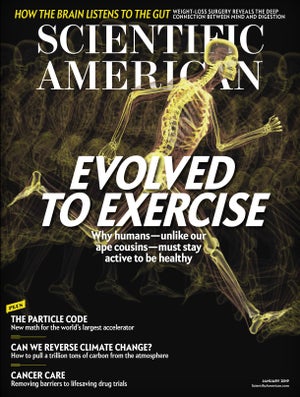
I’ve written an article for Scientific American! It went up online this week, the print versions go out on the 25th. The online version is titled “Loopy Particle Math”, the print one is “The Particle Code”, but they’re the same article.

For those who don’t subscribe to Scientific American, sorry about the paywall!

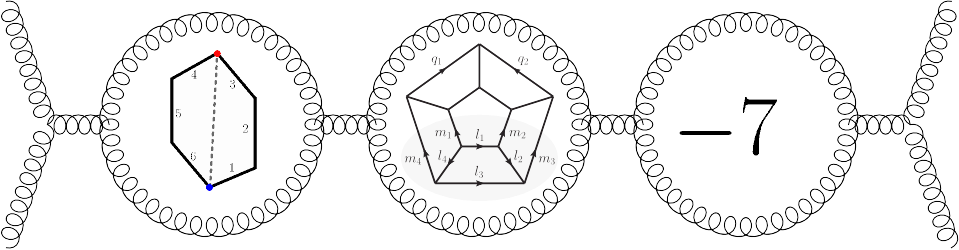
“The Particle Code” covers what will be familiar material to regulars on this blog. I introduce Feynman diagrams, and talk about the “amplitudeologists” who try to find ways around them. I focus on my corner of the amplitudes field, how the work of Goncharov, Spradlin, Vergu, and Volovich introduced us to “symbology”, a set of tricks for taking apart more complicated integrals (or “periods”) into simple logarithmic building blocks. I talk about how my collaborators and I use symbology, using these building blocks to compute amplitudes that would have been impossible with other techniques. Finally, I talk about the frontier of the field, the still-mysterious “elliptic polylogarithms” that are becoming increasingly well-understood.

(I don’t talk about the even more mysterious “Calabi-Yau polylogarithms“…another time for those!)

Working with Scientific American was a fun experience. I got to see how the professionals do things. They got me to clarify and explain, pointing out terms I needed to define and places I should pause to summarize. They took my rough gel-pen drawings and turned them into polished graphics. While I’m still a little miffed about them removing all the contractions, overall I learned a lot, and I think they did a great job of bringing the article to the printed page.

When You Shouldn’t Listen to a Distinguished but Elderly Scientist

Of science fiction author Arthur C. Clarke’s sayings, the most famous is “Clarke’s third law”, that “Any sufficiently advanced technology is indistinguishable from magic.” Almost as famous, though, is his first law:

“When a distinguished but elderly scientist states that something is possible, he is almost certainly right. When he states that something is impossible, he is very probably wrong.”

Recently Michael Atiyah, an extremely distinguished but also rather elderly mathematician, claimed that something was possible: specifically, he claimed it was possible that he had proved the Riemann hypothesis, one of the longest-standing and most difficult puzzles in mathematics. I won’t go into the details here, but people are, well, skeptical.

This post isn’t really about Atiyah. I’m not close enough to that situation to comment. Instead, it’s about a more general problem.

See, the public seems to mostly agree with Clarke’s law. They trust distinguished, elderly scientists, at least when they’re saying something optimistic. Other scientists know better. We know that scientists are human, that humans age…and that sometimes scientific minds don’t age gracefully.

Some of the time, that means Alzheimer’s, or another form of dementia. Other times, it’s nothing so extreme, just a mind slowing down with age, opinions calcifying and logic getting just a bit more fuzzy.

And the thing is, watching from the sidelines, you aren’t going to know the details. Other scientists in the field will, but this kind of thing is almost never discussed with the wider public. Even here, though specific physicists come to mind as I write this, I’m not going to name them. It feels rude, to point out that kind of all-too-human weakness in someone who accomplished so much. But I think it’s important for the public to keep in mind that these people exist. When an elderly Nobelist claims to have solved a problem that baffles mainstream science, the news won’t tell you they’re mentally ill. All you can do is keep your eyes open, and watch for warning signs:

Be wary of scientists who isolate themselves. Scientists who still actively collaborate and mentor almost never have this kind of problem. There’s a nasty feedback loop when those contacts start to diminish. Being regularly challenged is crucial to test scientific ideas, but it’s also important for mental health, especially in the elderly. As a scientist thinks less clearly, they won’t be able to keep up with their collaborators as much, worsening the situation.

Similarly, beware those famous enough to surround themselves with yes-men. With Nobel prizewinners in particular, many of the worst cases involve someone treated with so much reverence that they forget to question their own ideas. This is especially risky when commenting on an unfamiliar field: often, the Nobelist’s contacts in the new field have a vested interest in holding on to their big-name support, and ignoring signs of mental illness.

Finally, as always, bigger claims require better evidence. If everything someone works on is supposed to revolutionize science as we know it, then likely none of it will. The signs that indicate crackpots apply here as well: heavily invoking historical scientists, emphasis on notation over content, a lack of engagement with the existing literature. Be especially wary if the argument seems easy, deep problems are rarely so simple to solve.

Keep this in mind, and the next time a distinguished but elderly scientist states that something is possible, don’t trust them blindly. Ultimately, we’re still humans beings. We don’t last forever.

Journalists Need to Adapt to Preprints, Not Ignore Them

Nature has an article making the rounds this week, decrying the dangers of preprints.

On the surface, this is a bit like an article by foxes decrying the dangers of henhouses. There’s a pretty big conflict of interest when a journal like Nature, that makes huge amounts of money out of research scientists would be happy to publish for free, gets snippy about scientists sharing their work elsewhere. I was expecting an article about how “important” the peer review process is, how we can’t just “let anyone” publish, and the like.

Instead, I was pleasantly surprised. The article is about a real challenge, the weakening of journalistic embargoes. While this is still a problem I think journalists can think their way around, it’s a bit subtler than the usual argument.

For the record, peer review is usually presented as much more important than it actually is. When a scientific article gets submitted to a journal, it gets sent to two or three experts in the field for comment. In the best cases, these experts read the paper carefully and send criticism back. They don’t replicate the experiments, they don’t even (except for a few heroic souls) reproduce the calculations. That kind of careful reading is important, but it’s hardly unique: it’s something scientists do on their own when they want to build off of someone else’s paper, and it’s what good journalists get when they send a paper to experts for comments before writing an article. If peer review in a journal is important, it’s to ensure that this careful reading happens at least once, a sort of minimal evidence that the paper is good enough to appear on a scientist’s CV.

The Nature article points out that peer review serves another purpose, specifically one of delay. While a journal is preparing to publish an article they can send it out to journalists, after making them sign an agreement (an embargo) that they won’t tell the public until the journal publishes. This gives the journalists a bit of lead time, so the more responsible ones can research and fact-check before publishing.

Open-access preprints cut out the lead time. If the paper just appears online with no warning and no embargoes, journalists can write about it immediately. The unethical journalists can skip fact-checking and publish first, and the ethical ones have to follow soon after, or risk publishing “old news”. Nobody gets the time to properly vet, or understand, a new paper.

There’s a simple solution I’ve seen from a few folks on Twitter: “Don’t be an unethical journalist!” That doesn’t actually solve the problem though. The question is, if you’re an ethical journalist, but other people are unethical journalists, what do you do?

Apparently, what some ethical journalists do is to carry on as if preprints didn’t exist. The Nature article describes journalists who, after a preprint has been covered extensively by others, wait until a journal publishes it and then cover it as if nothing had happened. The article frames this as virtuous, but doomed: journalists sticking to their ethics even if it means publishing “old news”.

To be 100% clear here, this is not virtuous. If you present a paper’s publication in a journal as news, when it was already released as a preprint, you are actively misleading the public. I can’t count the number of times I’ve gotten messages from readers, confused because they saw a scientific result covered again months later and thought it was new. It leads to a sort of mental “double-counting”, where the public assumes that the scientific result was found twice, and therefore that it’s more solid. Unless the publication itself is unexpected (something that wasn’t expected to pass peer review, or something controversial like Mochizuki’s proof of the ABC conjecture) mere publication in a journal of an already-public result is not news.

What science journalists need to do here is to step back, and think about how their colleagues cover stories. Current events these days don’t have embargoes, they aren’t fed through carefully managed press releases. There’s a flurry of initial coverage, and it gets things wrong and misses details and misleads people, because science isn’t the only field that’s complicated, real life is complicated. Journalists have adapted to this schedule, mostly, by specializing. Some journalists and news outlets cover breaking news as it happens, others cover it later with more in-depth analysis. Crucially, the latter journalists don’t present the topic as new. They write explicitly in the light of previous news, as a response to existing discussion. That way, the public isn’t misled, and their existing misunderstandings can be corrected.

The Nature article brings up public health, and other topics where misunderstandings can do lasting damage, as areas where embargoes are useful. While I agree, I would hope many of these areas would figure out embargoes on their own. My field certainly does: the big results of scientific collaborations aren’t just put online as preprints, they’re released only after the collaboration sets up its own journalistic embargoes, and prepares its own press releases. In a world of preprints, this sort of practice needs to happen for important controversial public health and environmental results as well. Unethical scientists might still release too fast, to keep journalists from fact-checking, but they could do that anyway, without preprints. You don’t need a preprint to call a journalist on the phone and claim you cured cancer.

As open-access preprints become the norm, journalists will have to adapt. I’m confident they will be able to, but only if they stop treating science journalism as unique, and start treating it as news. Science journalism isn’t teaching, you’re not just passing down facts someone else has vetted. You’re asking the same questions as any other journalist: who did what? And what really happened? If you can do that, preprints shouldn’t be scary.

Unreasonably Big Physics

The Large Hadron Collider is big, eight and a half kilometers across. It’s expensive, with a cost to construct and operate in the billions. And with an energy of 6.5 TeV per proton, it’s the most powerful collider in the world, accelerating protons to 0.99999999 of the speed of light.

The LHC is reasonable. After all, it was funded, and built. What does an unreasonable physics proposal look like?

It’s probably unfair to call the Superconducting Super Collider unreasonable, after all, it did almost get built. It would have been a 28 kilometer-wide circle in the Texas desert, accelerating protons to an energy of 20 TeV, three times the energy of the LHC. When it was cancelled in 1993, it was projected to cost twelve billion dollars, and two billion had already been spent digging the tunnel. The US hasn’t invested in a similarly sized project since.

A better example of an unreasonable proposal might be the Collider-in-the-Sea. (If that link is paywalled, this paper covers most of the same information.)

mcint2-2656157-large

If you run out of room on land, why not build your collider underwater?

Ok, there are pretty obvious reasons why not. Surprisingly, the people proposing the Collider-in-the-Sea do a decent job of answering them. They plan to put it far enough out that it won’t disrupt shipping, and deep enough down that it won’t interfere with fish. Apparently at those depths even a hurricane barely ripples the water, and they argue that the technology exists to keep a floating ring stable under those conditions. All in all, they’re imagining a collider 600 kilometers in diameter, accelerating protons to 250 TeV, all for a cost they claim would be roughly comparable to the (substantially smaller) new colliders that China and Europe are considering.

I’m sure that there are reasons I’ve overlooked why this sort of project is impossible. (I mean, just look at the map!) Still, it’s impressive that they can marshal this much of an argument.

Besides, there are even more impossible projects, like this one, by Sugawara, Hagura, and Sanami. Their proposal for a 1000 TeV neutrino beam isn’t intended for research: rather, the idea is a beam powerful enough to send neutrinos through the Earth to destroy nuclear bombs. Such a beam could cause the bombs to detonate prematurely, “fizzling” with about 3% the explosion they would have normally.

In this case, Sugawara and co. admit that their proposal is pure fantasy. With current technology they would need a ring larger than the Collider-in-the-Sea, and the project would cost hundreds of billions of dollars. It’s not even clear who would want to build such a machine, or who could get away with building it: the authors imagine a science fiction-esque world government to foot the bill.

There’s a spectrum of papers that scientists write, from whimsical speculation to serious work. The press doesn’t always make the difference clear, so it’s a useful skill to see the clues in the writing that show where a given proposal lands. In the case of the Sugawara and co. proposal, the paper is littered with caveats, explicitly making it clear that it’s just a rough estimate. Even the first line, dedicating the paper to another professor, should get you to look twice: while this sometimes happens on serious papers, often it means the paper was written as a fun gift for the professor in question. The Collider-in-the-Sea doesn’t have these kinds of warning signs, and it’s clear its authors take it a bit more seriously. Nonetheless, comparing the level of detail to other accelerator proposals, even those from the same people, should suggest that the Collider-in-the-Sea isn’t entirely on the same level. As wacky as it is to imagine, we probably won’t get a collider that takes up most of the Gulf of Mexico, or a massive neutrino beam capable of blowing up nukes around the world.

Our Bargain

Sabine Hossenfelder has a blog post this week chastising particle physicists and cosmologists for following “upside-down Popper”, or assuming a theory is worth working on merely because it’s falsifiable. She describes her colleagues churning out one hypothesis after another, each tweaking an old idea just enough to make it falsifiable in the next experiment, without caring whether the hypothesis is actually likely to be true.

Sabine is much more of an expert in this area of physics (phenomenology) than I am, and I don’t presume to tell her she’s wrong about that community. But the problem she’s describing is part of something bigger, something that affects my part of physics as well.

There’s a core question we’d all like to answer: what should physicists work on? What criteria should guide us?

Falsifiability isn’t the whole story. The next obvious criterion is a sense of simplicity, of Occam’s Razor or mathematical elegance. Sabine has argued against the latter, which prompted a friend of mine to comment that between rejecting falsifiability and elegance, Sabine must want us to stop doing high-energy physics at all!

That’s more than a little unfair, though. I think Sabine has a reasonably clear criterion in mind. It’s the same criterion that most critics of the physics mainstream care about. It’s even the same criterion being used by the “other side”, the sort of people who criticize anything that’s not string/SUSY/inflation.

The criterion is quite a simple one: physics research should be productive. Anything we publish, anything we work on, should bring us closer to understanding the real world.

And before you object that this criterion is obvious, that it’s subjective, that it ignores the very real disagreements between the Sabines and the Luboses of the world…before any of that, please let me finish.

We can’t achieve this criterion. And we shouldn’t.

We can’t demand that all physics be productive without breaking a fundamental bargain, one we made when we accepted that science could be a career.

1200px-13_portrait_of_robert_hooke

The Hunchback of Notre Science

It wasn’t always this way. Up until the nineteenth century, “scientist” was a hobby, not a job.

After Newton published his theory of gravity, he was famously accused by Robert Hooke of stealing the idea. There’s some controversy about this, but historians agree on a few points: that Hooke did write a letter to Newton suggesting a 1/r^2 force law, and that Hooke, unlike Newton, never really worked out the law’s full consequences.

Why not? In part, because Hooke, unlike Newton, had a job.

Hooke was arguably the first person for whom science was a full-time source of income. As curator of experiments for the Royal Society, it was his responsibility to set up demonstrations for each Royal Society meeting. Later, he also handled correspondence for the Royal Society Journal. These responsibilities took up much of his time, and as a result, even if he was capable of following up on the consequences of 1/r^2 he wouldn’t have had time to focus on it. That kind of calculation wasn’t what he was being paid for.

We’re better off than Hooke today. We still have our responsibilities, to journals and teaching and the like, at various stages of our careers. But in the centuries since Hooke expectations have changed, and real original research is no longer something we have to fit in our spare time. It’s now a central expectation of the job.

When scientific research became a career, we accepted a kind of bargain. On the positive side, you no longer have to be independently wealthy to contribute to science. More than that, the existence of professional scientists is the bedrock of technological civilization. With enough scientists around, we get modern medicine and the internet and space programs and the LHC, things that wouldn’t be possible in a world of rare wealthy geniuses.

We pay a price for that bargain, though. If science is a steady job, then it has to provide steady work. A scientist has to be able to go in, every day, and do science.

And the problem is, science doesn’t always work like that. There isn’t always something productive to work on. Even when there is, there isn’t always something productive for you to work on.

Sabine blames “upside-down Popper” on the current publish-or-perish environment in physics. If physics careers weren’t so cut-throat and the metrics they are judged by weren’t so flawed, then maybe people would have time to do slow, careful work on deeper topics rather than pumping out minimally falsifiable papers as fast as possible.

There’s a lot of truth to this, but I think at its core it’s a bit too optimistic. Each of us only has a certain amount of expertise, and sometimes that expertise just isn’t likely to be productive at the moment. Because science is a job, a person in that position can’t just go work at the Royal Mint like Newton did. (The modern-day equivalent would be working for Wall Street, but physicists rarely come back from that.) Instead, they keep doing what they know how to do, slowly branching out, until they’ve either learned something productive or their old topic becomes useful once more. You can think of it as a form of practice, where scientists keep their skills honed until they’re needed.

So if we slow down the rate of publication, if we create metrics for universities that let them hire based on the depth and importance of work and not just number of papers and citations, if we manage all of that then yes we will improve science a great deal. But Lisa Randall still won’t work on Haag’s theorem.

In the end, we’ll still have physicists working on topics that aren’t actually productive.

img_0622

A physicist lazing about unproductively under an apple tree

So do we have to pay physicists to work on whatever they want, no matter how ridiculous?

No, I’m not saying that. We can’t expect everyone to do productive work all the time, but we can absolutely establish standards to make the work more likely to be productive.

Strange as it may sound, I think our standards for this are already quite good, or at least better than many other fields.

First, there’s falsifiability itself, or specifically our attitude towards it.

Physics’s obsession with falsifiability has one important benefit: it means that when someone proposes a new model of dark matter or inflation that they tweaked to be just beyond the current experiments, they don’t claim to know it’s true. They just claim it hasn’t been falsified yet.

This is quite different from what happens in biology and the social sciences. There, if someone tweaks their study to be just within statistical significance, people typically assume the study demonstrated something real. Doctors base treatments on it, and politicians base policy on it. Upside-down Popper has its flaws, but at least it’s never going to kill anybody, or put anyone in prison.

Admittedly, that’s a pretty low bar. Let’s try to set a higher one.

Moving past falsifiability, what about originality? We have very strong norms against publishing work that someone else has already done.

Ok, you (and probably Sabine) would object, isn’t that easy to get around? Aren’t all these Popper-flippers pretending to be original but really just following the same recipe each time, modifying their theory just enough to stay falsifiable?

To some extent. But if they were really following a recipe, you could beat them easily: just write the recipe down.

Physics progresses best when we can generalize, when we skip from case-by-case to understanding whole swaths of cases at once. Over time, there have been plenty of cases in which people have done that, where a number of fiddly hand-made models have been summarized in one parameter space. Once that happens, the rule of originality kicks in: now, no-one can propose another fiddly model like that again. It’s already covered.

As long as the recipe really is just a recipe, you can do this. You can write up what these people are doing in computer code, release the code, and then that’s that, they have to do something else. The problem is, most of the time it’s not really a recipe. It’s close enough to one that they can rely on it, close enough to one that they can get paper after paper when they need to…but it still requires just enough human involvement, just enough genuine originality, to be worth a paper.

The good news is that the range of “recipes” we can code up increases with time. Some spaces of theories we might never be able to describe in full generality (I’m glad there are people trying to do statistics on the string landscape, but good grief it looks quixotic). Some of the time though, we have a real chance of putting a neat little bow on a subject, labeled “no need to talk about this again”.

This emphasis on originality keeps the field moving. It means that despite our bargain, despite having to tolerate “practice” work as part of full-time physics jobs, we can still nudge people back towards productivity.


One final point: it’s possible you’re completely ok with the idea of physicists spending most of their time “practicing”, but just wish they wouldn’t make such a big deal about it. Maybe you can appreciate that “can I cook up a model where dark matter kills the dinosaurs” is an interesting intellectual exercise, but you don’t think it should be paraded in front of journalists as if it were actually solving a real problem.

In that case, I agree with you, at least up to a point. It is absolutely true that physics has a dysfunctional relationship with the media. We’re too used to describing whatever we’re working on as the most important thing in the universe, and journalists are convinced that’s the only way to get the public to pay attention. This is something we can and should make progress on. An increasing number of journalists are breaking from the trend and focusing not on covering the “next big thing”, but in telling stories about people. We should do all we can to promote those journalists, to spread their work over the hype, to encourage the kind of stories that treat “practice” as interesting puzzles pursued by interesting people, not the solution to the great mysteries of physics. I know that if I ever do anything newsworthy, there are some journalists I’d give the story to before any others.

At the same time, it’s important to understand that some of the dysfunction here isn’t unique to physics, or even to science. Deep down the reason nobody can admit that their physics is “practice” work is the same reason people at job interviews claim to love the company, the same reason college applicants have to tell stirring stories of hardship and couples spend tens of thousands on weddings. We live in a culture in which nothing can ever just be “ok”, in which admitting things are anything other than exceptional is akin to calling them worthless. It’s an arms-race of exaggeration, and it goes far beyond physics.

(I should note that this “culture” may not be as universal as I think it is. If so, it’s possible its presence in physics is due to you guys letting too many of us Americans into the field.)


We made a bargain when we turned science into a career. We bought modernity, but the price we pay is subsidizing some amount of unproductive “practice” work. We can negotiate the terms of our bargain, and we should, tilting the field with incentives to get it closer to the truth. But we’ll never get rid of it entirely, because science is still done by people. And sometimes, despite what we’re willing to admit, people are just “ok”.