Cause and Effect and Stories

You can think of cause and effect as the ultimate story. The world is filled with one damn thing happening after another, but to make sense of it we organize it into a narrative: this happened first, and it caused that, which caused that. We tie this to “what if” stories, stories about things that didn’t happen: if this hadn’t happened, then it wouldn’t have caused that, so that wouldn’t have happened.

We also tell stories about cause and effect. Physicists use cause and effect as a tool, a criterion to make sense of new theories: does this theory respect cause and effect, or not? And just like everything else in science, there is more than one story they tell about it.

As a physicist, how would you think about cause and effect?

The simplest, and most obvious requirement, is that effects should follow their causes. Cause and effect shouldn’t go backwards in time, the cause should come before the effect.

This all sounds sensible, until you remember that in physics “before” and “after” are relative. If you try to describe the order of two distant events, your description will be different than someone moving with a different velocity. You might think two things happened at the same time, while they think one happened first, and someone else thinks the other happened first.

You’d think this makes a total mess of cause and effect, but actually everything remains fine, as long nothing goes faster than the speed of light. If someone could travel between two events slower than the speed of light, then everybody will agree on their order, and so everyone can agree on which one caused the other. Cause and effect only get screwed up if they can happen faster than light.

(If the two events are two different times you observed something, then cause and effect will always be fine, since you yourself can’t go faster than the speed of light. So nobody will contradict what you observe, they just might interpret it differently.)

So if you want to make sure that your theory respects cause and effect, you’d better be sure that nothing goes faster than light. It turns out, this is not automatic! In general relativity, an effect called Shapiro time delay makes light take longer to pass a heavy object than to go through empty space. If you modify general relativity, you can accidentally get a theory with a Shapiro time advance, where light arrives sooner than it would through empty space. In such a theory, at least some observers will see effects happen before their causes!

Once you know how to check this, as a physicist, there are two kinds of stories you can tell. I’ve heard different people in the field tell both.

First, you can say that cause and effect should be a basic physical principle. Using this principle, you can derive other restrictions, demands on what properties matter and energy can have. You can carve away theories that violate these rules, making sure that we’re testing for theories that actually make sense.

On the other hand, there are a lot of stories about time travel. Time travel screws up cause and effect in a very direct way. When Harry Potter and Hermione travel back in time at the end of Harry Potter and the Prisoner of Azkaban, they cause the event that saves Harry’s life earlier in the book. Science fiction and fantasy are full of stories like this, and many of them are perfectly consistent. How can we be so sure that we don’t live in such a world?

The other type of story positions the physics of cause and effect as a search for evidence. We’re looking for physics that violates cause and effect, because if it exists, then on some small level it should be possible to travel back in time. By writing down the consequences of cause and effect, we get to describe what evidence we’d need to see it breaking down, and if we see it whole new possibilities open up.

These are both good stories! And like all other stories in science, they only capture part of what the scientists are up to. Some people stick to one or the other, some go between them, driven by the actual research, not the story itself. Like cause and effect itself, the story is just one way to describe the world around us.

Stories Backwards and Forwards

You can always start with “once upon a time”…

I come up with tricks to make calculations in particle physics easier. That’s my one-sentence story, or my most common one. If I want to tell a longer story, I have more options.

Here’s one longer story:

I want to figure out what Nature is telling us. I want to take all the data we have access to that has anything to say about fundamental physics, every collider and gravitational wave telescope and ripple in the overall structure of the universe, and squeeze it as hard as I can until something comes out. I want to make sure we understand the implications of our current best theories as well as we can, to as high precision as we can, because I want to know whether they match what we see.

To do that, I am starting with a type of calculation I know how to do best. That’s both because I can make progress with it, and because it will be important for making these inferences, for testing our theories. I am following a hint in a theory that definitely does not describe the real world, one that is both simpler to work with and surprisingly complex, one that has a good track record, both for me and others, for advancing these calculations. And at the end of the day, I’ll make our ability to infer things from Nature that much better.

Here’s another:

Physicists, unknowing, proposed a kind of toy model, one often simpler to work with but not necessarily simpler to describe. Using this model, they pursued increasingly elaborate calculations, and time and time again, those calculations surprised them. The results were not random, not a disorderly mess of everything they could plausibly have gotten. Instead, they had structure, symmetries and patterns and mathematical properties that the physicists can’t seem to explain. If we can explain them, we will advance our knowledge of models and theories and ideas, geometry and combinatorics, learning more about the unexpected consequences of the rules we invent.

We can also help the physicists advance physics, of course. That’s a happy accident, but one that justifies the money and time, showing the rest of the world that understanding consequences of rules is still important and valuable.

These seem like very different stories, but they’re not so different. They change in order, physics then math or math then physics, backwards and forwards. By doing that, they change in emphasis, in where they’re putting glory and how they’re catching your attention. But at the end of the day, I’m investigating mathematical mysteries, and I’m advancing our ability to do precision physics.

(Maybe you think that my motivation must lie with one of these stories and not the other. One is “what I’m really doing”, the other is a lie made up for grant agencies.
Increasingly, I don’t think people work like that. If we are at heart stories, we’re retroactive stories. Our motivation day to day doesn’t follow one neat story or another. We move forward, we maybe have deep values underneath, but our accounts of “why” can and will change depending on context. We’re human, and thus as messy as that word should entail.)

I can tell more than two stories if I want to. I won’t here. But this is largely what I’m working on at the moment. In applying for grants, I need to get the details right, to sprinkle the right references and the right scientific arguments, but the broad story is equally important. I keep shuffling that story, a pile of not-quite-literal index cards, finding different orders and seeing how they sound, imagining my audience and thinking about what stories would work for them.

Getting Started in Saclay

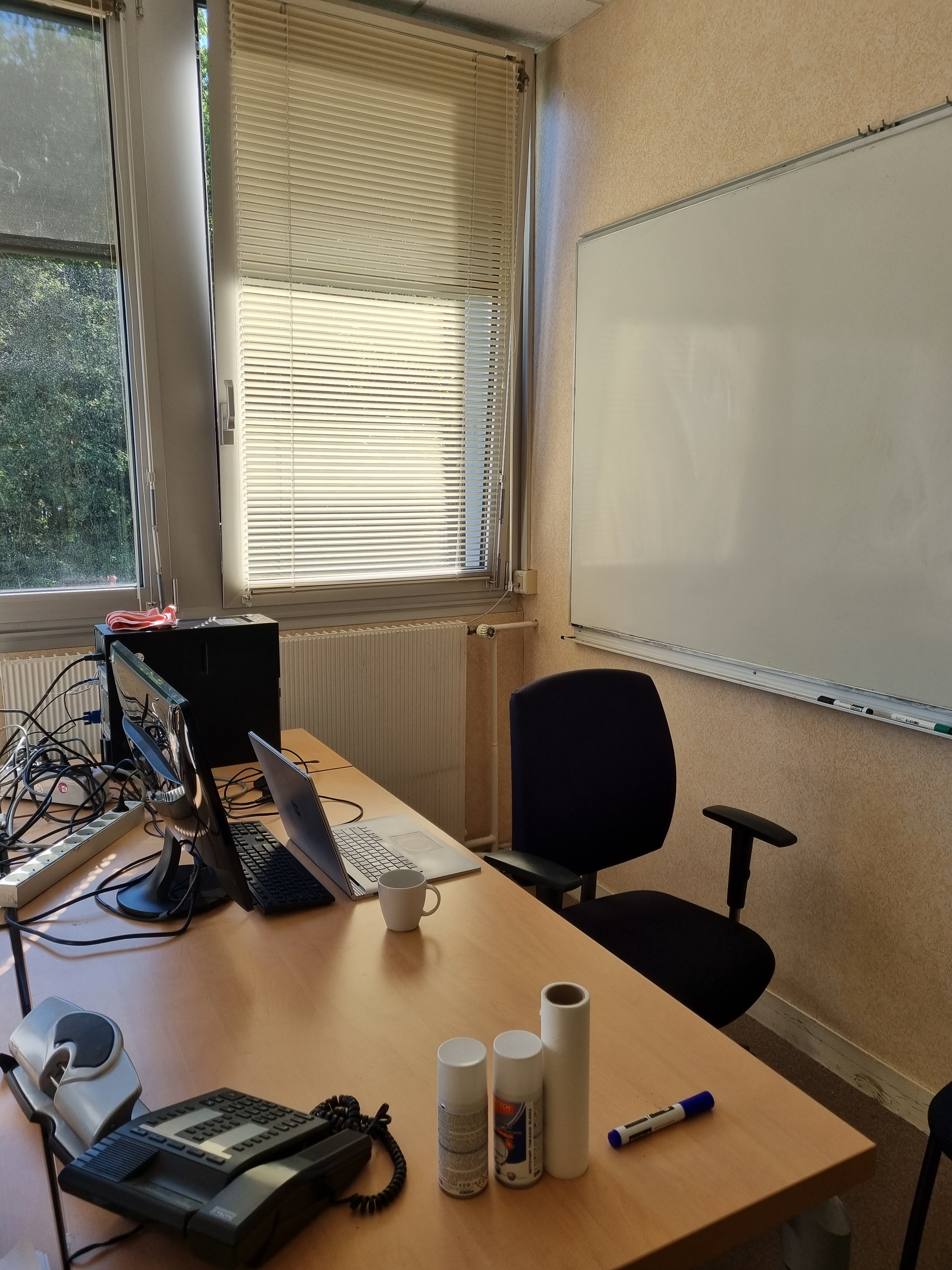
I started work this week in my new position, as a permanent researcher at the Institute for Theoretical Physics of CEA Paris-Saclay. I’m still settling in, figuring out how to get access to the online system and food at the canteen and healthcare. Things are slowly getting into shape, with a lot of running around involved. Until then, I don’t have a ton of time to write (and am dedicating most of it to writing grants!) But I thought, mirroring a post I made almost a decade ago, that I’d at least give you a view of my new office.

Cosmology and the Laws of Physics

Suppose you were an unusual sort of person: one who wanted, above all else, to know the laws of physics. Not content with the rules governing just one sort of thing, a star or an atom or a galaxy, you want to know the fundamental rules behind everything in the universe.

A good reductionist, you know that smaller things are more fundamental: the rules of the parts of things determine the rules of the whole. Knowing about quantum mechanics, you know that the more precisely you want to pin down something’s position, the more uncertain its momentum will be. And aware of special relativity, you know that terms like “small thing” or “high momentum” are relative: things can look bigger or smaller, faster or slower, depending on how they move relative to you. If you want to find the most fundamental things then, you end up needing not just small things or high momenta, but a lot of energy packed into a very small space.

You can get this in a particle collider, and that’s why they’re built. By colliding protons or electrons, you can cram a lot of energy into a very small space, and the rules governing that collision will be some of the most fundamental rules you have access to. By comparing your measurements of those collisions with your predictions, you can test your theories and learn more about the laws of physics.

If you really just wanted to know the laws of physics, then you might thing cosmology would be less useful. Cosmology is the science of the universe as a whole, how all of the stars and galaxies and the space-time around them move and change over the whole history of the universe. Dealing with very large distances, cosmology seems like it should take you quite far away from universal reductionist physical law.

If you thought that, you’d be missing one essential ingredient: the Big Bang. In the past, the universe was (as the song goes) in a hot dense state. The further back in time you look, the hotter and denser it gets. Go far enough back, and you find much higher energies, crammed into much smaller spaces, than we can make in any collider here on Earth. That means the Big Bang was governed by laws much more fundamental than the laws we can test here on Earth. And since the Big Bang resulted in the behavior of the universe as a whole, by observing that behavior we can learn more about those laws.

So a cosmologist can, in principle, learn quite a lot about fundamental physics. But cosmology is in many ways a lot harder than working with colliders. In a collider, we can clash protons together many times a second, with measurement devices right next to the collision. In cosmology, we have in a sense only one experiment, the universe we live in. We have to detect the evidence much later than the Big Bang itself, when the cosmic microwave background has cooled down and the structure of the universe has been warped by all the complexities of star and galaxy formation. Because we have only one experiment, all we can do is compare different sections of the sky, but there is only so much sky we can see, and as a consequence there are real limits on how much we can know.

Still, it’s worth finding out what we can know.m Cosmology is the only way at the moment we can learn about physics at very high energies, and thus learn the most fundamental laws. So if you’re someone who cares a lot about that sort of thing, it’s worth paying attention to!

Why You Might Want to Inspire Kids to Be Physicists (And What Movies You’d Make as a Result)

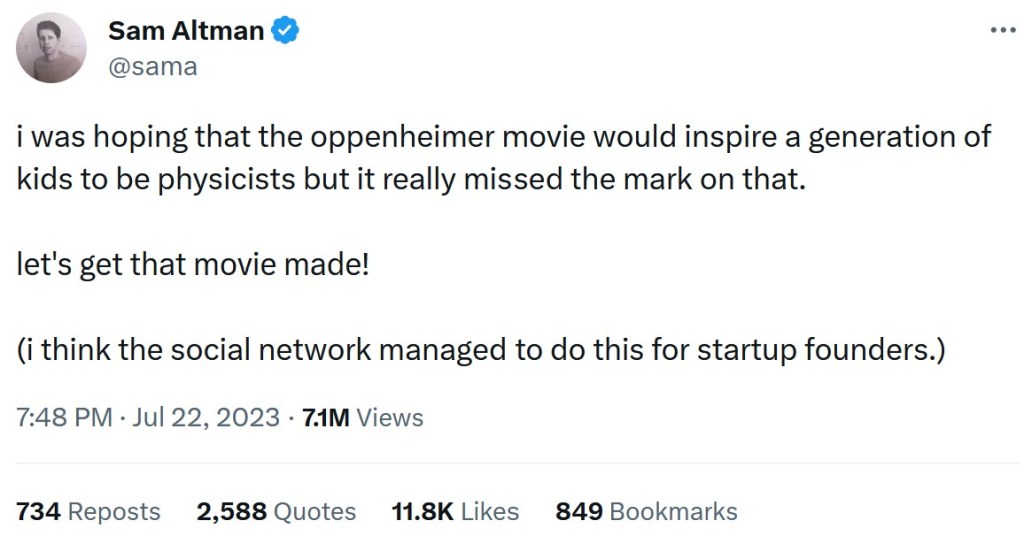
Since the new Oppenheimer biopic came out, people have been making fun of this tweet by Sam Altman:

Expecting a movie about someone building an immensely destructive weapon, watching it plunge the world into paranoia, then getting mercilessly hounded about it to be an inspiration seems…a bit unrealistic? But everyone has already made that point. What I found more interesting was a blog post a couple days ago by science blogger Chad Orzel. Orzel asks, suppose you did want to make a movie inspiring kids to go into physics: how would you do it? I commented on his post with my own take on the question, then realized it might be nice as a post here.

If you want to inspire kids to go into physics with a movie, what do you do? Well, you can start by asking, why do you want kids to go into physics? Why do you want more physicists?

Maybe you believe that more physicists are needed to understand the fundamental laws of the universe. The quest of fundamental physics may be worthwhile in its own right, or may be important because understanding the universe gives us more tools to manipulate it. You might even think of Oppenheimer’s story in that way: because physicists understood the nature of the atom, they could apply that knowledge to change the world, racing to use it to defeat the Nazis and later convinced to continue to avoid a brutal invasion of Japan. (Whether the bomb was actually necessary to do this is still, of course, quite controversial.)

If that’s why you want more kids to be physicists, then you want a story like that. You could riff off of Ashoke Sen’s idea that physics may be essential to save humanity. The laws of physics appear to be unstable, such that at some point the world will shift and a “bubble”, expanding at the speed of light, will rewrite the rules in a way that would destroy all life as we know it. The only way to escape would be to travel faster than light, something that is possible because the universe itself expands at those speeds. By scattering “generation ships” in different directions, we could ensure that some of humanity would survive any such “bubble”: but only if we got the physics right.

A movie based on that idea could look a bit like the movie Cloud Atlas, with connected characters spanning multiple time periods. Scientists in the modern day investigate the expanding universe, making plans that refugees in a future generation ship must carry out. If you want to inspire kids with the idea that physics could save the world, you could get a lot of mileage out of a story that could actually be true.

On the other hand, maybe you don’t care so much about fundamental physics. Maybe you want more physicists because they’re good at solving a variety of problems. They help to invent new materials, to measure things precisely, to predict the weather, change computation, and even contribute to medicine. Maybe you want to tell a story about that.

(Maybe you even want these kids to go farther afield, and study physics without actually becoming physicists. Sam Altman is not a physicist, and I’ve heard he’s not very interested in directing his philanthropic money to increasing the number of jobs for physicists. On the other hand, the AI industry where he is a central player does hire a lot of ex-physicists.)

The problem, as Orzel points out, is that those stories aren’t really stories about physicists. They’re stories about engineering and technology, and a variety of other scientists, because a wide variety of people contribute to these problems. In order to tell a story that inspires people to be physicists, you need a story that highlights something unique that they bring to the table.

Orzel gets close to what I think of as the solution, by bringing up The Social Network. Altman was also mocked for saying that The Social Network motivated kids to found startups: the startup founders in that movie are not exactly depicted as good people. But in reality, it appears that the movie did motivate people to found startups. Stories about badass amoral jerks are engaging, and it’s easy to fantasize about having that kind of power and ability. There’s a reason that The Imitation Game depicted Alan Turing, a man known for his gentle kindness, as brusque and arrogant.

If you want to tell a story about physicists, it’s actually pretty easy, because physicists can be quite arrogant! There is a stereotype of physicists walking into another field, deciding they know everything they need to know, and lecturing the experts about how they should be doing their jobs. This really does happen, and sometimes it’s exactly as dumb as it sounds…but sometimes the physicists are right! Orzel brings up Feynman’s role in figuring out how the Challenger space shuttle blew up, an example of precisely this kind of success.

So if you want kids to grow up to be generalist physicists, people who solve all sorts of problems for all sorts of people, you need to tell them a story like that. One with a Sherlock-esque physicist who runs around showing how much smarter they are than everyone else. You need to make a plot where they physicist waves around “physicist tools”, like dimensional analysis, Fermi estimates, and thermodynamics, and uses them to uncover a mystery, showing a bunch of engineers or biologists just how much cooler they are.

If you do that, you probably could inspire some kids to become physicists. You’ll need a new movie to inspire them to be engineers or biologists, though!

Amplitudes 2023 Retrospective

I’m back from CERN this week, with a bit more time to write, so I thought I’d share some thoughts about last week’s Amplitudes conference.

One thing I got wrong in last week’s post: I’ve now been told only 213 people actually showed up in person, as opposed to the 250-ish estimate I had last week. This may seem fewer than Amplitudes in Prague had, but it seems likely they had a few fewer show up than appeared on the website. Overall, the field is at least holding steady from year to year, and definitely has grown since the pandemic (when 2019’s 175 was already a very big attendance).

It was cool having a conference in CERN proper, surrounded by the history of European particle physics. The lecture hall had an abstract particle collision carved into the wood, and the visitor center would in principle have had Standard Model coffee mugs were they not sold out until next May. (There was still enough other particle physics swag, Swiss chocolate, and Swiss chocolate that was also particle physics swag.) I’d planned to stay on-site at the CERN hostel, but I ended up appreciated not doing that: the folks who did seemed to end up a bit cooped up by the end of the conference, even with the conference dinner as a chance to get out.

Past Amplitudes conferences have had associated public lectures. This time we had a not-supposed-to-be-public lecture, a discussion between Nima Arkani-Hamed and Beate Heinemann about the future of particle physics. Nima, prominent as an amplitudeologist, also has a long track record of reasoning about what might lie beyond the Standard Model. Beate Heinemann is an experimentalist, one who has risen through the ranks of a variety of different particle physics experiments, ending up well-positioned to take a broad view of all of them.

It would have been fun if the discussion erupted into an argument, but despite some attempts at provocative questions from the audience that was not going to happen, as Beate and Nima have been friends for a long time. Instead, they exchanged perspectives: on what’s coming up experimentally, and what theories could explain it. Both argued that it was best to have many different directions, a variety of experiments covering a variety of approaches. (There wasn’t any evangelism for particular experiments, besides a joking sotto voce mention of a muon collider.) Nima in particular advocated that, whether theorist or experimentalist, you have to have some belief that what you’re doing could lead to a huge breakthrough. If you think of yourself as just a “foot soldier”, covering one set of checks among many, then you’ll lose motivation. I think Nima would agree that this optimism is irrational, but necessary, sort of like how one hears (maybe inaccurately) that most new businesses fail, but someone still needs to start businesses.

Michelangelo Mangano’s talk on Thursday covered similar ground, but with different emphasis. He agrees that there are still things out there worth discovering: that our current model of the Higgs, for instance, is in some ways just a guess: a simplest-possible answer that doesn’t explain as much as we’d like. But he also emphasized that Standard Model physics can be “new physics” too. Just because we know the model doesn’t mean we can calculate its consequences, and there are a wealth of results from the LHC that improve our models of protons, nuclei, and the types of physical situations they partake in, without changing the Standard Model.

We saw an impressive example of this in Gregory Korchemsky’s talk on Wednesday. He presented an experimental mystery, an odd behavior in the correlation of energies of jets of particles at the LHC. These jets can include a very large number of particles, enough to make it very hard to understand them from first principles. Instead, Korchemsky tried out our field’s favorite toy model, where such calculations are easier. By modeling the situation in the limit of a very large number of particles, he was able to reproduce the behavior of the experiment. The result was a reminder of what particle physics was like before the Standard Model, and what it might become again: partial models to explain odd observations, a quest to use the tools of physics to understand things we can’t just a priori compute.

On the other hand, amplitudes does do a priori computations pretty well as well. Fabrizio Caola’s talk opened the conference by reminding us just how much our precise calculations can do. He pointed out that the LHC has only gathered 5% of its planned data, and already it is able to rule out certain types of new physics to fairly high energies (by ruling out indirect effects, that would show up in high-precision calculations). One of those precise calculations featured in the next talk, by Guilio Gambuti. (A FORM user, his diagrams were the basis for the header image of my Quanta article last winter.) Tiziano Peraro followed up with a technique meant to speed up these kinds of calculations, a trick to simplify one of the more computationally intensive steps in intersection theory.

The rest of Monday was more mathematical, with talks by Zeno Capatti, Jaroslav Trnka, Chia-Kai Kuo, Anastasia Volovich, Francis Brown, Michael Borinsky, and Anna-Laura Sattelberger. Borinksy’s talk felt the most practical, a refinement of his numerical methods complete with some actual claims about computational efficiency. Francis Brown discussed an impressively powerful result, a set of formulas that manages to unite a variety of invariants of Feynman diagrams under a shared explanation.

Tuesday began with what I might call “visitors”: people from adjacent fields with an interest in amplitudes. Alday described how the duality between string theory in AdS space and super Yang-Mills on the boundary can be used to get quite concrete information about string theory, calculating how the theory’s amplitudes are corrected by the curvature of AdS space using a kind of “bootstrap” method that felt nicely familiar. Tim Cohen talked about a kind of geometric picture of theories that extend the Standard Model, including an interesting discussion of whether it’s really “geometric”. Marko Simonovic explained how the integration techniques we develop in scattering amplitudes can also be relevant in cosmology, especially for the next generation of “sky mappers” like the Euclid telescope. This talk was especially interesting to me since this sort of cosmology has a significant presence at CEA Paris-Saclay. Along those lines an interesting paper, “Cosmology meets cohomology”, showed up during the conference. I haven’t had a chance to read it yet!

Just before lunch, we had David Broadhurst give one of his inimitable talks, complete with number theory, extremely precise numerics, and literary and historical references (apparently, Källén died flying his own plane). He also remedied a gap in our whimsically biological diagram naming conventions, renaming the pedestrian “double-box” as a (in this context, Orwellian) lobster. Karol Kampf described unusual structures in a particular Effective Field Theory, while Henriette Elvang’s talk addressed what would become a meaningful subtheme of the conference, where methods from the mathematical field of optimization help amplitudes researchers constrain the space of possible theories. Giulia Isabella covered another topic on this theme later in the day, though one of her group’s selling points is managing to avoid quite so heavy-duty computations.

The other three talks on Tuesday dealt with amplitudes techniques for gravitational wave calculations, as did the first talk on Wednesday. Several of the calculations only dealt with scattering black holes, instead of colliding ones. While some of the results can be used indirectly to understand the colliding case too, a method to directly calculate behavior of colliding black holes came up again and again as an important missing piece.

The talks on Wednesday had to start late, owing to a rather bizarre power outage (the lights in the room worked fine, but not the projector). Since Wednesday was the free afternoon (home of quickly sold-out CERN tours), this meant there were only three talks: Veneziano’s talk on gravitational scattering, Korchemsky’s talk, and Nima’s talk. Nima famously never finishes on time, and this time attempted to control his timing via the surprising method of presenting, rather than one topic, five “abstracts” on recent work that he had not yet published. Even more surprisingly, this almost worked, and he didn’t run too ridiculously over time, while still managing to hint at a variety of ways that the combinatorial lessons behind the amplituhedron are gradually yielding useful perspectives on more general realistic theories.

Thursday, Andrea Puhm began with a survey of celestial amplitudes, a topic that tries to build the same sort of powerful duality used in AdS/CFT but for flat space instead. They’re gradually tackling the weird, sort-of-theory they find on the boundary of flat space. The two next talks, by Lorenz Eberhardt and Hofie Hannesdottir, shared a collaborator in common, namely Sebastian Mizera. They also shared a common theme, taking a problem most people would have assumed was solved and showing that approaching it carefully reveals extensive structure and new insights.

Cristian Vergu, in turn, delved deep into the literature to build up a novel and unusual integration method. We’ve chatted quite a bit about it at the Niels Bohr Institute, so it was nice to see it get some attention on the big stage. We then had an afternoon of trips beyond polylogarithms, with talks by Anne Spiering, Christoph Nega, and Martijn Hidding, each pushing the boundaries of what we can do with our hardest-to-understand integrals. Einan Gardi and Ruth Britto finished the day, with a deeper understanding of the behavior of high-energy particles and a new more mathematically compatible way of thinking about “cut” diagrams, respectively.

On Friday, João Penedones gave us an update on a technique with some links to the effective field theory-optimization ideas that came up earlier, one that “bootstraps” whole non-perturbative amplitudes. Shota Komatsu talked about an intriguing variant of the “planar” limit, one involving large numbers of particles and a slick re-writing of infinite sums of Feynman diagrams. Grant Remmen and Cliff Cheung gave a two-parter on a bewildering variety of things that are both surprisingly like, and surprisingly unlike, string theory: important progress towards answering the question “is string theory unique?”

Friday afternoon brought the last three talks of the conference. James Drummond had more progress trying to understand the symbol letters of supersymmetric Yang-Mills, while Callum Jones showed how Feynman diagrams can apply to yet another unfamiliar field, the study of vortices and their dynamics. Lance Dixon closed the conference without any Greta Thunberg references, but with a result that explains last year’s mystery of antipodal duality. The explanation involves an even more mysterious property called antipodal self-duality, so we’re not out of work yet!
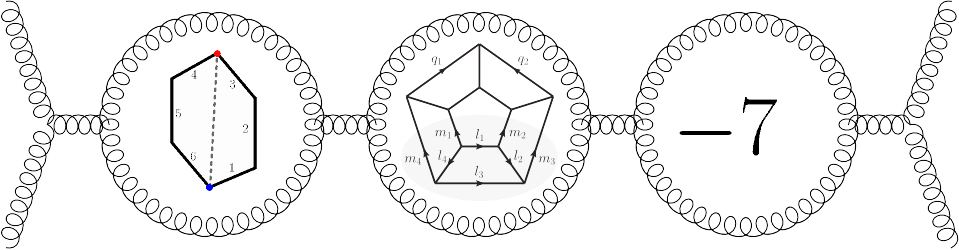
At Amplitudes 2023 at CERN

I’m at the big yearly conference of my sub-field this week, called Amplitudes. This year, surprisingly for the first time, it’s at the very appropriate location of CERN.

Somewhat overshadowed by the very picturesque Alps

Amplitudes keeps on growing. In 2019, we had 175 participants. We were on Zoom in 2020 and 2021, with many more participants, but that probably shouldn’t count. In Prague last year we had 222. This year, I’ve been told we have even more, something like 250 participants (the list online is bigger, but includes people joining on Zoom). We’ve grown due to new students, but also new collaborations: people from adjacent fields who find the work interesting enough to join along. This year we have mathematicians talking about D-modules, bootstrappers finding new ways to get at amplitudes in string theory, beyond-the-standard-model theorists talking about effective field theories, and cosmologists talking about the large-scale structure of the universe.

The talks have been great, from clear discussions of earlier results to fresh-off-the-presses developments, plenty of work in progress, and even one talk where the speaker’s opinion changed during the coffee break. As we’re at CERN, there’s also a through-line about the future of particle physics, with a chat between Nima Arkani-Hamed and the experimentalist Beate Heinemann on Tuesday and a talk by Michelangelo Mangano about the meaning of “new physics” on Thursday.

I haven’t had a ton of time to write, I keep getting distracted by good discussions! As such, I’ll do my usual thing, and say a bit more about specific talks in next week’s post.

En France!

I don’t have a lot to say this week. I’ve been busy moving, in preparation for my new job in the Fall. Moving internationally hasn’t left a lot of time, or mental space, for science, or even for taking a nice photo for this post! But I’ll pick up again next week, with Amplitudes, my sub-field’s big yearly conference.

It’s Only a Model

Last week, I said that the current best estimate for the age of the universe, 13.8 billion years old, is based on a mathematical model. In order to get that number, astronomers had to assume the universe evolved in a particular way, according to a model where the universe is composed of ordinary matter, dark matter, and dark energy. In other words, the age of the universe is a model-dependent statement.

Reading that, you might ask whether we can do better. What about a model-independent measurement of the age of the universe?

As intuitive as it might seem, we can’t actually do that. In fact, if we’re really strict about it, we can’t get a model-independent measurement of anything at all. Everything is based on a model.

Imagine stepping on your bathroom scale, getting a mass in kilograms. The number it gives you seems as objective as anything. But to get that number, you have to trust that a number of models are true. You have to model gravity, to assume that the scale’s measurement of your weight gives you the right mass based on the Earth’s surface gravity being approximately constant. You have to model the circuits and sensors in the scale, and be confident that you understand how they’re supposed to work. You have to model people: to assume that the company that made the scale tested it accurately, and that the people who sold it to you didn’t lie about where it came from. And finally, you have to model error: you know that the scale can’t possibly give you your exact weight, so you need a rough idea of just how far off it can reasonably be.

Everything we know is like this. Every measurement in science builds on past science, on our understanding of our measuring equipment and our trust in others. Everything in our daily lives comes through a network of assumptions about the world around us. Everything we perceive is filtered through instincts, our understanding of our own senses and knowledge of when they do and don’t trick us.

Ok, but when I say that the age of the universe is model-dependent, I don’t really mean it like that, right?

Everything we know is model-dependent, but only some model-dependence is worth worrying about. Your knowledge of your bathroom scale comes from centuries-old physics of gravity, widely-applied principles of electronics, and a trust in the function of basic products that serves you well in every other aspect of your life. The models that knowledge depends on aren’t really in question, especially not when you just want to measure your weight.

Some measurements we make in physics are like this too. When the experimental collaborations at the LHC measured the Higgs mass, they were doing something far from routine. But the models they based that measurement on, models of particle physics and particle detector electronics and their own computer code, are still so well-tested that it mostly doesn’t make sense to think of this as a model-dependent measurement. If we’re questioning the Higgs mass, it’s only because we’re questioning something much bigger.

The age of the universe, though, is trickier. Our most precise measurements are based on a specific model: we estimate what the universe is made of and how fast it’s expanding, plug it into our model of how the universe changes over time, and get an estimate for the age. You might suggest that we should just look out into the universe and find the oldest star, but that’s model-dependent too. Stars don’t have rings like trees. Instead, to estimate the age of a star we have to have some model for what kind of light it emits, and for how that light has changed over the history of the universe before it reached us.

These models are not quite as well-established as the models behind particle physics, let alone those behind your bathroom scale. Our models of stars are pretty good, applied to many types of stars in many different galaxies, but they do involve big, complicated systems involving many types of extreme and difficult to estimate physics. Star models get revised all the time, usually in minor ways but occasionally in more dramatic ones. Meanwhile, our model of the whole universe is powerful, but by its very nature much less-tested. We can test it on observations of the whole universe today, or on observations of the whole universe in the past (like the cosmic microwave background). And it works well for these, better than any other model. But it’s not inconceivable, not unrealistic, and above all not out of context, that another model could take its place. And if it did, many of the model-dependent measurements we’ve based on it will have to change.

So that’s why, while everything we know is model-dependent, some are model-dependent in a more important way. Some things, even if we feel they have solid backing, may well turn out to be wrong, in a way that we have reason to take seriously. The age of the universe is pretty well-established as these things go, but it still is one of those types of things, where there is enough doubt in our model that we can’t just take the measurement at face value.

Small Shifts for Specificity

Cosmologists are annoyed at a recent spate of news articles claiming the universe is 26.7 billion years old (rather than 13.8 billion as based on the current best measurements). To some of the science-reading public, the news sounds like a confirmation of hints they’d already heard: about an ancient “Methuselah” star that seemed to be older than the universe (later estimates put it younger), and recent observations from the James Webb Space Telescope of early galaxies that look older than they ought.

“The news doesn’t come from a telescope, though, or a new observation of the sky. Instead, it comes from this press release from the University of Ottawa: “Reinventing cosmology: uOttawa research puts age of universe at 26.7 — not 13.7 — billion years”.

(If you look, you’ll find many websites copying this press release almost word-for-word. This is pretty common in science news, where some websites simply aggregate press releases and others base most of their science news on them rather than paying enough for actual journalism.)

The press release, in turn, is talking about a theory, not an observation. The theorist, Rajendra Gupta, was motivated by examples like the early galaxies observed by JWST and the Methuselah star. Since the 13.8 billion year age of the universe is based on a mathematical model, he tried to find a different mathematical model that led to an older universe. Eventually, by hypothesizing what seems like every unproven physics effect he could think of, he found one that gives a different estimate, 26.7 billion. He probably wasn’t the first person to do this, because coming up with different models to explain odd observations is a standard thing cosmologists do all the time, and until one of the models is shown to explain a wider range of observations (because our best theories explain a lot, so they’re hard to replace), they’re just treated as speculation, not newsworthy science.

This is a pretty clear case of hype, and as such most of the discussion has been about what went wrong. Should we blame the theorist? The university? The journalists? Elon Musk?

Rather than blame, I think it’s more productive to offer advice. And in this situation, the person I think could use some advice is the person who wrote the press release.

So suppose you work for a university, writing their press releases. One day, you hear that one of your professors has done something very cool, something worthy of a press release: they’ve found a new estimate for the age of the universe. What do you do?

One thing you absolutely shouldn’t do is question the science. That just isn’t your job, and even if it were you don’t have the expertise to do that. Anyone who’s hoping that you will only write articles about good science and not bad science is being unrealistic, that’s just not an option.

If you can’t be more accurate, though, you can still be more precise. You can write your article, and in particular your headline, so that you express what you do know as clearly and specifically as possible.

(I’m assuming here you write your own headlines. This is not normal in journalism, where most headlines are written by an editor, not by the writer of a piece. But university press offices are small enough that I’m assuming, perhaps incorrectly, that you can choose how to title your piece.)

Let’s take a look at the title, “Reinventing cosmology: uOttawa research puts age of universe at 26.7 — not 13.7 — billion years”, and see if we can make some small changes to improve it.

One very general word in that title is “research”. Lots of people do research: astronomers do research when they collect observations, theorists do research when they make new models. If you say “research”, some people will think you’re reporting a new observation, a new measurement that gives a radically different age for the universe.

But you know that’s not true, it’s not what the scientist you’re talking to is telling you. So to avoid the misunderstanding, you can get a bit more specific, and replace the word “research” with a more precise one: “Reinventing cosmology: uOttawa theory puts age of universe at 26.7 — not 13.7 — billion years”.

“Theory” is just as familiar a word as “research”. You won’t lose clicks, you won’t confuse people. But now, you’ve closed off a big potential misunderstanding. By a small shift, you’ve gotten a lot clearer. And you didn’t need to question the science to do it!

You can do more small shifts, if you understand a bit more of the science. “Puts” is kind of ambiguous: a theory could put an age somewhere because it computes it from first principles, or because it dialed some parameter to get there. Here, the theory was intentionally chosen to give an older universe, so the title should hint at this in some way. Instead of “puts”, then, you can use “allows”: “Reinventing cosmology: uOttawa theory allows age of universe to be 26.7 — not 13.7 — billion years”.

These kinds of little tricks can be very helpful. If you’re trying to avoid being misunderstood, then it’s good to be as specific as you can, given what you understand. If you do it carefully, you don’t have to question your scientists’ ideas or downplay their contributions. You can do your job, promote your scientists, and still contribute to responsible journalism.