
Why We Are Leaving France: The Misadventures of a Trailing Spouse

In last week’s announcement, I mentioned I’d have a few follow-up posts. This week is a guest post. I want to let my wife tell her side of the story, to talk publicly about what she’s experienced over the last six months.


If you are a frequent reader of this blog, you probably know that 4gravitons relocated last year to France, following a long-coveted permanent academic position at the Institute for Theoretical Physics (IPhT) of CEA Paris-Saclay. Along with 4gravitons, I also moved to France as a trailing spouse. This is not an unusual situation, academic spouses agreeing to leave behind their friends and career to allow the academic in the relationship to develop their career. I had even set some conditions that I thought were necessary for me to successfully integrate elsewhere (access to employment, an intelligible healthcare system, good public transit), a list of desirable traits (in or near a medium-to-large city, prior knowledge of the language, walkable neighborhood),  and some places I was unwilling to move to. When the offer for a position in France arrived, we thought it was almost ideal:

  • France is an EU country, which would give me direct access to employment (by the EU directive on Freedom of Movement),
  • France is also somewhat renowned for having a sensible working healthcare system, even though in recent times it has been stretched thin,
  • IPhT is less than an hour away from Paris, and
  • Both 4gravitons and I already had a B1/B2 level in French (you can find the CEFR level descriptors here). 

However, we have decided to leave France only 6 months after arriving. What happened?

I wanted to put one of Escher’s labyrinths here, but they’re still under copyright.

The quest for a Carte de Séjour (and access to the labor market) 

As I wrote earlier, being able to work was a necessary condition for me to relocate. I work in education, which often requires a good deal of paperwork (since countries correctly want to make sure their young people are in a safe, nurturing environment). I had heard that France was facing a shortage of teachers, so I was hopeful about my prospects. I applied for one position which seemed like a perfect fit and got through a couple of interviews before the legal right to work issues started. EU law states that EU spouses have access to employment in EU countries on arrival (they should get the same rights as their European partners); however, in France employers are liable if they hire someone illegally so they are extremely cautious when hiring foreigners. In practice, this means employers will NOT hire EU spouses if they do not have a document from the French authorities explicitly stating their right to work. Since it is not possible to start the process to get such a document before arriving in France, finding work would have to wait.

One day after arriving in France, still hoping things would go smoothly and we could build a good life there, I collected all the document required by EU law to apply for a Carte de Séjour (residence card), went to the neighborhood Photomaton to have compliant photos taken, and uploaded the documents and photo-ID to the website of ANEF, the agency that handles the digital side of French immigration. EU law grants EU spouses 3 months to apply for the Carte de Séjour, but I wanted to have the process started as soon as possible so I could work. Naïvely, I thought I would be issued a document stating that I had applied for a Carte de Séjour under EU law and thus was allowed employment, the way it works in other EU countries. This was not the case. I was, instead, given a letter saying that I had applied for a Carte de Séjour, and that the document did not grant access to either employment or social benefits (such as healthcare, more on this below). To make matters worse, our sous-préfécture (the part of local government that handles the application) listed average waiting times for first demands at 161 days.

Well, at least the process was started and, in my head, the long wait times would likely only apply to complicated cases. I was arriving as an EU spouse, after having lived in another EU country (since 4gravitons had been working at the Niels Bohr Institute, in Denmark) for quite some time. It would likely be a short wait. It was just a matter of waiting for an e-mail when the process actually started and making sure to submit further documentation quickly, if it was deemed necessary.

A couple of months later, the email had not yet arrived (and work opportunities kept vanishing due to lack of papers), so we started asking for confirmation that my documents had indeed been received by our local sous-préfécture. We wrote to ANEF (“due to a technical error, we cannot answer your question”), called the sous-préfécture (“nobody here can answer your question”), support organizations (“You have the wrong visa! Can you go to another country and apply for a long-term visa from there?”), and so on. This went on for a long time despite local contacts reaching out to our sous-préfécture, our préfect, and other connections to try and accelerate the process. I finally received the e-mail starting the process (requesting some more documents, as well as some I had already sent) about 5 months after submitting the application (it took exactly 148  days, I counted). At this point, I was also granted a new letter attesting that I was legally in France (my short-term Schengen visa having expired much earlier) and that explicitly did not grant access to either employment (without a work authorization) or social benefits.

Healthcare for the undocumented

To make things even more complicated, I started having unusual symptoms a few weeks after our move to France. In the worst instance, the symptoms were worrying enough that an ambulance was sent to take me to the emergency room for an MRI (luckily, it was not serious). Note that I did not have a health card, so the ambulance had to be paid in cash before they would move me, the hospital sent a bill for the MRI by mail some weeks later, and the government sent a bill for the emergency care four months later. Luckily, we bought private insurance before moving, since we have relocated before and know that sometimes it takes a little time before one is signed up with the local healthcare institutions. Unluckily, hospitals here will not deal with insurance companies directly so we had to pay and file for reimbursement (this involves papers called feuille de soins, and the ambulance did not give us one, so no reimbursement for that). The following 3 or 4 months involved many specialist visits, lots of labs, lots of feuilles de soins… and very limited improvement on my symptoms. Since we could not have a family doctor (this requires a health card and an infinite amount of patience given that most general doctors have no space for new patients), appointments often consisted of the same questions, more referrals, confusion over a patient arriving with a giant file of previous documents, and no answers. At the end, the only answer proposed was that it may all be a physical expression of stress and anxiety.

The aforementioned situation was adding significant complications to our lives so, France being a country with socialized medicine, we started the process required to register me for a Carte Vitale (this is the name of the French health card). Residents in France aren’t automatically covered, but they are either registered for coverage by their employer or register themselves as dependents of someone with coverage. We reached out to CPAM (the French agency that controls socialized health insurance) and were given the forms to apply for coverage and a list of documents, which included a valid residency document (long-term visa or Carte de Séjour). EU spouses are not required to get a long-term visa (the French embassy explicitly told us I should get a short-term visa, and only because our residency cards for Denmark were expiring around the time of relocation) and the Carte de Séjour process was still ongoing, so we had a problem. Regardless, we made a file, and included our marriage certificate, the letter stating I had applied for a residence card, and proof of residency and work in France for 4gravitons, which shows the legality of my residence in France under EU regulations. The instructions are to send the file by mail to the corresponding CPAM office, which we tried to do but the postal office lost the letter. We eventually got an appointment to hand the documents in person and were told directly that I had the wrong visa and my request would likely be denied due to the lack of Carte de Séjour. We repeated the rules established by the EU (lack of a Carte de Séjour CANNOT be used to justify the denial of rights to EU families) and gave them the dossier. A month or so later, a letter came in the mail stating that my request had been denied because I had not been a resident for three months (at that point, I had been a resident for 2 and a half months so that was not much of an issue); a few weeks later, once my three-month visa had expired, a different letter arrived changing the reason for refusal to the lack of legal resident status.

Everyone ♥️ Paris, France

As you may well imagine, I was not feeling much appreciation for the City of Lights given our difficulties settling in and the isolation imposed by my status (legal resident but undocumented). Yet, whenever I have tried to explain why I was anxious, frustrated, or depressed, I encountered very little empathy or understanding. It often felt as if, by describing my experiences in the city, I was criticizing a core belief for people: that Paris is a magical place where one eats wonderful food and strolls about beautiful places. 

In sensing my unhappiness in (or near) Paris, I was often advised to go spend more time in the museums (the ones I am most interested in are quite expensive and permanently crowded) or walking around the nice areas of Paris (but beware not to take a wrong turn, for it is easy to find oneself in a less-than-nice place). This continued even if I explained that I have been to Paris, have seen the beautiful museums and manicured parks, and I never much enjoyed it. 

I moved here knowing that Paris was not a city I loved, but expecting it would provide access to entertainment (art, theater, gaming, etc) and to a variety of other resources (like materials for artwork or ingredients for my traditional foods). I was quite unhappy when the reliability of the RER-B became a problem: we ended up defaulting to scheduling almost two hours for any Paris trip to ensure we would arrive on time. Despite the extended time, there were occasions when we almost missed a meeting time due to train delays and cancellations. In the end, access to all the nice things in Paris was limited by logistics.

An unintegrated immigrant

Until this move, I thought that integration into developed countries was mostly a matter of individual effort: learn the language, find employment and connections to the local community, and understand that things are different than in your previous home. I can no longer hold this belief. I tried, as much as I could, to interact with our local community. I took any opportunity to speak French, and often was made to feel dumb for not finding the right terms; an ophthalmologist once welcomed me by saying “Oh, you’re the patient who does not speak French” in French (try describing different kinds of eye pain in a foreign language). I signed-up for more French lessons which seemed to focus more on local slang than on useful words (my vocabulary needs more help than my grammar for French). I also joined some art lessons and a local vocal ensemble, where I met some lovely people but had little chance of creating more in-depth connections. 

Finally, after months of trying and failing to integrate, Newtonmas came. The few friends we had here all left to visit their families. I still had no papers and could not leave France. On top of this, there was an unexpected death in my family in the lead-up to the holidays. I found myself, almost 5 months after arriving, unemployed (and with no access to the job market), uninsured (and paying for healthcare and a lot of counseling out of pocket), undocumented (at this point, with no valid visa and no way to prove I was in France legally), and grieving alone in a foreign country. We knew that I could not stay here. And thus, we cannot stay here.

Integration requires effort from the immigrant, but it also requires effort from the country. It requires a country willing to give basic access to the requirements of life, to let immigrants step into the public sphere under fair conditions, and to do so consistently and reliably. France, in its current state, cannot do this. I hope it can improve, but I am not required to wait here for it. We’ll be elsewhere, integrating into another country and contributing to their community instead.

Well That Didn’t Work

Apologies to anyone who finds the title too flippant. This is a serious situation, and I am taking it seriously. But this is how I write. I mix the absurd and the profound. I build stories.

In May, I was offered the kind of position I’d been searching for for years, the kind of position almost everyone in my life at that point was searching for: a permanent position as a theoretical physicist. As these positions almost always do, it required an international move: I’d be leaving Denmark, and going to France.

Originally, I had planned to defer the position for a year, to have time for my wife and I to tie up loose ends. That, it turned out, wasn’t possible: the position would have to start before the end of 2023. I talked things over with my wife, and we decided to move in August. She works in education, so it would, we hoped, let her start a job with the start of the school year. We’d settle in, get to know a new country and find our place in it.

She didn’t end up finding that place. That wasn’t because she couldn’t find work: that came easy. It was because, as far as employers here understood, she wasn’t allowed to work. The EU Directive on Freedom of Movement is very clear: spouses of EU citizens (I’m German) have the right to work EU-wide, independent of whether they have any document from their host country saying so, as long as they live with their spouse. But different countries implement this differently. The Danish government makes this right clear on their website. As soon as the spouse of an EU citizen registers with Danish immigration, shortly after they arrive, they get a letter saying their case is in process, and they conditionally can work. If they happen to have been lying, their case can still be rejected, but if it is only the employee is punished: the employer couldn’t have known, after all.

France is different. If an employer hires someone who lies about their right to work, the employer is at fault, so employers are afraid to hire without explicit documentation from the French government. Government websites do not mention that spouses of EU citizens have the right to work, and leaves it off of lists where it should appear. And the French documentation is slow. My wife applied the day after we arrived, in August. Five months later, the French government finally opened the file. They gave her a document saying she had the right to remain in the country…but not yet the right to travel or work.

In the end, my wife decided that she didn’t want to stay in the country that did this to her, and seeing the effect it has had on her I have to agree.

Academics don’t get to choose where to live. People do, though, especially in places like the EU. I can choose for us to live in Denmark, to build a life in a country that has treated us well. I just have to leave academia to do it.

So that’s the plan. I have resigned from my position in France, the moving truck has picked up our stuff. We’re headed back to Denmark. I’ll spend a couple months as a visiting professor at the Niels Bohr Institute, courtesy of some extremely generous former colleagues.

After that? Something else. Probably Data Science, that seems like what most of the ex-physicists are doing these days. Ultimately, I’m up for anything I can do in Copenhagen that leverages my skills. I’ve got ten years of experience coding in weird programming languages, learning new kinds of math, and writing once a week for you guys. I’m optimistic I’ll find something. (And if you’re looking for someone like that in Copenhagen, let me know!)

I do still care about physics, even if I won’t be researching it. So I’ll keep blogging, and the blog will keep having physics content. I’ve dabbled in science journalism more recently, and I’ll keep doing more. It won’t be a full-time job for the moment, but in the long run who knows? For my physics contacts, if you’re willing to be a sounding-board for dumb questions, that would be really valuable. And if you run into a story, something that sounds like it would make good science news, then let me know!

For all those attending the conference I’m organizing: it will still go on, even if I’m less likely to be a part of it. I still have four capable co-organizers, after all.

Over the next few weeks I’ll have a few more posts about this, from different angles. I have a few more things to say, some personal, some practical (for example, a guide for EU citizens bringing non-EU spouses to France). My wife will have a guest post: she’s had some crazy things happen to her here, and deserves to have her story told.

In the meantime, I’d be happy to hear from people. I know many of you will be shocked. (Props to the old friend who figured it out from my LinkedIn posts!) I’ve met a lot of support so far, a lot of very understanding people. But whatever your reaction, I’m willing to talk through it.

Generalize

What’s the difference between a model and an explanation?

Suppose you cared about dark matter. You observe that things out there in the universe don’t quite move the way you would expect. There is something, a consistent something, that changes the orbits of galaxies and the bending of light, the shape of the early universe and the spiderweb of super-clusters. How do you think about that “something”?

One option is to try to model the something. You want to use as few parameters as possible, so that your model isn’t just an accident, but will actually work to predict new data. You want to describe how it changes gravity, on all the scales you care about. Your model might be very simple, like the original MOND, and just describe a modification to Newtonian gravity, since you typically only need Newtonian gravity to model many of these phenomena. (Though MOND itself can’t account for all the things attributed to dark matter, so it had to be modified.) You might have something slightly more complicated, proposing some “matter” but not going into much detail about what it is, just enough for your model to work.

If you were doing engineering, a model like that is a fine thing to have. If you were building a spaceship and wanted to figure out what its destination would look like after a long journey, you’d need a model of dark matter like this, one that predicted how galaxies move and light bends, to do the job.

But a model like that isn’t an explanation. And the reason why is that explanations generalize.

In practice, you often just need Newtonian gravity to model how galaxies move. But if you want to model more dramatic things, the movement of the whole universe or the area around a black hole, then you need general relativity as well. So to generalize to those areas, you can’t just modify Newtonian gravity. You need an explanation, one that tells you not just how Newton’s equations change, but how Einstein’s equations change.

In practice, you can get by with a simple model of dark matter, one that doesn’t tell you very much, and just adds a new type of matter. But if you want to model quantum gravity, you need to know how this new matter interacts, not just at baseline with gravity, but with everything else. You need to know how the new matter is produced, whether it gets its mass from the Higgs boson or from something else, whether it falls into the same symmetry groups as the Standard Model or totally new ones, how it arises from tangled-up strings and multi-dimensional membranes. You need not just a model, but an explanation, one that tells you not just roughly what kind of particle you need, but how it changes our models of particle physics overall.

Physics, at its best, generalizes. Newton’s genius wasn’t that he modeled gravity on Earth, but that he unified it with gravity in the solar system. By realizing that gravity was universal, he proposed an explanation that led to much more progress than the models of predecessors like Kepler. Later, Einstein’s work on general relativity led to similar progress.

We can’t always generalize. Sometimes, we simply don’t know enough. But if we’re not engineering, then we don’t need a model, and generalizing should, at least in the long-run, be our guiding hope.

LHC Black Hole Reassurance: The Professional Version

A while back I wrote a post trying to reassure you that the Large Hadron Collider cannot create a black hole that could destroy the Earth. If you’re the kind of person who is worried about this kind of thing, you’ve probably heard a variety of arguments: that it hasn’t happened yet, despite the LHC running for quite some time, that it didn’t happen before the LHC with cosmic rays of comparable energy, and that a black hole that small would quickly decay due to Hawking radiation. I thought it would be nice to give a different sort of argument, a back-of-the-envelope calculation you can try out yourself, showing that even if a black hole was produced using all of the LHC’s energy and fell directly into the center of the Earth, and even if Hawking radiation didn’t exist, it would still take longer than the lifetime of the universe to cause any detectable damage. Modeling the black hole as falling through the Earth and just slurping up everything that falls into its event horizon, it wouldn’t even double in size before the stars burn out.

That calculation was extremely simple by physics standards. As it turns out, it was too simple. A friend of mine started thinking harder about the problem, and dug up this paper from 2008: Astrophysical implications of hypothetical stable TeV-scale black holes.

Before the LHC even turned on, the experts were hard at work studying precisely this question. The paper has two authors, Steve Giddings and Michelangelo Mangano. Giddings is an expert on the problem of quantum gravity, while Mangano is an expert on LHC physics, so the two are exactly the dream team you’d ask for to answer this question. Like me, they pretend that black holes don’t decay due to Hawking radiation, and pretend that one falls to straight from the LHC to the center of the Earth, for the most pessimistic possible scenario.

Unlike me, but like my friend, they point out that the Earth is not actually a uniform sphere of matter. It’s made up of particles: quarks arranged into nucleons arranged into nuclei arranged into atoms. And a black hole that hits a nucleus will probably not just slurp up an event horizon-sized chunk of the nucleus: it will slurp up the whole nucleus.

This in turn means that the black hole starts out growing much more fast. Eventually, it slows down again: once it’s bigger than an atom, it starts gobbling up atoms a few at a time until eventually it is back to slurping up a cylinder of the Earth’s material as it passes through.

But an atom-sized black hole will grow faster than an LHC-energy-sized black hole. How much faster is estimated in the Giddings and Mangano paper, and it depends on the number of dimensions. For eight dimensions, we’re safe. For fewer, they need new arguments.

Wait a minute, you might ask, aren’t there only four dimensions? Is this some string theory nonsense?

Kind of, yes. In order for the LHC to produce black holes, gravity would need to have a much stronger effect than we expect on subatomic particles. That requires something weird, and the most plausible such weirdness people considered at the time were extra dimensions. With extra dimensions of the right size, the LHC might have produced black holes. It’s that kind of scenario that Giddings and Mangano are checking: they don’t know of a plausible way for black holes to be produced at the LHC if there are just four dimensions.

For fewer than eight dimensions, though, they have a problem: the back-of-the-envelope calculation suggests black holes could actually grow fast enough to cause real damage. Here, they fall back on the other type of argument: if this could happen, would it have happened already? They argue that, if the LHC could produce black holes in this way, then cosmic rays could produce black holes when they hit super-dense astronomical objects, such as white dwarfs and neutron stars. Those black holes would eat up the white dwarfs and neutron stars, in the same way one might be worried they could eat up the Earth. But we can observe that white dwarfs and neutron stars do in fact exist, and typically live much longer than they would if they were constantly being eaten by miniature black holes. So we can conclude that any black holes like this don’t exist, and we’re safe.

If you’ve got a smattering of physics knowledge, I encourage you to read through the paper. They consider a lot of different scenarios, much more than I can summarize in a post. I don’t know if you’ll find it reassuring, since they may not cover whatever you happen to be worried about. But it’s a lot of fun seeing how the experts handle the problem.

Models, Large Language and Otherwise

In particle physics, our best model goes under the unimaginative name “Standard Model“. The Standard Model models the world in terms of interactions of different particles, or more properly quantum fields. The fields have different masses and interact with different strengths, and each mass and interaction strength is a parameter: a “free” number in the model, one we have to fix based on data. There are nineteen parameters in the Standard Model (not counting the parameters for massive neutrinos, which were discovered later).

In principle, we could propose a model with more parameters that fit the data better. With enough parameters, one can fit almost anything. That’s cheating, though, and it’s a type of cheating we know how to catch. We have statistical tests that let us estimate how impressed we should be when a model matches the data. If a model is just getting ahead on extra parameters without capturing something real, we can spot that, because it gets a worse score on those tests. A model with a bad score might match the data you used to fix its parameters, but it won’t predict future data, so it isn’t actually useful. Right now the Standard Model (plus neutrino masses) gets the best score on those tests, when fitted to all the data we have access to, so we think of it as our best and most useful model. If someone proposed a model that got a better score, we’d switch: but so far, no-one has managed.

Physicists care about this not just because a good model is useful. We think that the best model is, in some sense, how things really work. The fact that the Standard Model fits the data best doesn’t just mean we can use it to predict more data in the future: it means that somehow, deep down, that the world is made up of quantum fields the way the Standard Model describes.

If you’ve been following developments in machine learning, or AI, you might have heard the word “model” slung around. For example, GPT is a Large Language Model, or LLM for short.

Large Language Models are more like the Standard Model than you might think. Just as the Standard Model models the world in terms of interacting quantum fields, Large Language Models model the world in terms of a network of connections between artificial “neurons”. Just as particles have different interaction strengths, pairs of neurons have different connection weights. Those connection weights are the parameters of a Large Language Model, in the same way that the masses and interaction strengths of particles are the parameters of the Standard Model. The parameters for a Large Language Model are fixed by a giant corpus of text data, almost the whole internet reduced to a string of bytes that the LLM needs to match, in the same way the Standard Model needs to match data from particle collider experiments. The Standard Model has nineteen parameters, Large Language Models have billions.

Increasingly, machine learning models seem to capture things better than other types of models. If you want to know how a protein is going to fold, you can try to make a simplified model of how its atoms and molecules interact with each other…but instead, you can make your model a neural network. And that turns out to work better. If you’re a bank and you want to know how many of your clients will default on their loans, you could ask an economist to make a macroeconomic model…or, you can just make your model a neural network too.

In physics, we think that the best model is the model that is closest to reality. Clearly, though, this can’t be what’s going on here. Real proteins don’t fold based on neural networks, and neither do real economies. Both economies and folding proteins are very complicated, so any model we can use right now won’t be what’s “really going on”, unlike the comparatively simple world of particle physics. Still, it seems weird that, compared to the simplified economic or chemical models, neural networks can work better, even if they’re very obviously not really what’s going on. Is there another way to think about them?

I used to get annoyed at people using the word “AI” to refer to machine learning models. In my mind, AI was the thing that shows up in science fiction, machines that can think as well or better than humans. (The actual term of art for this is AGI, artificial general intelligence.) Machine learning, and LLMs in particular, felt like a meaningful step towards that kind of AI, but they clearly aren’t there yet.

Since then, I’ve been convinced that the term isn’t quite so annoying. The AI field isn’t called AI because they’re creating a human-equivalent sci-fi intelligence. They’re called AI because the things they build are inspired by how human intelligence works.

As humans, we model things with mathematics, but we also model them with our own brains. Consciously, we might think about objects and their places in space, about people and their motivations and actions, about canonical texts and their contents. But all of those things cash out in our neurons. Anything we think, anything we believe, any model we can actually apply by ourselves in our own lives, is a model embedded in a neural network. It’s quite a bit more complicated neural network than an LLM, but it’s very much still a kind of neural network.

Because humans are alright at modeling a variety of things, because we can see and navigate the world and persuade and manipulate each other, we know that neural networks can do these things. A human brain may not be the best model for any given phenomenon: an engineer can model the flight of a baseball with math much better than the best baseball player can with their unaided brain. But human brains still tend to be fairly good models for a wide variety of things. Evolution has selected them to be.

So with that in mind, it shouldn’t be too surprising that neural networks can model things like protein folding. Even if proteins don’t fold based on neural networks, even if the success of AlphaFold isn’t capturing the actual details of the real world the way the Standard Model does, the model is capturing something. It’s loosely capturing the way a human would think about the problem, if you gave that human all the data they needed. And humans are, and remain, pretty good at thinking! So we have reason, not rigorous, but at least intuitive reason, to think that neural networks will actually be good models of things.

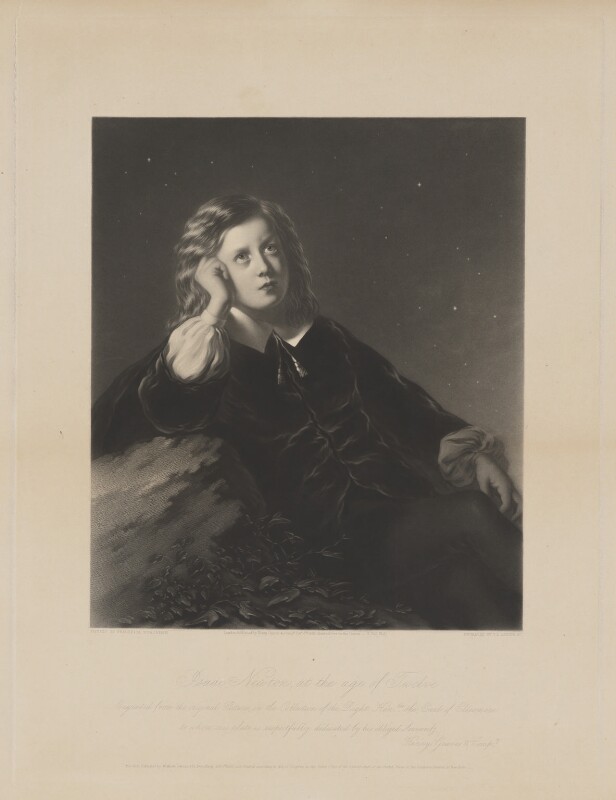
Newtonmas Pageants

Newtonmas: because if you’re going to celebrate someone supposedly born on December 25, you might as well pick someone whose actual birthday was within two weeks of that.

My past Newtonmas posts have tended to be about gifts, which is a pretty easy theme. But Christmas, for some, isn’t just about Santa Claus delivering gifts, but about someone’s birth. Children put on plays acting out different characters. In Mexico, they include little devils, who try to tempt the shepherds away from visiting Jesus.

Could we do this kind of thing for Newtonmas? A Newtonmas Pageant?

The miraculous child

Historians do know a bit about Newton’s birth. His father (also named Isaac Newton) died two months before he was born. Newton was born prematurely, his mother apparently claimed he could fit inside a quart mug.

The mug may be surprising (it comes in quarts?), but there isn’t really enough material for a proper story here. That said, it would be kind of beside the point if there were. If we’re celebrating science, maybe the story of one particular child is not the story we should be telling.

Instead, we can tell stories about scientific ideas. These often have quite dramatic stories. Instead of running from inn to inn looking for rooms, scientists run from journal to journal trying to publish. Instead of frankincense, myrrh, and gold, there are Nobel prizes. Instead of devils tempting the shepherds away, you have tempting but unproductive ideas. For example, Newton battled ideas from Descartes and Liebniz that suggested gravity could be caused by a vortex of fluid. The idea was popular because it was mechanical-sounding: no invisible force of gravity needed. But it didn’t work, and Newton spent half of the Principia where he wrote down his new science building a theory of fluids so he could say it didn’t work.

So for this Newtonmas, tell the story of a scientific idea: one that had a difficult birth but that, eventually brought pilgrims and gifts from miles around.

Merry Newtonmas, everyone!

If That Measures the Quantum Vacuum, Anything Does

Sabine Hossenfelder has gradually transitioned from critical written content about physics to YouTube videos, mostly short science news clips with the occasional longer piece. Luckily for us in the unable-to-listen-to-podcasts demographic, the transcripts of these videos are occasionally published on her organization’s Substack.

Unluckily, it feels like the short news format is leading to some lazy metaphors. There are stories science journalists sometimes tell because they’re easy and familiar, even if they don’t really make sense. Scientists often tell them too, for the same reason. But the more careful voices avoid them.

Hossenfelder has been that careful before, but one of her recent pieces falls short. The piece is titled “This Experiment Will Measure Nothing, But Very Precisely”.

The “nothing” in the title is the oft-mythologized quantum vacuum. The story goes that in quantum theory, empty space isn’t really empty. It’s full of “virtual” particles, that pop in and out of existence, jostling things around.

This…is not a good way to think about it. Really, it’s not. If you want to understand what’s going on physically, it’s best to think about measurements, and measurements involve particles: you can’t measure anything in pure empty space, you don’t have anything to measure with. Instead, every story you can tell about the “quantum vacuum” and virtual particles, you can tell about interactions between particles that actually exist.

(That post I link above, by the way, was partially inspired by a more careful post by Hossenfelder. She does know this stuff. She just doesn’t always use it.)

Let me tell the story Hossenfelder’s piece is telling, in a less silly way:

In the earliest physics classes, you learn that light does not affect other light. Shine two flashlight beams across each other, and they’ll pass right through. You can trace the rays of each source, independently, keeping track of how they travel and bounce around the room.

In quantum theory, that’s not quite true. Light can interact with light, through subtle quantum effects. This effect is tiny, so tiny it hasn’t been measured before. But with ingenious tricks involving tuning three different lasers in exactly the right way, a team of physicists in Dresden has figured out how it could be done.

And see, that’s already cool, right? It’s cool when people figure out how to see things that have never been seen before, full stop.

But the way Hossenfelder presents it, the cool thing about this is that they are “measuring nothing”. That they’re measuring “the quantum vacuum”, really precisely.

And I mean, you can say that, I guess. But it’s equally true of every subtle quantum effect.

In classical physics, electrons should have a very specific behavior in a magnetic field, called their magnetic moment. Quantum theory changes this: electrons have a slightly different magnetic moment, an anomalous magnetic moment. And people have measured this subtle effect: it’s famously the most precisely confirmed prediction in all of science.

That effect can equally well be described as an effect of the quantum vacuum. You can draw the same pictures, if you really want to, with virtual particles popping in and out of the vacuum. One effect (light bouncing off light) doesn’t exist at all in classical physics, while the other (electrons moving in a magnetic field) exists, but is subtly different. But both, in exactly the same sense, are “measurements of nothing”.

So if you really want to stick on the idea that, whenever you measure any subtle quantum effect, you measure “the quantum vacuum”…then we’re already doing that, all the time. Using it to popularize some stuff (say, this experiment) and not other stuff (the LHC is also measuring the quantum vacuum) is just inconsistent.

Better, in my view, to skip the silly talk about nothing. Talk about what we actually measure. It’s cool enough that way.

What’s in a Subfield?

A while back, someone asked me what my subfield, amplitudeology, is really about. I wrote an answer to that here, a short-term and long-term perspective that line up with the stories we often tell about the field. I talked about how we try to figure out ways to calculate probabilities faster, first for understanding the output of particle colliders like the LHC, then more recently for gravitational wave telescopes. I talked about how the philosophy we use for that carries us farther, how focusing on the minimal information we need to make a prediction gives us hope that we can generalize and even propose totally new theories.

The world doesn’t follow stories, though, not quite so neatly. Try to define something as simple as the word “game” and you run into trouble. Some games have a winner and a loser, some games everyone is on one team, and some games don’t have winners or losers at all. Games can involve physical exercise, computers, boards and dice, or just people telling stories. They can be played for fun, or for money, silly or deadly serious. Most have rules, but some don’t even have that. Instead, games are linked by history: a series of resemblances, people saying that “this” is a game because it’s kind of like “that”.

A subfield isn’t just a word, it’s a group of people. So subfields aren’t defined just by resemblance. Instead, they’re defined by practicality.

To ask what amplitudeology is really about, think about why you might want to call yourself an amplitudeologist. It could be a question of goals, certainly: you might care a lot about making better predictions for the LHC, or you could have some other grand story in mind about how amplitudes will save the world. Instead, though, it could be a matter of training: you learned certain methods, certain mathematics, a certain perspective, and now you apply it to your research, even if it goes further afield from what was considered “amplitudeology” before. It could even be a matter of community, joining with others who you think do cool stuff, even if you don’t share exactly the same goals or the same methods.

Calling yourself an amplitudeologist means you go to their conferences and listen to their talks, means you look to them to collaborate and pay attention to their papers. Those kinds of things define a subfield: not some grand mission statement, but practical questions of interest, what people work on and know and where they’re going with that. Instead of one story, like every other word, amplitudeology has a practical meaning that shifts and changes with time. That’s the way subfields should be: useful to the people who practice them.

What Referees Are For

This week, we had a colloquium talk by the managing editor of the Open Journal of Astrophysics.

The Open Journal of Astrophysics is an example of an arXiv overlay journal. In the old days, journals shouldered the difficult task of compiling scientists’ work into a readable format and sending them to university libraries all over the world so people could stay up to date with the work of distant colleagues. They used to charge libraries for the journals, now some instead charge authors per paper they want to publish.

Now, most of that is unnecessary due to online resources, in my field the arXiv. We prepare our papers using free tools like LaTeX, then upload them to arXiv.org, a website that makes the papers freely accessible for everybody. I don’t think I’ve ever read a paper in a physical journal in my field, and I only check journal websites if I think there’s a mistake in the arXiv version. The rest of the time, I just use the arXiv.

Still, journals do one thing the arXiv doesn’t do, and that’s refereeing. Each paper a journal receives is sent out to a few expert referees. The referees read the paper, and either reject it, accept it as-is, or demand changes before they can accept it. The journal then publishes accepted papers only.

The goal of arXiv overlay journals is to make this feature of journals also unnecessary. To do this, they notice that if every paper is already on arXiv, they don’t need to host papers or print them or typeset them. They just need to find suitable referees, and announce which papers passed.

The Open Journal of Astrophysics is a relatively small arXiv overlay journal. They operate quite cheaply, in part because the people running it can handle most of it as a minor distraction from their day job. SciPost is much bigger, and has to spend more per paper to operate. Still, it spends a lot less than journals charge authors.

We had a spirited discussion after the talk, and someone brought up an interesting point: why do we need to announce which papers passed? Can’t we just publish everything?

What, in the end, are the referees actually for? Why do we need them?

One function of referees is to check for mistakes. This is most important in mathematics, where referees might spend years making sure every step in a proof works as intended. Other fields vary, from theoretical physics (where we can check some things sometimes, but often have to make do with spotting poorly explained parts of a calculation), to fields that do experiments in the real world (where referees can look for warning signs and shady statistics, but won’t actually reproduce the experiment). A mistake found by a referee can be a boon to not just the wider scientific community, but to the author as well. Most scientists would prefer their papers to be correct, so we’re often happy to hear about a genuine mistake.

If this was all referees were for, though, then you don’t actually need to reject any papers. As a colleague of mine suggested, you just need the referees to publish their reports. Then the papers could be published along with comments from the referees, and possibly also responses from the author. Readers could see any mistakes the referees found, and judge for themselves what they show about the result.

Referees already publish their reports in SciPost much of the time, though not currently in the Open Journal of Astrophysics. Both journals still reject some papers, though. In part, that’s because they serve another function: referees are supposed to tell us which papers are “good”.

Some journals are more prestigious and fancy than others. Nature and Science are the most famous, though people in my field almost never bother to publish in either. Still, we have a hierarchy in mind, with Physical Review Letters on the high end and JHEP on the lower one. Publishing in a fancier and more prestigious journal is supposed to say something about you as a scientist, to say that your work is fancier and more prestigious. If you can’t publish in any journal at all, then your work wasn’t interesting enough to merit getting credit for it, and maybe you should have worked harder.

What does that credit buy you? Ostensibly, everything. Jobs are more likely to hire you if you’ve published in more prestigious places, and grant agencies will be more likely to give you money.

In practice, though, this depends a lot on who’s making the decisions. Some people will weigh these kinds of things highly, especially if they aren’t familiar with a candidate’s work. Others will be able to rely on other things, from numbers of papers and citations to informal assessments of a scientist’s impact. I genuinely don’t know whether the journals I published in made any impact at all when I was hired, and I’m a bit afraid to ask. I haven’t yet sat on the kind of committee that makes these decisions, so I don’t know what things look like from the other side either.

But I do know that, on a certain level, journals and publications can’t matter quite as much as we think. As I mentioned, my field doesn’t use Nature or Science, while others do. A grant agency or hiring committee comparing two scientists would have to take that into account, just as they have to take into account the thousands of authors on every single paper by the ATLAS and CMS experiments. If a field started publishing every paper regardless of quality, they’d have to adapt there too, and find a new way to judge people compatible with that.

Can we just publish everything, papers and referee letters and responses and letters and reviews? Maybe. I think there are fields where this could really work well, and fields where it would collapse into the invective of a YouTube comments section. I’m not sure where my own field sits. Theoretical particle physics is relatively small and close-knit, but it’s also cool and popular, with many strong and dumb opinions floating around. I’d like to believe we could handle it, that we could prune back the professional cruft and turn our field into a real conversation between scholars. But I don’t know.

A Significant Calculation

Particle physicists have a weird relationship to journals. We publish all our results for free on a website called the arXiv, and when we need to read a paper that’s the first place we look. But we still submit our work to journals, because we need some way to vouch that we’re doing good work. Explicit numbers (h-index, impact factor) are falling out of favor, but we still need to demonstrate that we get published in good journals, that we do enough work, and that work has an impact on others. We need it to get jobs, to get grants to fund research at those jobs, and to get future jobs for the students and postdocs we hire with those grants. Our employers need it to justify their own funding, to summarize their progress so governments and administrators can decide who gets what.

This can create weird tensions. When people love a topic, they want to talk about it with each other. They want to say all sorts of things, big and small, to contribute new ideas and correct others and move things forward. But as professional physicists, we also have to publish papers. We can publish some “notes”, little statements on the arXiv that we don’t plan to make into a paper, but we don’t really get “credit” for those. So in practice, we try to force anything we want to say into a paper-sized chunk.

That wouldn’t be a problem if paper-sized chunks were flexible, and you can see when journals historically tried to make them that way. Some journals publish “letters”, short pieces a few pages long, to contrast with their usual papers that can run from twenty to a few hundred pages. These “letters” tend to be viewed as prestigious, though, so they end up being judged on roughly the same standards as the normal papers, if not more strictly.

What standards are those? For each journal, you can find an official list. The Journal of High-Energy Physics, for example, instructs reviewers to look for “high scientific
quality, originality and relevance”. That rules out papers that just reproduce old results, but otherwise is frustratingly vague. What constitutes high scientific quality? Relevant to whom?

In practice, reviewers use a much fuzzier criterion: is this “paper-like”? Does this look like other things that get published, or not?

Each field will assess that differently. It’s a criterion of familiarity, of whether a paper looks like what people in the field generally publish. In my field, one rule of thumb is that a paper must contain a significant calculation.

A “significant calculation” is still quite fuzzy, but the idea is to make sure that a paper requires some amount of actual work. Someone has to do something challenging, and the work shouldn’t be half-done: as much as feasible, they should finish, and calculate something new. Ideally, this should be something that nobody had calculated before, but if the perspective is new enough it can be something old. It should “look hard”, though.

That’s a fine way to judge whether someone is working hard, which is something we sometimes want to judge. But since we’re incentivized to make everything into a paper, this means that every time we want to say something, we want to accompany it with some “significant calculation”, some concrete time-consuming work. This can happen even if we want to say something that’s quite direct and simple, a fact that can be quickly justified but nonetheless has been ignored by the field. If we don’t want it to be “just” an un-credited note, we have to find some way to turn it into a “significant calculation”. We do extra work, sometimes pointless work, in order to make something “paper-sized”.

I like to think about what academia would be like without the need to fill out a career. The model I keep imagining is that of a web forum or a blogging platform. There would be the big projects, the in-depth guides and effortposts. But there would also be shorter contributions, people building off each other, comments on longer pieces and quick alerts pinned to the top of the page. We’d have a shared record of knowledge, where everyone contributes what they want to whatever level of detail they want.

I think math is a bit closer to this ideal. Despite their higher standards for review, checking the logic of every paper to make sure it makes sense to publish, math papers can sometimes be very short, or on apparently trivial things. Physics doesn’t quite work this way, and I suspect part of it is our funding sources. If you’re mostly paid to teach, like many mathematicians, your research is more flexible. If you’re paid to research, like many physicists, then people want to make sure your research is productive, and that tends to cram it into measurable boxes.

In today’s world, I don’t think physics can shift cultures that drastically. Even as we build new structures to rival the journals, the career incentives remain. Physics couldn’t become math unless it shed most of the world’s physicists.

In the long run, though…well, we may one day find ourselves in a world where we don’t have to work all our days to keep each other alive. And if we do, hopefully we’ll change how scientists publish.