
Tag Archives: academia

Physics Gets Easier, Then Harder

Some people have stories about an inspiring teacher who introduced them to their life’s passion. My story is different: I became a physicist due to a famously bad teacher.

My high school was, in general, a good place to learn science, but physics was the exception. The teacher at the time had a bad reputation, and while I don’t remember exactly why I do remember his students didn’t end up learning much physics. My parents were aware of the problem, and aware that physics was something I might have a real talent for. I was already going to take math at the university, having passed calculus at the high school the year before, taking advantage of a program that let advanced high school students take free university classes. Why not take physics at the university too?

This ended up giving me a huge head-start, letting me skip ahead to the fun stuff when I started my Bachelor’s degree two years later. But in retrospect, I’m realizing it helped me even more. Skipping high-school physics didn’t just let me move ahead: it also let me avoid a class that is in many ways more difficult than university physics.

High school physics is a mess of mind-numbing formulas. How is velocity related to time, or acceleration to displacement? What’s the current generated by a changing magnetic field, or the magnetic field generated by a current? Students learn a pile of apparently different procedures to calculate things that they usually don’t particularly care about.

Once you know some math, though, you learn that most of these formulas are related. Integration and differentiation turn the mess of formulas about acceleration and velocity into a few simple definitions. Understand vectors, and instead of a stack of different rules about magnets and circuits you can learn Maxwell’s equations, which show how all of those seemingly arbitrary rules fit together in one reasonable package.

This doesn’t just happen when you go from high school physics to first-year university physics. The pattern keeps going.

In a textbook, you might see four equations to represent what Maxwell found. But once you’ve learned special relativity and some special notation, they combine into something much simpler. Instead of having to keep track of forces in diagrams, you can write down a Lagrangian and get the laws of motion with a reliable procedure. Instead of a mess of creation and annihilation operators, you can use a path integral. The more physics you learn, the more seemingly different ideas get unified, the less you have to memorize and the more just makes sense. The more physics you study, the easier it gets.

Until, that is, it doesn’t anymore. A physics education is meant to catch you up to the state of the art, and it does. But while the physics along the way has been cleaned up, the state of the art has not. We don’t yet have a unified set of physical laws, or even a unified way to do physics. Doing real research means once again learning the details: quantum computing algorithms or Monte Carlo simulation strategies, statistical tools or integrable models, atomic lattices or topological field theories.

Most of the confusions along the way were research problems in their own day. Electricity and magnetism were understood and unified piece by piece, one phenomenon after another before Maxwell linked them all together, before Lorentz and Poincaré and Einstein linked them further still. Once a student might have had to learn a mess of particles with names like J/Psi, now they need just six types of quarks.

So if you’re a student now, don’t despair. Physics will get easier, things will make more sense. And if you keep pursuing it, eventually, it will stop making sense once again.
Ways Freelance Journalism Is Different From Academic Writing

A while back, I was surprised when I saw the writer of a well-researched webcomic assume that academics are paid for their articles. I ended up writing a post explaining how academic publishing actually works.

Now that I’m out of academia, I’m noticing some confusion on the other side. I’m doing freelance journalism, and the academics I talk to tend to have some common misunderstandings. So academics, this post is for you: a FAQ of questions I’ve been asked about freelance journalism. Freelance journalism is more varied than academia, and I’ve only been doing it a little while, so all of my answers will be limited to my experience.

Q: What happens first? Do they ask you to write something? Do you write an article and send it to them?

Academics are used to writing an article, then sending it to a journal, which sends it out to reviewers to decide whether to accept it. In freelance journalism in my experience, you almost never write an article before it’s accepted. (I can think of one exception I’ve run into, and that was for an opinion piece.)

Sometimes, an editor reaches out to a freelancer and asks them to take on an assignment to write a particular sort of article. This happens more freelancers that have been working with particular editors for a long time. I’m new to this, so the majority of the time I have to “pitch”. That means I email an editor describing the kind of piece I want to write. I give a short description of the topic and why it’s interesting. If the editor is interested, they’ll ask some follow-up questions, then tell me what they want me to focus on, how long the piece should be, and how much they’ll pay me. (The last two are related, many places pay by the word.) After that, I can write a draft.

Q: Wait, you’re paid by the word? Then why not make your articles super long, like Victor Hugo?

I’m paid per word assigned, not per word in the finished piece. The piece doesn’t have to strictly stick to the word limit, but it should be roughly the right size, and I work with the editor to try to get it there. In practice, places seem to have a few standard size ranges and internal terminology for what they are (“blog”, “essay”, “short news”, “feature”). These aren’t always the same as the categories readers see online. Some places have a web page listing these categories for prospective freelancers, but many don’t, so you have to either infer them from the lengths of articles online or learn them over time from the editors.

Q: Why didn’t you mention this important person or idea?

Because pieces pay more by the word, it’s easier as a freelancer to sell shorter pieces than longer ones. For science news, favoring shorter pieces also makes some pedagogical sense. People usually take away only a few key messages from a piece, if you try to pack in too much you run a serious risk of losing people. After I’ve submitted a draft, I work with the editor to polish it, and usually that means cutting off side-stories and “by-the-ways” to make the key points as vivid as possible.

Q: Do you do those cool illustrations?

Academia has a big focus on individual merit. The expectation is that when you write something, you do almost all of the work yourself, to the extent that more programming-heavy fields like physics and math do their own typesetting.

Industry, including journalism, is more comfortable delegating. Places will generally have someone on-staff to handle illustrations. I suggest diagrams that could be helpful to the piece and do a sketch of what they could look like, but it’s someone else’s job to turn that into nice readable graphic design.

Q: Why is the title like that? Why doesn’t that sound like you?

Editors in journalistic outlets are much more involved than in academic journals. Editors won’t just suggest edits, they’ll change wording directly and even input full sentences of their own. The title and subtitle of a piece in particular can change a lot (in part because they impact SEO), and in some places these can be changed by the editor quite late in the process. I’ve had a few pieces whose title changed after I’d signed off on them, or even after they first appeared.

Q: Are your pieces peer-reviewed?

The news doesn’t have peer review, no. Some places, like Quanta Magazine, do fact-checking. Quanta pays independent fact-checkers for longer pieces, while for shorter pieces it’s the writer’s job to verify key facts, confirming dates and the accuracy of quotes.

Q: Can you show me the piece before it’s published, so I can check it?

That’s almost never an option. Journalists tend to have strict rules about showing a piece before it’s published, related to more political areas where they want to preserve the ability to surprise wrongdoers and the independence to find their own opinions. Science news seems like it shouldn’t require this kind of thing as much, it’s not like we normally write hit pieces. But we’re not publicists either.

In a few cases, I’ve had people who were worried about something being conveyed incorrectly, or misleadingly. For those, I offer to do more in the fact-checking stage. I can sometimes show you quotes or paraphrase how I’m describing something, to check whether I’m getting something wrong. But under no circumstances can I show you the full text.

Q: What can I do to make it more likely I’ll get quoted?

Pieces are short, and written for a general, if educated, audience. Long quotes are harder to use because they eat into word count, and quotes with technical terms are harder to use because we try to limit the number of terms we ask the reader to remember. Quotes that mention a lot of concepts can be harder to find a place for, too: concepts are introduced gradually over the piece, so a quote that mentions almost everything that comes up will only make sense to the reader at the very end.

In a science news piece, quotes can serve a couple different roles. They can give authority, an expert’s judgement confirming that something is important or real. They can convey excitement, letting the reader see a scientist’s emotions. And sometimes, they can give an explanation. This last only happens when the explanation is very efficient and clear. If the journalist can give a better explanation, they’re likely to use that instead.

So if you want to be quoted, keep that in mind. Try to say things that are short and don’t use a lot of technical jargon or bring in too many concepts at once. Convey judgement, which things are important and why, and convey passion, what drives you and excited you about a topic. I am allowed to edit quotes down, so I can take a piece of a longer quote that’s cleaner or cut a long list of examples from an otherwise compelling statement. I can correct grammar and get rid of filler words and obvious mistakes. But I can’t put words in your mouth, I have to work with what you actually said, and if you don’t say anything I can use then you won’t get quoted.

Government Science Funding Isn’t a Precision Tool

People sometimes say there is a crisis of trust in science. In controversial subjects, from ecology to health, increasingly many people are rejecting not only mainstream ideas, but the scientists behind them.

I think part of the problem is media literacy, but not in the way you’d think. When we teach media literacy, we talk about biased sources. If a study on cigarettes is funded by the tobacco industry or a study on climate change is funded by an oil company, we tell students to take a step back and consider that the scientists might be biased.

That’s a worthwhile lesson, as far as it goes. But it naturally leads to another idea. Most scientific studies aren’t funded by companies, most studies are funded by the government. If you think the government is biased, does that mean the studies are too?

I’m going to argue here that government science funding is a very different thing than corporations funding individual studies. Governments do have an influence on scientists, and a powerful one, but that influence is diffuse and long-term. They don’t have control over the specific conclusions scientists reach.

If you picture a stereotypical corrupt scientist, you might imagine all sorts of perks. They might get extra pay from corporate consulting fees. Maybe they get invited to fancy dinners, go to corporate-sponsored conferences in exotic locations, and get gifts from the company.

Grants can’t offer any of that, because grants are filtered through a university. When a grant pays a scientist’s salary, the university pays less to compensate, instead reducing their teaching responsibilities or giving them a slightly better chance at future raises. Any dinners or conferences have to obey not only rules from the grant agency (a surprising number of grants these days can’t pay for alcohol) but from the university as well, which can set a maximum on the price of a dinner or require people to travel economy using a specific travel agency. They also have to be applied for: scientists have to write their planned travel and conference budget, and the committee evaluating grants will often ask if that budget is really necessary.

Actual corruption isn’t the only thing we teach news readers to watch out for. By funding research, companies can choose to support people who tend to reach conclusions they agree with, keep in contact through the project, then publicize the result with a team of dedicated communications staff.

Governments can’t follow up on that level of detail. Scientific work is unpredictable, and governments try to fund a wide breadth of scientific work, so they have to accept that studies will not usually go as advertised. Scientists pivot, finding new directions and reaching new opinions, and government grant agencies don’t have the interest or the staff to police them for it. They also can’t select very precisely, with committees that often only know bits and pieces about the work they’re evaluating because they have to cover so many different lines of research. And with the huge number of studies funded, the number that can be meaningfully promoted by their comparatively small communications staff is only a tiny fraction.

In practice, then, governments can’t choose what conclusions scientists come to. If a government grant agency funds a study, that doesn’t tell you very much about whether the conclusion of the study is biased.

Instead, governments have an enormous influence on the general type of research that gets done. This doesn’t work on the level of conclusions, but on the level of topics, as that’s about the most granular that grant committees can get. Grants work in a direct way, giving scientists more equipment and time to do work of a general type that the grant committees are interested in. It works in terms of incentives, not because researchers get paid more but because they get to do more, hiring more students and temporary researchers if they can brand their work in terms of the more favored type of research. And it works by influencing the future: by creating students and sustaining young researchers who don’t yet have temporary positions, and by encouraging universities to hire people more likely to get grants for their few permanent positions.

So if you’re suspicious the government is biasing science, try to zoom out a bit. Think about the tools they have at their disposal, about how they distribute funding and check up on how it’s used. The way things are set up currently, most governments don’t have detailed control over what gets done. They have to filter that control through grant committees of opinionated scientists, who have to evaluate proposals well outside of their expertise. Any control you suspect they’re using has to survive that.

Freelancing in [Country That Includes Greenland]

(Why mention Greenland? It’s a movie reference.)

I figured I’d give an update on my personal life.

A year ago, I resigned from my position in France and moved back to Denmark. I had planned to spend a few months as a visiting researcher in my old haunts at the Niels Bohr Institute, courtesy of the spare funding of a generous friend. There turned out to be more funding than expected, and what was planned as just a few months was extended to almost a year.

I spent that year learning something new. It was still an amplitudes project, trying to make particle physics predictions more efficient. But this time I used Python. I looked into reinforcement learning and PyTorch, played with using a locally hosted Large Language Model to generate random code, and ended up getting good results from a classic genetic programming approach. Along the way I set up a SQL database, configured Docker containers, and puzzled out interactions with CUDA. I’ve got a paper in the works, I’ll post about it when it’s out.

All the while, on the side, I’ve been seeking out stories. I’ve not just been a writer, but a journalist, tracking down leads and interviewing experts. I had three pieces in Quanta Magazine and one in Ars Technica.

Based on that, I know I can make money doing science journalism. What I don’t know yet is whether I can make a living doing it. This year, I’ll figure that out. With the project at the Niels Bohr Institute over, I’ll have more time to seek out leads and pitch to more outlets. I’ll see whether I can turn a skill into a career.

So if you’re a scientist with a story to tell, if you’ve discovered something or accomplished something or just know something that the public doesn’t, and that you want to share: do reach out. There’s a lot that can be of interest, passion that can be shared.

At the same time, I don’t know yet whether I can make a living as a freelancer. Many people try and don’t succeed. So I’m keeping my CV polished and my eyes open. I have more experience now with Data Science tools, and I’ve got a few side projects cooking that should give me a bit more. I have a few directions in mind, but ultimately, I’m flexible. I like being part of a team, and with enthusiastic and competent colleagues I can get excited about pretty much anything. So if you’re hiring in Copenhagen, if you’re open to someone with ten years of STEM experience who’s just starting to see what industry has to offer, then let’s chat. Even if we’re not a good fit, I bet you’ve got a good story to tell.

Newtonmas and the Gift of a Physics Background

This week, people all over the world celebrated the birth of someone whose universally attractive ideas spread around the globe. I’m talking, of course about Isaac Newton.

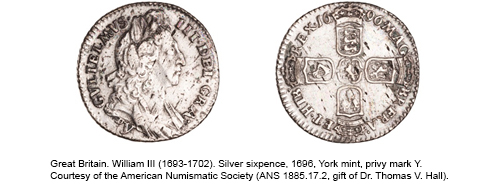
For Newtonmas this year, I’ve been pondering another aspect of Newton’s life. There’s a story you might have heard that physicists can do basically anything, with many people going from a career in physics to a job in a variety of other industries. It’s something I’ve been trying to make happen for myself. In a sense, this story goes back to the very beginning, when Newton quit his academic job to work at the Royal Mint.

On the surface, there are a lot of parallels. At the Mint, a big part of Newton’s job was to combat counterfeiting and “clipping”, where people would carve small bits of silver off of coins. This is absolutely a type of job ex-physicists do today, at least in broad strokes. Working as Data Scientists for financial institutions, people look for patterns in transactions that give evidence of fraud.

Digging deeper, though, the analogy falls apart a bit. Newton didn’t apply any cunning statistical techniques to hunt down counterfeiters. Instead, the stories that get told about his work there are basically detective stories. He hung out in bars to catch counterfeiter gossip and interviewed counterfeiters in prison, not exactly the kind of thing you’d hire a physicist to do these days. The rest of the role was administrative: setting up new mint locations and getting people to work overtime to replace the country’s currency. Newton’s role at the mint was less like an ex-physicist going into Data Science and more like Steven Chu as Secretary of Energy: someone with a prestigious academic career appointed to a prestigious government role.

If you’re looking for a patron saint of physicists who went to industry, Newton’s contemporary Robert Hooke may be a better bet. Unlike many other scientists of the era, Hooke wasn’t independently wealthy, and for a while he was kept quite busy working for the Royal Society. But a bit later he had another, larger source of income: working as a surveyor and architect, where he designed several of London’s iconic buildings. While Newton’s work at the Mint drew on his experience as a person of power and influence, working as an architect drew much more on skills directly linked to Hooke’s work as a scientist: understanding the interplay of forces in quantitative detail.

While Newton and Hooke’s time was an era of polymaths, in some sense the breadth of skills imparted by a physics education has grown. Physicists learn statistics (which barely existed in Newton’s time) programming (which did not exist at all) and a wider range of mathematical and physical models. Having a physics background isn’t the ideal way to go into industry (that would be having an industry background). But for those of us making the jump, it’s still a Newtonmas gift to be grateful for.

Which String Theorists Are You Complaining About?

Do string theorists have an unfair advantage? Do they have an easier time getting hired, for example?

In one of the perennial arguments about this on Twitter, Martin Bauer posted a bar chart of faculty hires in the US by sub-field. The chart was compiled by Erich Poppitz from data in the US particle physics rumor mill, a website where people post information about who gets hired where for the US’s quite small number of permanent theoretical particle physics positions at research universities and national labs. The data covers 1994 to 2017, and shows one year, 1999, when there were more string theorists hired than all other topics put together. The years around then also had many string theorists hired, but the proportion starts falling around the mid 2000’s…around when Lee Smolin wrote a book, The Trouble With Physics, arguing that string theorists had strong-armed their way into academic dominance. After that, the percentage of string theorists falls, oscillating between a tenth and a quarter of total hires.

Judging from that, you get the feeling that string theory’s critics are treating a temporary hiring fad as if it was a permanent fact. The late 1990’s were a time of high-profile developments in string theory that excited a lot of people. Later, other hiring fads dominated, often driven by experiments: I remember when the US decided to prioritize neutrino experiments and neutrino theorists had a much easier time getting hired, and there seem to be similar pushes now with gravitational waves, quantum computing, and AI.

Thinking about the situation in this way, though, ignores what many of the critics have in mind. That’s because the “string” column on that bar chart is not necessarily what people think of when they think of string theory.

If you look at the categories on Poppitz’s bar chart, you’ll notice something odd. “String” its itself a category. Another category, “lattice”, refers to lattice QCD, a method to find the dynamics of quarks numerically. The third category, though, is a combination of three things “ph/th/cosm”.

“Cosm” here refers to cosmology, another sub-field. “Ph” and “th” though aren’t really sub-fields. Instead, they’re arXiv categories, sections of the website arXiv.org where physicists post papers before they submit them to journals. The “ph” category is used for phenomenology, the type of theoretical physics where people try to propose models of the real world and make testable predictions. The “th” category is for “formal theory”, papers where theoretical physicists study the kinds of theories they use in more generality and develop new calculation methods, with insights that over time filter into “ph” work.

“String”, on the other hand, is not an arXiv category. When string theorists write papers, they’ll put them into “th” or “ph” or another relevant category (for example “gr-qc”, for general relativity and quantum cosmology). This means that when Poppitz distinguishes “ph/th/cosm” from “string”, he’s being subjective, using his own judgement to decide who counts as a string theorist.

So who counts as a string theorist? The simplest thing to do would be to check if their work uses strings. Failing that, they could use other tools of string theory and its close relatives, like Calabi-Yau manifolds, M-branes, and holography.

That might be what Poppitz was doing, but if he was, he was probably missing a lot of the people critics of string theory complain about. He even misses many people who describe themselves as string theorists. In an old post of mine I go through the talks at Strings, string theory’s big yearly conference, giving them finer-grained categories. The majority don’t use anything uniquely stringy.

Instead, I think critics of string theory have two kinds of things in mind.

First, most of the people who made their reputations on string theory are still in academia, and still widely respected. Some of them still work on string theory topics, but many now work on other things. Because they’re still widely respected, their interests have a substantial influence on the field. When one of them starts looking at connections between theories of two-dimensional materials, you get a whole afternoon of talks at Strings about theories of two-dimensional materials. Working on those topics probably makes it a bit easier to get a job, but also, many of the people working on them are students of these highly respected people, who just because of that have an easier time getting a job. If you’re a critic of string theory who thinks the founders of the field led physics astray, then you probably think they’re still leading physics astray even if they aren’t currently working on string theory.

Second, for many other people in physics, string theorists are their colleagues and friends. They’ll make fun of trends that seem overhyped and under-thought, like research on the black hole information paradox or the swampland, or hopes that a slightly tweaked version of supersymmetry will show up soon at the LHC. But they’ll happily use ideas developed in string theory when they prove handy, using supersymmetric theories to test new calculation techniques, string theory’s extra dimensions to inspire and ground new ideas for dark matter, or the math of strings themselves as interesting shortcuts to particle physics calculations. String theory is available as reference to these people in a way that other quantum gravity proposals aren’t. That’s partly due to familiarity and shared language (I remember a talk at Perimeter where string theorists wanted to learn from practitioners from another area and the discussion got bogged down by how they were using the word “dimension”), but partly due to skepticism of the various alternate approaches. Most people have some idea in their heads of deep problems with various proposals: screwing up relativity, making nonsense out of quantum mechanics, or over-interpreting on limited evidence. The most commonly believed criticisms are usually wrong, with objections long-known to practitioners of the alternate approaches, and so those people tend to think they’re being treated unfairly. But the wrong criticisms are often simplified versions of correct criticisms, passed down by the few people who dig deeply into these topics, criticisms that the alternative approaches don’t have good answers to.

The end result is that while string theory itself isn’t dominant, a sort of “string friendliness” is. Most of the jobs aren’t going to string theorists in the literal sense. But the academic world string theorists created keeps turning. People still respect string theorists and the research directions they find interesting, and people are still happy to collaborate and discuss with string theorists. For research communities people are more skeptical of, it must feel very isolating, like the world is still being run by their opponents. But this isn’t the kind of hegemony that can be solved by a revolution. Thinking that string theory is a failed research program, and people focused on it should have a harder time getting hired, is one thing. Thinking that everyone who respects at least one former string theorist should have a harder time getting hired is a very different goal. And if what you’re complaining about is “string friendliness”, not actual string theorists, then that’s what you’re asking for.

The “That’s Neat” Level

Everything we do, we do for someone.

The simplest things we do for ourselves. We grab that chocolate bar on the table and eat it, and it makes us happier.

Unless the chocolate bar is homemade, we probably paid money for it. We do other things, working for a living, to get the money to get those chocolate bars for ourselves.

(We also get chocolate bars for our loved ones, or for people we care about. Whether this is not in a sense also getting a chocolate bar for yourself is left as an exercise to the reader.)

What we do for the money, in turn, is driven by what would make someone else happier. Sometimes this is direct: you cut someone’s hair, they enjoy the breeze, they pay you, you enjoy the chocolate.

Other times, this gets mediated. You work in HR at a haircut chain. The shareholders want more money, to buy things like chocolate bars, so they vote for a board who wants to do what the shareholders want so as not to be in breach of contract and get fewer chocolate bars, so the board tells you to do things they believe will achieve that, and you do them because that’s how you get your chocolate bars. Every so often, the shareholders take a look at how many chocolate bars they can afford and adjust.

Compared to all this, academia is weirdly un-mediated.

It gets the closest to this model with students. Students want to learn certain things because they will allow them to provide other people with better services in future, which they can use to buy chocolate bars, and other things for the sheer pleasure, a neat experience almost comparable to a chocolate bar. People running universities want more money from students so they can spend it on things like giant statues of chocolate bars, so they instruct people working in the university to teach more of the things students want. (Typically in a very indirect way, for example funding a department in the US based on number of majors rather than number of students.)

But there’s a big chunk of academics whose performance is mostly judged not by their teaching, but by their research. They are paid salaries by departments based on the past quality of their research, or paid out of grants awarded based on the expected future quality of their research. (Or to combine them, paid salaries by departments based on the expected size of their grants.)

And in principle, that introduces many layers of mediation. The research universities and grant agencies are funded by governments, which pool money together in the expectation that someday by doing so they will bring about a world where more people can eat chocolate bars.

But the potential to bring about a world of increased chocolate bars isn’t like maximizing shareholder value. Nobody can check, one year later, how much closer you are to the science-fueled chocolate bar utopia.

And so in practice, in science, people fund you because they think what you’re doing is neat. Because it scratches the chocolate-bar-shaped hole in their brains. They might have some narrative about how your work could lead to the chocolate bar utopia the government is asking for, but it’s not like they’re calculating the expected distribution of chocolate bars if they fund your project versus another. You have to convince a human being, not that you are doing something instrumentally and measurably useful…but that you are doing something cool.

And that makes us very weird people! Halfway between haircuts and HR, selling a chocolate bar that promises to be something more.

Lack of Recognition Is a Symptom, Not a Cause

Science is all about being first. Once a discovery has been made, discovering the same thing again is redundant. At best, you can improve the statistical evidence…but for a theorem or a concept, you don’t even have that. This is why we make such a big deal about priority: the first person to discover something did something very valuable. The second, no matter how much effort and insight went into their work, did not.

Because priority matters, for every big scientific discovery there is a priority dispute. Read about science’s greatest hits, and you’ll find people who were left in the wings despite their accomplishments, people who arguably found key ideas and key discoveries earlier than the people who ended up famous. That’s why the idea Peter Higgs is best known for, the Higgs mechanism,

“is therefore also called the Brout–Englert–Higgs mechanism, or Englert–Brout–Higgs–Guralnik–Hagen–Kibble mechanism, Anderson–Higgs mechanism,Anderson–Higgs–Kibble mechanism, Higgs–Kibble mechanism by Abdus Salam and ABEGHHK’tH mechanism (for Anderson, Brout, Englert, Guralnik, Hagen, Higgs, Kibble, and ‘t Hooft) by Peter Higgs.”

Those who don’t get the fame don’t get the rewards. The scientists who get less recognition than they deserve get fewer grants and worse positions, losing out on the career outcomes that the person famous for the discovery gets, even if the less-recognized scientist made the discovery first.

…at least, that’s the usual story.

You can start to see the problem when you notice a contradiction: if a discovery has already been made, what would bring someone to re-make it?

Sometimes, people actually “steal” discoveries, finding something that isn’t widely known and re-publishing it without acknowledging the author. More often, though, the re-discoverer genuinely didn’t know. That’s because, in the real world, we don’t all know about a discovery as soon as it’s made. It has to be communicated.

At minimum, this means you need enough time to finish ironing out the kinks of your idea, write up a paper, and disseminate it. In the days before the internet, dissemination might involve mailing pre-prints to universities across the ocean. It’s relatively easy, in such a world, for two people to get started discovering the same thing, write it up, and even publish it before they learn about the other person’s work.

Sometimes, though, something gets rediscovered long after the original paper should have been available. In those cases, the problem isn’t time, it’s reach. Maybe the original paper was written in a way that hid its implications. Maybe it was published in a way only accessible to a smaller community: either a smaller part of the world, like papers that were only available to researchers in the USSR, or a smaller research community. Maybe the time hadn’t come yet, and the whole reason why the result mattered had yet to really materialize.

For a result like that, a lack of citations isn’t really the problem. Rather than someone who struggles because their work is overlooked, these are people whose work is overlooked, in a sense, because they are struggling: because their work is having a smaller impact on the work of others. Acknowledging them later can do something, but it can’t change the fact that this was work published for a smaller community, yielding smaller rewards.

And ultimately, it isn’t just priority we care about, but impact. While the first European to make contact with the New World might have been Erik the Red, we don’t call the massive exchange of plants and animals between the Old and New World the “Red Exchange”. Erik the Red being “first” matters much less, historically speaking, than Columbus changing the world. Similarly, in science, being the first to discover something is meaningless if that discovery doesn’t change how other people do science, and the person who manages to cause that change is much more valuable than someone who does the same work but doesn’t manage the same reach.

Am I claiming that it’s fair when scientists get famous for other peoples’ discoveries? No, it’s definitely not fair. It’s not fair because most of the reasons one might have lesser reach aren’t under one’s control. Soviet scientists (for the most part) didn’t choose to be based in the USSR. People who make discoveries before they become relevant don’t choose the time in which they were born. And while you can get better at self-promotion with practice, there’s a limited extent to which often-reclusive scientists should be blamed for their lack of social skills.

What I am claiming is that addressing this isn’t a matter of scrupulously citing the “original” discoverer after the fact. That’s a patch, and a weak one. If we want to get science closer to the ideal, where each discovery only has to be made once, then we need to work to increase reach for everyone. That means finding ways to speed up publication, to let people quickly communicate preliminary ideas with a wide audience and change the incentives so people aren’t penalized when others take up those ideas. It means enabling conversations between different fields and sub-fields, building shared vocabulary and opportunities for dialogue. It means making a community that rewards in-person hand-shaking less and careful online documentation more, so that recognition isn’t limited to the people with the money to go to conferences and the social skills to schmooze their way through them. It means anonymity when possible, and openness when we can get away with it.

Lack of recognition and redundant effort are both bad, and they both stem from the same failures to communicate. Instead of fighting about who deserves fame, we should work to make sure that science is truly global and truly universal. We can aim for a future where no-one’s contribution goes unrecognized, and where anything that is known to one is known to all.

The Bystander Effect for Reviewers

I probably came off last week as a bit of an extreme “journal abolitionist”. This week, I wanted to give a couple caveats.

First, as a commenter pointed out, the main journals we use in my field are run by nonprofits. Physical Review Letters, the journal where we publish five-page papers about flashy results, is run by the American Physical Society. The Journal of High-Energy Physics, where we publish almost everything else, is run by SISSA, the International School for Advanced Studies in Trieste. (SISSA does use Springer, a regular for-profit publisher, to do the actual publishing.)

The journals are also funded collectively, something I pointed out here before but might not have been obvious to readers of last week’s post. There is an agreement, SCOAP3, where research institutions band together to pay the journals. Authors don’t have to pay to publish, and individual libraries don’t have to pay for subscriptions.

And this is a lot better than the situation in other fields, yeah! Though I’d love to quantify how much. I haven’t been able to find a detailed breakdown, but SCOAP3 pays around 1200 EUR per article published. What I’d like to do (but not this week) is to compare this to what other fields pay, as well as to publishing that doesn’t have the same sort of trapped audience, and to online-only free journals like SciPost. (For example, publishing actual physical copies of journals at this point is sort of a vanity thing, so maybe we should compare costs to vanity publishers?)

Second, there’s reviewing itself. Even without traditional journals, one might still want to keep peer review.

What I wanted to understand last week was what peer review does right now, in my field. We read papers fresh off the arXiv, before they’ve gone through peer review. Authors aren’t forced to update the arXiv with the journal version of their paper, if they want another version, even if that version was rejected by the reviewers, then they’re free to do so, and most of us wouldn’t notice. And the sort of in-depth review that happens in peer review also happens without it. When we have journal clubs and nominate someone to present a recent paper, or when we try to build on a result or figure out why it contradicts something we thought we knew, we go through the same kind of in-depth reading that (in the best cases) reviewers do.

But I think I’ve hit upon something review does that those kinds of informal things don’t. It gets us to speak up about it.

I presented at a journal club recently. I read through a bombastic new paper, figured out what I thought was wrong with it, and explained it to my colleagues.

But did I reach out to the author? No, of course not, that would be weird.

Psychologists talk about the bystander effect. If someone collapses on the street, and you’re the only person nearby, you’ll help. If you’re one of many, you’ll wait and see if someone else helps instead.

I think there’s a bystander effect for correcting people. If someone makes a mistake and publishes something wrong, we’ll gripe about it to each other. But typically, we won’t feel like it’s our place to tell the author. We might get into a frustrating argument, there wouldn’t be much in it for us, and it might hurt our reputation if the author is well-liked.

(People do speak up when they have something to gain, of course. That’s why when you write a paper, most of the people emailing you won’t be criticizing the science: they’ll be telling you you need to cite them.)

Peer review changes the expectations. Suddenly, you’re expected to criticize, it’s your social role. And you’re typically anonymous, you don’t have to worry about the consequences. It becomes a lot easier to say what you really think.

(It also becomes quite easy to say lazy stupid things, of course. This is why I like setups like SciPost, where reviews are made public even when the reviewers are anonymous. It encourages people to put some effort in, and it means that others can see that a paper was rejected for bad reasons and put less stock in the rejection.)

I think any new structure we put in place should keep this feature. We need to preserve some way to designate someone a critic, to give someone a social role that lets them let loose and explain why someone else is wrong. And having these designated critics around does help my field. The good criticisms get implemented in the papers, the authors put the new versions up on arXiv. Reviewing papers for journals does make our science better…even if none of us read the journal itself.

Why Journals Are Sticky

An older professor in my field has a quirk: every time he organizes a conference, he publishes all the talks in a conference proceeding.

In some fields, this would be quite normal. In computer science, where progress flows like a torrent, new developments are announced at conferences long before they have the time to be written up carefully as a published paper. Conference proceedings are summaries of what was presented at the conference, published so that anyone can catch up on the new developments.

In my field, this is rarer. A few results at each conference will be genuinely new, never-before-published discoveries. Most, though, are talks on older results, results already available online. Writing them up again in summarized form as a conference proceeding seems like a massive waste of time.

The cynical explanation is that this professor is doing this for the citations. Each conference proceeding one of his students publishes is another publication on their CV, another work that they can demand people cite whenever someone uses their ideas or software, something that puts them above others’ students without actually doing any extra scientific work.

I don’t think that’s how this professor thinks about it, though. He certainly cares about his students’ careers, and will fight for them to get cited as much as possible. But he asks everyone at the conference to publish a proceeding, not just his students. I think he’d argue that proceedings are helpful, that they can summarize papers in new ways and make them more accessible. And if they give everyone involved a bit more glory, if they let them add new entries to their CV and get fancy books on their shelves, so much the better for everyone.

My guess is, he really believes something like that. And I’m fairly sure he’s wrong.

The occasional conference proceeding helps, but only because it makes us more flexible. Sometimes, it’s important to let others know about a new result that hasn’t been published yet, and we let conference proceedings go into less detail than a full published paper, so this can speed things up. Sometimes, an old result can benefit from a new, clearer explanation, which normally couldn’t be published without it being a new result (or lecture notes). It’s good to have the option of a conference proceeding.

But there is absolutely no reason to have one for every single talk at a conference.

Between the cynical reason and the explicit reason, there’s the banal one. This guy insists on conference proceedings because they were more useful in the past, because they’re useful in other fields, and because he’s been doing them himself for years. He insists on them because to him, they’re a part of what it means to be a responsible scientist.

And people go along with it. Because they don’t want to get into a fight with this guy, certainly. But also because it’s a bit of extra work that could give a bit of a career boost, so what’s the harm?

I think something similar to this is why academic journals still work the way they do.

In the past, journals were the way physicists heard about new discoveries. They would get each edition in the mail, and read up on new developments. The journal needed to pay professional copyeditors and printers, so they needed money, and they got that money from investors by being part of for-profit companies that sold shares.

Now, though, physicists in my field don’t read journals. We publish our new discoveries online on a non-profit website, formatting them ourselves with software that uses the same programming skills we use in the rest of our professional lives. We then discuss the papers in email threads and journal club meetings. When a paper is wrong, or missing something important, we tell the author, and they fix it.

Oh, and then after that we submit the papers to the same for-profit journals and the same review process that we used to use before we did all this, listing the journals that finally accept the papers on our CVs.

Why do we still do that?

Again, you can be cynical. You can accuse the journals of mafia-ish behavior, you can tie things back to the desperate need to publish in high-ranked journals to get hired. But I think the real answer is a bit more innocent, and human, than that.

Imagine that you’re a senior person in the field. You may remember the time before we had all of these nice web-based publishing options, when journals were the best way to hear about new developments. More importantly than that, though, you’ve worked with these journals. You’ve certainly reviewed papers for them, everyone in the field does that, but you may have also served as an editor, tracking down reviewers and handling communication between the authors and the journal. You’ve seen plenty of cases where the journal mattered, where tracking down the right reviewers caught a mistake or shot down a crackpot’s ambitions, where the editing cleaned something up or made a work more appear more professional. You think of the journals as having high standards, standards you have helped to uphold: when choosing between candidates for a job, you notice that one has several papers in Physical Review Letters, and remember papers you’ve rejected for not meeting what you intuited were that journal’s standards. To you, journals are a key part of being a responsible scientist.

Does any of that make journals worth it, though?

Well, that depends on costs. It depends on alternatives. It depends not merely on what the journals catch, but on how often they do it, and how much would have been caught on its own. It depends on whether the high standards you want to apply to job applicants are already being applied by the people who write their recommendation letters and establish their reputations.

And you’re not in a position to evaluate any of that, of course. Few people are, who don’t spend a ton of time thinking about scientific publishing.

And thus, for the non-senior people, there’s not much reason to push back. One hears a few lofty speeches about Elsevier’s profits, and dreams about the end of the big for-profit journals. But most people aren’t cut out to be crusaders or reformers, especially when they signed up to be scientists. Most people are content not to annoy the most respected people in their field by telling them that something they’ve spent an enormous amount of time on is now pointless. Most people want to be seen as helpful by these people, to not slack off on work like reviewing that they argue needs doing.

And most of us have no reason to think we know that much better, anyway. Again, we’re scientists, not scientific publishing experts.

I don’t think it’s good practice to accuse people of cognitive biases. Everyone thinks they have good reasons to believe what they believe, and the only way to convince them is to address those reasons.

But the way we use journals in physics these days is genuinely baffling. It’s hard to explain, it’s the kind of thing people have been looking quizzically at for years. And this kind of explanation is the only one I’ve found that matches what I’ve seen. Between the cynical explanation and the literal arguments, there’s the basic human desire to do what seems like the responsible thing. That tends to explain a lot.