Category Archives: Misc

Poll Results, and What’s Next

I’ll leave last week’s poll up a while longer as more votes trickle in, but the overall pattern (beyond “Zipflike“) is pretty clear.

From pretty early on, most requests were for more explanations of QFT, gravity, and string theory concepts, with amplitudes content a clear second. This is something I can definitely do more of: I haven’t had much inspiration for interesting pieces of this sort recently, but it’s something I can ramp up in future.

I suspect that many of the people voting for more QFT and more amplitudes content were also interested in something else, though: more physics news. Xezlec mentioned that with Résonaances and Of Particular Significance quiet, there’s an open niche for vaguely reasonable people blogging about physics.

The truth is, I didn’t think of adding a “more physics news” option to the poll. I’m not a great source of news: not being a phenomenologist, I don’t keep up with the latest experimental results, and since my sub-field is small and insular I’m not always aware of the latest thing Witten or Maldacena is working on.

For an example of the former: recently, various LHC teams presented results at the Moriond and Aspen conferences, with no new evidence of supersymmetry in the data they’ve gathered thus far. This triggered concessions on several bets about SUSY (including an amusingly awkward conversation about how to pay one of them).

And I only know about that because other bloggers talked about it.

So I’m not going to be a reliable source of physics news.

With that said, knowing there’s a sizable number of people interested in this kind of thing is helpful. I’ve definitely had times when I saw something I found interesting, but wasn’t sure if my audience would care. (For example, recently there’s been some substantial progress on the problem that gave this blog its name.) Now that I know some of you are interested, I’ll err on the side of posting about these kinds of things.

“What’s it like to be a physicist” and science popularization were both consistently third and fourth in the poll, switching back and forth as more votes came in. This tells me that while many of you want more technical content, there are still people interested in pieces aimed to a broader audience, so I won’t abandon those.

The other topics were fairly close together, with the more “news-y” ones (astrophysics/cosmology and criticism of bad science coverage) beating the less “news-y” ones. This also supports my guess that people were looking for a “more physics news” option. A few people even voted for “more arguments”, which was really more of a joke topic: getting into arguments with other bloggers tends to bring in readers, but it’s not something I ever plan to do intentionally.

So, what’s next? I’ll explain more quantum field theory, talk more about interesting progress in amplitudes, and mention news when I come across it, trusting you guys to find it interesting. I’ll keep up with the low-level stuff, and with trying to humanize physics, to get the public to understand what being a physicist is all about. And I’ll think about some of the specific suggestions you gave: I’m always looking for good post ideas.


New Poll: What Would You Like to See More Of?

It’s been a while since I last polled you guys. Back then, I was curious what sorts of backgrounds my readers had. In the end, roughly half of you had some serious background in high-energy physics, while the other half had seen some physics, but not a lot.

This time, I’d like to know what sort of content you want to see. WordPress tells me how well an individual post does, but there isn’t much of a pattern to my best-performing posts beyond the vagaries of whose attention they grab. That’s why I’m asking you what you want to see more of. I’ve split things into vague categories. Feel free to vote for as many as you like, and let me know in the comments if there’s something I missed.

The Way to a Mathematician’s Heart Is through a Pi

Want to win over a mathematician? Bake them a pi.

Of course, presentation counts. You can’t just pour a spew of digits.

1200px-pi_tau_digit_runs-svg

If you have to, at least season it with 9’s

Ideally, you’ve baked your pi at home, in a comfortable physical theory. You lay out a graph to give it structure, then wrap it in algebraic curves before baking under an integration.

(Sometimes you can skip this part. My mathematician will happily eat graphs and ignore the pi.)

At this point, if your motives are pure (or at least mixed Tate), you have your pi. To make it more interesting, be sure to pair with a well-aged Riemann zeta value. With the right preparation, you can achieve a truly cosmic pi.

whirled-pies-54

Fine, that last joke was a bit of a stretch. Hope you had a fun pi day!

Valentine’s Day Physics Poem 2017

It’s that time of year again! Valentine’s Day was this week, so to continue this blog’s tradition it’s time for me to post one of my physics poems. I wrote this back before I fully understood quantum field theory, so you’ll have to excuse any inaccuracies in the metaphor (at least on the physics side 😉 ).


Perturbation Theory II – Going in Loops


In order to interact, two particles must collide.

But a particle is a small thing, moving in its own circles, covering little space in its lonely life.

So we will never interact.


But particles emit bosons,

Tiny messengers of force,

Tendrils of interaction.

When these find us,

As they sometimes do,

We can interact.


But a boson is a small thing, moving in its own circles, covering little space in its lonely life.

So we will never interact.


But each boson has its own retinue,

Particles and their bosons in turn,

Spawned from its self-energy, uncertainty in its own nature,

Each, unobserved, with infinite possibilities.


And to compensate for these infinities

The charged nature of our naked selves

Must in turn be infinitely repressed.


So perhaps interaction would still be understandable

For those with simple repressions,

Matching constraints.


But we are not such people.

Complicated beings, we spin and twirl.

We hide our charge behind an infinity of possible terms,

So we can never know

If we will interact.


But perhaps we are not simply isolated points.

Perhaps we have extension,

Dimension,

Reach, beyond the confines of zero-dimensional selves.

And with that reach

Perhaps we can understand.

Perhaps

We can interact.

PSI Winter School 2017

It’s that time of year again! Perimeter Scholars International, Perimeter’s Master’s program in theoretical physics, is holding its Winter School up in Ontario’s copious backwoods.

img_20170125_161426

Ominous antlered snowmen included

Like last year, the students are spending mornings and evenings doing research supervised by PI grad students, postdocs, and faculty, and the afternoons on a variety of winter activities, including skiing and snowshoeing.

Last year, my group worked on the “POPE”, a proposal by Basso, Sever, and Vieira, and we ended up getting a paper out of it. This year, I’ve teamed up with Freddy Cachazo on a gravity-related project. We’ve got a group of enthusiastic students and are making decent progress, I’ll have more to say about it next week.

Have You Given Your Kids “The Talk”?

If you haven’t seen it yet, I recommend reading this delightful collaboration between Scott Aaronson (of Shtetl-Optimized) and Zach Weinersmith (of Saturday Morning Breakfast Cereal). As explanations of a concept beyond the standard popular accounts go, this one is pretty high quality, correcting some common misconceptions about quantum computing.

I especially liked the following exchange:

ontology

I’ve complained before about people trying to apply ontology to physics, and I think this gets at the root of one of my objections.

People tend to think that the world should be describable with words. From that perspective, mathematics is just a particular tool, a system we’ve created. If you look at the world in that way, mathematics looks unreasonably effective: it’s ability to describe the real world seems like a miraculous coincidence.

Mathematics isn’t just one tool though, or just one system. It’s all of them: not just numbers and equations, but knots and logic and everything else. Deep down, mathematics is just a collection of all the ways we’ve found to state things precisely.

Because of that, it shouldn’t surprise you that we “put complex numbers in our ontologies”. Complex numbers are just one way we’ve found to make precise statements about the world, one that comes in handy when talking about quantum mechanics. There doesn’t need to be a “correct” description in words: the math is already stating things as precisely as we know how.

That doesn’t mean that ontology is a useless project. It’s worthwhile to develop new ways of talking about things. I can understand the goal of building up a philosophical language powerful enough to describe the world in terms of words, and if such a language was successful it might well inspire us to ask new scientific questions.

But it’s crucial to remember that there’s real work to be done there. There’s no guarantee that the project will work, that words will end up sufficient. When you put aside our best tools to make precise statements, you’re handicapping yourself, making the problem harder than it needed to be. It’s your responsibility to make sure you’re getting something worthwhile out of it.

arXiv vs. snarXiv: Can You Tell the Difference?

Have you ever played arXiv vs snarXiv?

arXiv is a preprint repository: it’s where we physicists put our papers before they’re published to journals.

snarXiv is…well..sound it out.

A creation of David Simmons-Duffin, snarXiv randomly generates titles and abstracts out of trendy arXiv buzzwords. It’s designed so that the papers on it look almost plausible…until you take a closer look, anyway.

Hence the game, arXiv vs snarXiv. Given just the titles of two papers, can you figure out which one is real, and which is fake?

I played arXiv vs snarXiv for a bit today, waiting for some code to run. Out of twenty questions, I only got two wrong.

Sometimes, it was fairly clear which paper was fake because snarXiv overreached. By trying to pile on too many buzzwords, it ended up with a title that repeated itself, or didn’t quite work grammatically.

Other times, I had to use some actual physics knowledge. Usually, this meant noticing when a title tied together unrelated areas in an implausible way. When a title claims to tie obscure mathematical concepts from string theory to a concrete problem in astronomy, it’s pretty clearly snarXiv talking.

The toughest questions, including the ones I got wrong, were when snarXiv went for something subtle. For short enough titles, the telltale signs of snarXiv were suppressed. There just weren’t enough buzzwords for a mistake to show up. I’m not sure there’s a way to distinguish titles like that, even for people in the relevant sub-field.

How well do you do at arXiv vs snarXiv? Any tips?

Congratulations to Thouless, Haldane, and Kosterlitz!

I’m traveling this week in sunny California, so I don’t have time for a long post, but I thought I should mention that the 2016 Nobel Prize in Physics has been announced. Instead of going to LIGO, as many had expected, it went to David Thouless, Duncan Haldane, and Michael Kosterlitz. LIGO will have to wait for next year.

Thouless, Haldane, and Kosterlitz are condensed matter theorists. While particle physics studies the world at the smallest scales and astrophysics at the largest, condensed matter physics lives in between, explaining the properties of materials on an everyday scale. This can involve inventing new materials, or unusual states of matter, with superconductors being probably the most well-known to the public. Condensed matter gets a lot less press than particle physics, but it’s a much bigger field: overall, the majority of physicists study something under the condensed matter umbrella.

This year’s Nobel isn’t for a single discovery. Rather, it’s for methods developed over the years that introduced topology into condensed matter physics.

Topology often gets described in terms of coffee cups and donuts. In topology, two shapes are the same if you can smoothly change one into another, so a coffee cup and a donut are really the same shape.

mug_and_torus_morphMost explanations stop there, which makes it hard to see how topology could be useful for physics. The missing part is that topology studies not just which shapes can smoothly change into each other, but which things, in general, can change smoothly into each other.

That’s important, because in physics most changes are smooth. If two things can’t change smoothly into each other, something special needs to happen to bridge the gap between them.

There are a lot of different sorts of implications this can have. Topology means that some materials can be described by a number that’s conserved no matter what (smooth) changes occur, leading to experiments that see specific “levels” rather than a continuous range of outcomes. It means that certain physical setups can’t change smoothly into other ones, which protects those setups from changing: an idea people are investigating in the quest to build a quantum computer, where extremely delicate quantum states can be disrupted by even the slightest change.

Overall, topology has been enormously important in physics, and Thouless, Haldane, and Kosterlitz deserve a significant chunk of the credit for bringing it into the spotlight.

The (but I’m Not a) Crackpot Style Guide

Ok, ok, I believe you. You’re not a crackpot. You’re just an outsider, one with a brilliant new idea that would overturn the accepted paradigms of physics, if only someone would just listen.

Here’s the problem: you’re not alone. There are plenty of actual crackpots. We get contacted by them fairly regularly. And most of the time, they’re frustrating and unpleasant to deal with.

If you want physicists to listen to you, you need to show us you’re not one of those people. Otherwise, most of us won’t bother.

I can’t give you a foolproof way to do that. But I can give some suggestions that will hopefully make the process a little less frustrating for everyone involved.

Don’t spam:

Nobody likes spam. Nobody reads spam. If you send a mass email to every physicist whose email address you can find, none of them will read it. If you repeatedly post the same thing in a comment thread, nobody will read it. If you want people to listen to you, you have to show that you care about what they have to say, and in order to do that you have to tailor your message. This leads in to the next point,

Ask the right people:

Before you start reaching out, you should try to get an idea of who to talk to. Physics is quite specialized, so if you’re taking your ideas seriously you should try to contact people with a relevant specialization.

Now, I know what you’re thinking: your ideas are unique, no-one in physics is working on anything similar.

Here, it’s important to distinguish the problem you’re trying to solve with how you’re trying to solve it. Chances are, no-one else is working on your specific idea…but plenty of people are interested in the same problems.

Think quantum mechanics is built on shoddy assumptions? There are people who spend their lives trying to modify quantum mechanics. Have a beef against general relativity? There’s a whole sub-field of people who modify gravity.

These people are a valuable resource for you, because they know what doesn’t work. They’ve been trying to change the system, and they know just how hard it is to change, and just what evidence you need to be consistent with.

Contacting someone whose work just uses quantum mechanics or relativity won’t work. If you’re making elementary mistakes, we can put you on the right track…but if you think you’re making elementary mistakes, you should start out by asking help from a forum or the like, not contacting a professional. If you think you’ve really got a viable replacement to an established idea, you need to contact people who work on overturning established ideas, since they’re most aware of the complicated webs of implications involved. Relatedly,

Take ownership of your work:

I don’t know how many times someone has “corrected” something in the comments, and several posts later admitted that the “correction” comes from their own theory. If you’re arguing from your own work, own it! If you don’t, people will assume you’re trying to argue from an established theory, and are just confused about how that theory works. This is a special case of a broader principle,

Epistemic humility:

I’m not saying you need to be humble in general, but if you want to talk productively you need to be epistemically humble. That means being clear about why you know what you know. Did you get it from a mathematical proof? A philosophical argument? Reading pop science pieces? Something you remember from high school? Being clear about your sources makes it easier for people to figure out where you’re coming from, and avoids putting your foot in your mouth if it turns out your source is incomplete.

Context is crucial:

If you’re commenting on a blog like this one, pay attention to context. Your comment needs to be relevant enough that people won’t parse it as spam.

If all a post does is mention something like string theory, crowing about how your theory is a better explanation for quantum gravity isn’t relevant. Ditto for if all it does is mention a scientific concept that you think is mistaken.

What if the post is promoting something that you’ve found to be incorrect, though? What if someone is wrong on the internet?

In that case, it’s important to keep in mind the above principles. A popularization piece will usually try to present the establishment view, and merits a different response than a scientific piece arguing something new. In both cases, own your own ideas and be specific about how you know what you know. Be clear on whether you’re talking about something that’s controversial, or something that’s broadly agreed on.

You can get an idea of what works and what doesn’t by looking at comments on this blog. When I post about dark matter, or cosmic inflation, there are people who object, and the best ones are straightforward about why. Rather than opening with “you’re wrong”, they point out which ideas are controversial. They’re specific about whose ideas they’re referencing, and are clear about what is pedagogy and what is science.

Those comments tend to get much better responses than the ones that begin with cryptic condemnations, follow with links, and make absolute statements without backing them up.

On the internet, it’s easy for misunderstandings to devolve into arguments. Want to avoid that? Be direct, be clear, be relevant.

Book Review: The Invention of Science

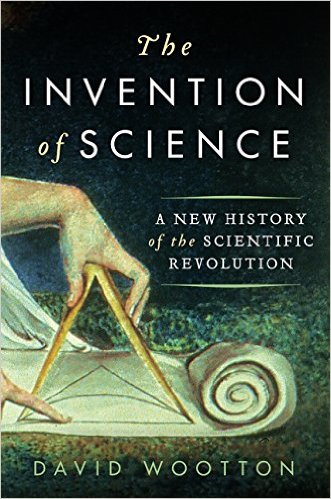
I don’t get a lot of time to read for pleasure these days. When I do, it’s usually fiction. But I’ve always had a weakness for stories from the dawn of science, and David Wootton’s The Invention of Science: A New History of the Scientific Revolution certainly fit the bill.

517hucfpasl-_sx329_bo1204203200_

Wootton’s book is a rambling tour of the early history of science, from Brahe’s nova in 1572 to Newton’s Optics in 1704. Tying everything together is one clear, central argument: that the scientific revolution involved, not just a new understanding of the world, but the creation of new conceptual tools. In other words, the invention of science itself.

Wootton argues this, for the most part, by tracing changes in language. Several chapters have a common structure: Wootton identifies a word, like evidence or hypothesis, that has an important role in how we talk about science. He then tracks that word back to its antecedents, showing how early scientists borrowed and coined the words they needed to describe the new type of reasoning they had pioneered.

Some of the most compelling examples come early on. Wootton points out that the word “discover” only became common in European languages after Columbus’s discovery of the new world: first in Portugese, then later in the rest of Europe. Before then, the closest term meant something more like “find out”, and was ambiguous: it could refer to finding something that was already known to others. Thus, early writers had to use wordy circumlocutions like “found out that which was not known before” to refer to genuine discovery.

The book covers the emergence of new social conventions in a similar way. For example, I was surprised to learn that the first recorded priority disputes were in the sixteenth century. Before then, discoveries weren’t even typically named for their discoverers: “the Pythagorean theorem”, oddly enough, is a name that wasn’t used until after the scientific revolution was underway. Beginning with explorers arguing over the discovery of the new world and anatomists negotiating priority for identifying the bones of the ear or the “discovery” of the clitoris, the competitive element of science began to come into its own.

Along the way, Wootton highlights episodes both familiar and obscure. You’ll find Bruno and Torricelli, yes, but also disputes over whether the seas are higher than the land or whether a weapon could cure wounds it caused via the power of magnetism. For anyone as fascinated by the emergence of science as I am, it’s a joyous wealth of detail.

If I had one complaint, it would be that for a lay reader far too much of Wootton’s book is taken up by disputes with other historians. His particular foes are relativists, though he spares some paragraphs to attack realists too. Overall, his dismissals of his opponents are so pat, and his descriptions of their views so self-evidently silly, that I can’t help but suspect that he’s not presenting them fairly. Even if he is, the discussion is rather inside baseball for a non-historian like me.

I read part of Newton’s Principia in college, and I was hoping for a more thorough discussion of Newton’s role. While he does show up, Wootton seems to view Newton as a bit of an enigma: someone who insisted on using the old language of geometric proofs while clearly mastering the new science of evidence and experiment. In this book, Newton is very much a capstone, not a focus.

Overall, The Invention of Science is a great way to learn about the twists and turns of the scientific revolution. If you set aside the inter-historian squabbling (or if you like that sort of thing) you’ll find a book brim full of anecdotes from the dawn of modern thought, and a compelling argument that what we do as scientists is neither an accident of culture nor obvious common-sense, but a hard-won invention whose rewards we are still reaping today.