Monthly Archives: January 2017

PSI Winter School 2017

It’s that time of year again! Perimeter Scholars International, Perimeter’s Master’s program in theoretical physics, is holding its Winter School up in Ontario’s copious backwoods.

img_20170125_161426

Ominous antlered snowmen included

Like last year, the students are spending mornings and evenings doing research supervised by PI grad students, postdocs, and faculty, and the afternoons on a variety of winter activities, including skiing and snowshoeing.

Last year, my group worked on the “POPE”, a proposal by Basso, Sever, and Vieira, and we ended up getting a paper out of it. This year, I’ve teamed up with Freddy Cachazo on a gravity-related project. We’ve got a group of enthusiastic students and are making decent progress, I’ll have more to say about it next week.

Digging up Variations

The best parts of physics research are when I get a chance to push out into the unknown, doing calculations no-one has done before. Sometimes, though, research is more…archeological.

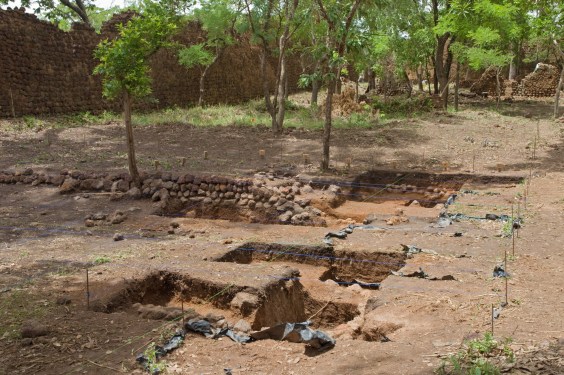
2016-05-441-134ap_archeologyexcavation_loropc3a9ni_ruins_nr-loropc3a9niponi_prv-bf_sun15may2016-1119h

Pictured: not what I signed up for

Recently, I’ve been digging through a tangle of papers, each of which calculates roughly the same thing in a slightly different way. Like any good archeologist, I need to figure out not just what the authors of these papers were doing, but also why.

(As a physicist, why do I care about “why”? In this case, it’s because I want to know which of the authors’ choices are worth building on. If I can figure out why they made the choices they did, I can decide whether I share their motivations, and thus which aspects of their calculations are useful for mine.)

My first guess at “why” was a deeply cynical one. Why would someone publish slight variations on an old calculation? To get more publications!

This is a real problem in science. In certain countries in particular, promotions and tenure are based not on honestly assessing someone’s work but on quick and dirty calculations based on how many papers they’ve published. This motivates scientists to do the smallest amount possible in order to get a paper out.

That wasn’t what was happening in these papers, though. None of the authors lived in those kinds of countries, and most were pretty well established people: not the sort who worry about keeping up with publications.

So I put aside my cynical first-guess, and actually looked at the papers. Doing that, I found a more optimistic explanation.

These authors were in the process of building research programs. Each had their own long-term goal, a set of concepts and methods they were building towards. And each stopped along the way, to do another variation on this well-trod calculation. They weren’t doing this just because they needed a paper, or just because they could. They were trying to sift out insights, to debug their nascent research program in a well-understood case.

Thinking about it this way helped untwist the tangle of papers. The confusion of different choices suddenly made sense, as the result of different programs with different goals. And in turn, understanding which goals contributed to which papers helped me sort out which goals I shared, and which ideas would turn out to be helpful.

Would it have been less confusing if some of these people had sat on their calculations, and not published? Maybe at first. But in the end, the variations help, giving me a clearer understanding of the whole.

Next Year in Copenhagen!

As some of you might be aware, this is my last year at the Perimeter Institute. It’s been great, but the contract was only for three years, and come August I’ll be heading elsewhere.

Determining that “elsewhere” was the subject of an extensive job search. Now that the search has resolved, I can tell you that “elsewhere” is the Niels Bohr International Academy at the Niels Bohr Institute in Copenhagen, where I’ll be starting a three-year postdoc job in the fall.

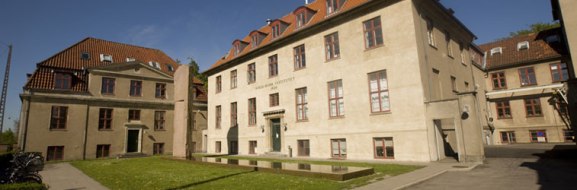
blegdamsvej_forside

Probably in the building on the left

There are some pretty stellar amplitudes people at NBIA, so I’m pretty excited to be going there. It’s going to be a great opportunity to both build on what I’ve been doing and expand beyond. They’re also hiring several other amplitudes-focused postdocs this year, so overall it should be a really fun group.

It’s also a bit daunting. Moving to Canada from the US was reasonably smooth, I could drive most of my things over in a U-Haul truck. Moving to Denmark is going to be quite a bit more complicated. I’ll need to learn a new language and get used to a fairly different culture.

I can take solace in the fact that in some sense I’m retracing my great-grandfather’s journey in the opposite direction. My great-grandfather worked at the Niels Bohr Institute on his way out of Europe in the 1930’s, and made friends with the Bohrs along the way, before coming to the US. I’ll get a chance to explore a piece of family history, and likely collaborate with a Bohr as well.

Popularization as News, Popularization as Signpost

Lubos Motl has responded to my post from last week about the recent Caltech short, Quantum is Calling. His response is pretty much exactly what you’d expect, including the cameos by Salma Hayek and Kaley Cuoco.

The only surprise was his lack of concern for accuracy. Quantum is Calling got the conjecture it was trying to popularize almost precisely backwards. I was expecting that to bother him, at least a little.

Should it bother you?

That depends on what you think Quantum is Calling is trying to do.

Science popularization, even good science popularization, tends to get things wrong. Some of that is inevitable, a result of translating complex concepts to a wider audience.

Sometimes, though, you can’t really chalk it up to translation. Interstellar had some extremely accurate visualizations of black holes, but it also had an extremely silly love-powered tesseract. That wasn’t their attempt to convey some subtle scientific truth, it was just meant to sound cool.

And the thing is, that’s not a bad thing to do. For a certain kind of piece, sounding cool really is the point.

Imagine being an explorer. You travel out into the wilderness and find a beautiful waterfall.
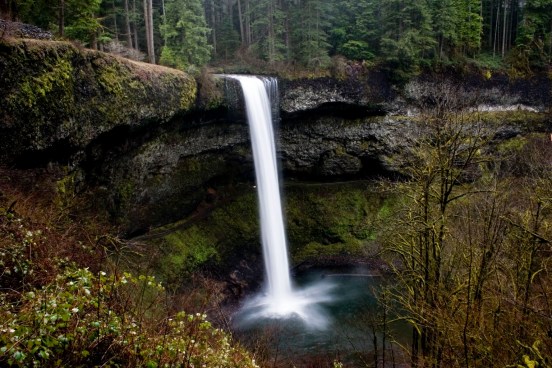
south_falls_silver_falls_state_park

Example:

How do you tell people about it?

One option is the press. The news can cover your travels, so people can stay up to date with the latest in waterfall discoveries. In general, you’d prefer this sort of thing to be fairly accurate: the goal here is to inform people, to give them a better idea of the world around them.

Alternatively, you can advertise. You put signposts up around town pointing toward the waterfall, complete with vivid pictures. Here, accuracy matters a lot less: you’re trying to get people excited, knowing that as they get closer they can get more detailed information.

In science popularization, the “news” here isn’t just news. It’s also blog posts, press releases, and public lectures. It’s the part of science popularization that’s supposed to keep people informed, and it’s one that we hope is mostly accurate, at least as far as possible.

The “signposts”, meanwhile, are things like Interstellar. Their audience is as wide as it can possibly be, and we don’t expect them to get things right. They’re meant to excite people, to get them interested in science. The expectation is that a few students will find the imagery interesting enough to go further, at which point they can learn the full story and clear up any remaining misconceptions.

Quantum is Calling is pretty clearly meant to be a signpost. The inaccuracy is one way to tell, but it should be clear just from the context. We’re talking about a piece with Hollywood stars here. The relative star-dom of Zoe Saldana and Keanu Reeves doesn’t matter, the presence of any mainstream film stars whatsoever means they’re going for the broadest possible audience.

(Of course, the fact that it’s set up to look like an official tie-in to the Star Trek films doesn’t hurt matters either.)

They’re also quite explicit about their goals. The piece’s predecessor has Keanu Reeves send a message back in time, with the goal of inspiring a generation of young scientists to build a future paradise. They’re not subtle about this.

Ok, so what’s the problem? Signposts are allowed to be inaccurate, so the inaccuracy shouldn’t matter. Eventually people will climb up to the waterfall and see it for themselves, right?

What if the waterfall isn’t there?
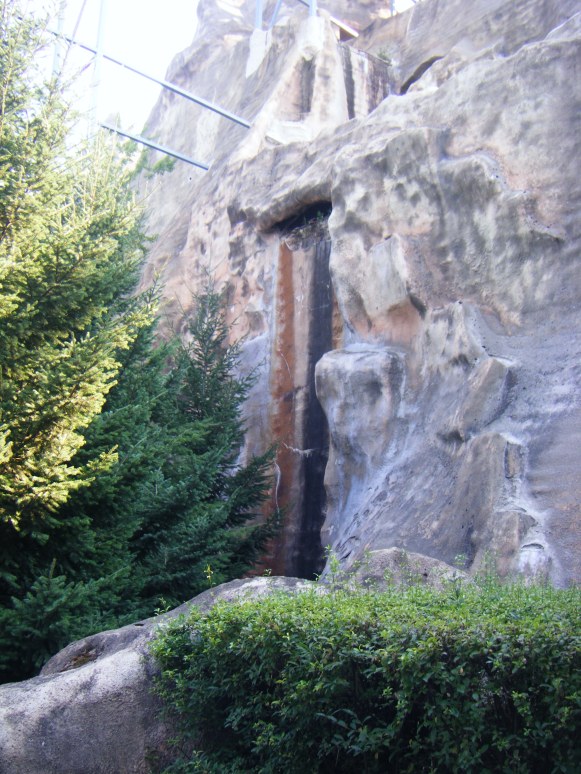
wonder_mountain_dry_backside_waterfall

Like so:

The evidence for ER=EPR (the conjecture that Quantum is Calling is popularizing) isn’t like seeing a waterfall. It’s more like finding it via surveying. By looking at the slope of nearby terrain and following the rivers, you can get fairly confident that there should be a waterfall there, even if you can’t yet see it over the next ridge. You can then start sending scouts, laying in supplies, and getting ready for a push to the waterfall. You can alert the news, telling journalists of the magnificent waterfall you expect to find, so the public can appreciate the majesty of your achievement.

What you probably shouldn’t do is put up a sign for tourists.

As I hope I made clear in my last post, ER=EPR has some decent evidence. It hasn’t shown that it can handle “foot traffic”, though. The number of researchers working on it is still small. (For a fun but not especially rigorous exercise, try typing “ER=EPR” and “AdS/CFT” into physics database INSPIRE.) Conjectures at this stage are frequently successful, but they often fail, and ER=EPR still has a decent chance of doing so. Tying your inspiring signpost to something that may well not be there risks sending tourists up to an empty waterfall. They won’t come down happy.

As such, I’m fine with “news-style” popularizations of ER=EPR. And I’m fine with “signposts” for conjectures that have shown they can handle some foot traffic. (A piece that sends Zoe Saldana to the holodeck to learn about holography could be fun, for example.) But making this sort of high-profile signpost for ER=EPR feels irresponsible and premature. There will be plenty of time for a Star Trek tie-in to ER=EPR once it’s clear the idea is here to stay.