With Halloween coming up, it’s time once again to talk about the spooky side of physics. And what could be spookier than action at a distance?

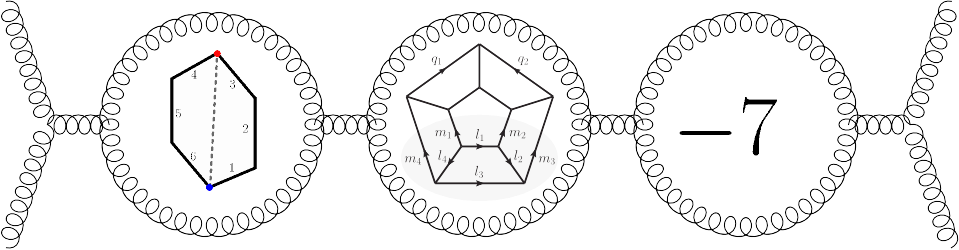
Pictured here.
Ok, maybe not an obvious contender for spookiest concept of the year. But physicists have struggled with action at a distance for centuries, and there are deep reasons why.
It all dates back to Newton. In Newton’s time, all of nature was expected to be mechanical. One object pushes another, which pushes another in turn, eventually explaining everything that every happens. And while people knew by that point that the planets were not circling around on literal crystal spheres, it was still hoped that their motion could be explained mechanically. The favored explanations of the time were vortices, whirlpools of celestial fluid that drove the planets around the Sun.
Newton changed all that. Not only did he set down a law of gravitation that didn’t use a fluid, he showed that no fluid could possibly replicate the planets’ motions. And while he remained agnostic about gravity’s cause, plenty of his contemporaries accused him of advocating “action at a distance”. People like Leibniz thought that a gravitational force without a mechanical cause would be superstitious nonsense, a betrayal of science’s understanding of the world in terms of matter.
For a while, Newton’s ideas won out. More and more, physicists became comfortable with explanations involving a force stretching out across empty space, using them for electricity and magnetism as these became more thoroughly understood.
Eventually, though, the tide began to shift back. Electricity and Magnetism were explained, not in terms of action at a distance, but in terms of a field that filled the intervening space. Eventually, gravity was too.
The difference may sound purely semantic, but it means more than you might think. These fields were restricted in an important way: when the field changed, it changed at one point, and the changes spread at a speed limited by the speed of light. A theory composed of such fields has a property called locality, the property that all interactions are fundamentally local, that is, they happen at one specific place and time.
Nowadays, we think of locality as one of the most fundamental principles in physics, on par with symmetry in space and time. And the reason why is that true action at a distance is quite a spooky concept.
Much of horror boils down to fear of the unknown. From what might lurk in the dark to the depths of the ocean, we fear that which we cannot know. And true action at a distance would mean that our knowledge might forever be incomplete. As long as everything is mediated by some field that changes at the speed of light, we can limit our search for causes. We can know that any change must be caused by something only a limited distance away, something we can potentially observe and understand. By contrast, true action at a distance would mean that forces from potentially anywhere in the universe could alter events here on Earth. We might never know the ultimate causes of what we observe; they might be stuck forever out of reach.
Some of you might be wondering, what about quantum mechanics? The phrase “spooky action at a distance” was famous because Einstein used it as an accusation against quantum entanglement, after all.
The key thing about quantum mechanics is that, as J. S. Bell showed, you can’t have locality…unless you throw out another property, called realism. Realism is the idea that quantum states have definite values for measurements before those measurements are taken. And while that sounds important, most people find getting rid of it much less scary than getting rid of locality. In a non-realistic world, at least we can still predict probabilities, even if we can’t observe certainties. In a non-local world, there might be aspects of physics that we just can’t learn. And that’s spooky.



 4 gravitons