
Monthly Archives: June 2014

(Super)gravity: Meet the Gravitino

I’m putting together a series of posts about N=8 supergravity, with the goal of creating a guide much like I have for N=4 super Yang-Mills and the (2,0) theory.

N=8 supergravity is what happens when you add the maximum amount of supersymmetry to a theory of gravity. I’m going to strongly recommend that you read both of those posts before reading this one, as there are a number of important concepts there: the idea that different types of particles are categorized by a number called spin, the idea that supersymmetry is a relationship between particles with spin X and particles with spin X-½, and the idea that gravity can be thought of equally as a bending of space and time or as a particle with spin 2, called a graviton.

Knowing all that, if you add supersymmetry to gravity, you’d relate a spin 2 particle (the graviton) to a spin 3/2 particle (for 2-½).

What is a spin 3/2 particle?

Spin 0 particles correspond to a single number, like a temperature, that can vary over space. The Higgs boson is the one example of a spin 0 particle that we know of in the real world. Spin ½ covers electrons, protons, and almost all of the particles that make up ordinary matter, while spin 1 covers Yang-Mills forces. That covers the entire Standard Model, all of the particles scientists have seen in the real world. So what could a spin 3/2 particle possibly be?

We can at least guess at what it would be called. Whatever this spin 3/2 particle is, it’s the supersymmetric partner of the graviton. For somewhat stupid reasons, that means its name is determined by taking “graviton” and adding “-ino” to the end, to get gravitino.

But that still doesn’t answer the question: What is a gravitino?

Here’s the quick answer: A gravitino is a spin 1 particle combined with a spin ½ particle.

What sort of combination am I talking about? Not the one you might think. A gravitino is a fundamental particle, it is not made up of other particles.


NOT like this.

So in what sense is it a combination?

A handy way for physicists to think about particles is as manifestations of an underlying field. The field is stronger or weaker in different places, and when the field is “on”, a particle is present. For example, the electron field covers all of space, but only where that electron field is greater than zero do actual electrons show up.

I’ve said that a scalar field is simple to understand because it’s just a number, like a temperature, that takes different values in different places. The other types of fields are like this too, but instead of one number there’s generally a more complicated set of numbers needed to define them. Yang-Mills fields, with spin 1, are forces, with a direction and a strength. This is why they’re often called vector fields. Spin ½ particles have a set of numbers that characterizes them as well. It’s called a spinor, and unfortunately it’s not something I can give you an intuitive definition for. Just be aware that, like vectors, it involves a series of numbers that specify how the field behaves at each point.

It’s a bit like a computer game. The world is full of objects, and different objects have different stats. A weapon might have damage and speed, while a quest-giver would have information about what quests they give. Since everything is just code, though, you can combine the two, and all you have to do is put both types of stats on the same object.

Like this.

For quantum fields, the “stats” are the numbers I mentioned earlier: a single number for scalars, direction and strength for vectors, and the spinor information for spinors. So if you want to combine two of them, say spin 1 and spin ½, you just need a field that has both sets of “stats”.

That’s the gravitino. The gravitino has vector “stats” from the spin 1 part, and spinor “stats” from the spin ½ part. It’s a combination of two types of fundamental particles, to create one that nobody has seen before.

That doesn’t mean nobody will ever see one, though. Gravitinos could well exist in our world, they’re actually a potential (if problematic) candidate for dark matter.

But much like supersymmetry in general, while gravitinos may exist, N=8 of them certainly don’t. N=8 is a whole lot of supersymmetry…but that’s a topic for another post. Stay tuned for the next post in the series!
Made of Energy, or Made of Nonsense?

I did a few small modifications to the blog settings this week. Comments now support Markdown, reply-chains in the comments can go longer, and there are a few more sharing buttons on the posts. I’m gearing up to do a more major revamp of the blog in July for when the name changes over from 4 gravitons and a grad student to just 4 gravitons.

io9 did an article recently on scientific ideas that scientists wish the public would stop misusing. They’ve got a lot of good ones (Proof, Quantum, Organic), but they somehow managed to miss one of the big ones: Energy. Matt Strassler has a nice, precise article on this particular misconception, but nonetheless I think it’s high time I wrote my own.

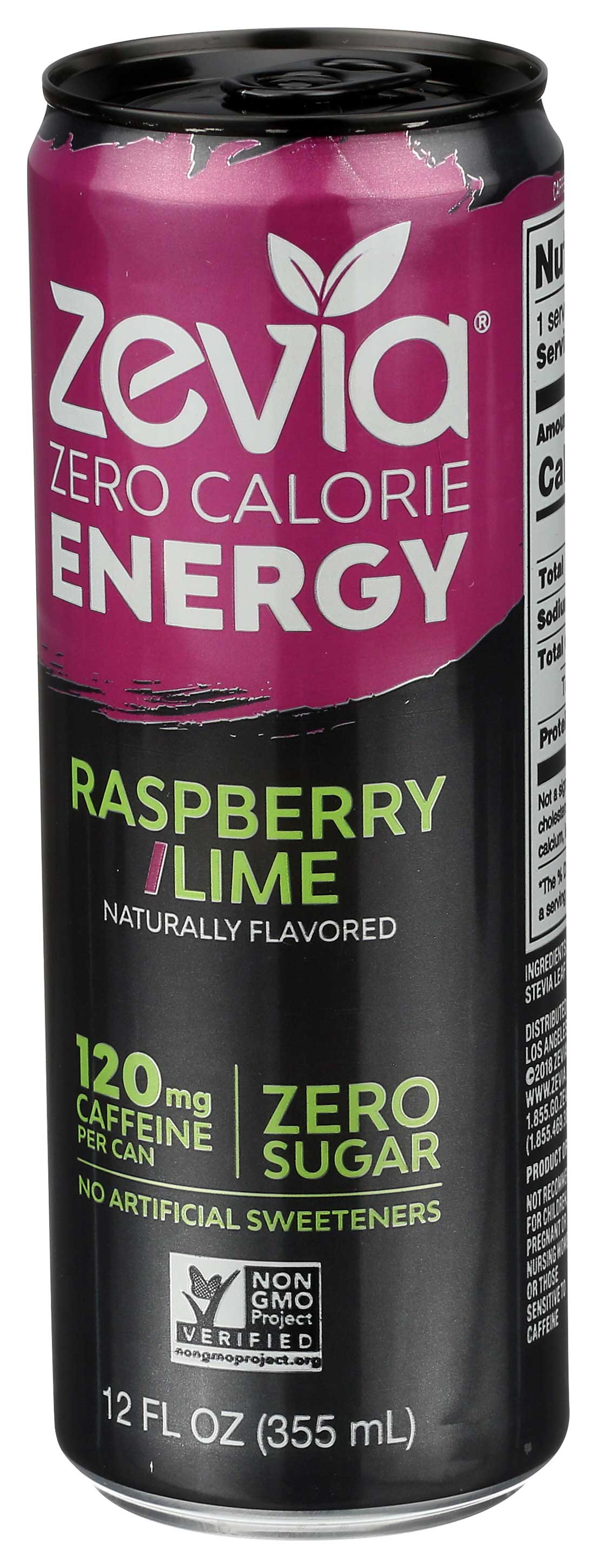
There’s a whole host of misconceptions regarding energy. Some of them are simple misuses of language, like zero-calorie energy drinks:

Zero Purpose

Energy can be measured in several different units. You can use Joules, or electron-Volts, or dynes…or calories. Calories are a measure of energy, so zero calories quite literally means zero energy.

Now, that’s not to say the makers of zero calorie energy drinks are lying. They’re just using a different meaning of energy from the scientific one. Their drinks give you vim and vigor, the get-up-and-go required to make money playing computer games. For most of the public, that “get-up-and-go” is called energy, even if scientifically it’s not.

That’s not really a misconception, more of an amusing use of language. This next one though really makes my blood boil.

Raise your hand if you’ve seen a Sci-Fi movie or TV show where some creature is described as being made of “pure energy”. Whether they’re peaceful, ultra-advanced ascended beings, or genocidal maniacs from another dimension, the concept of creatures made of “pure energy” shows up again and again and again.

You can’t fight the Drej, they’re pure bullshit!

Even if you aren’t the type to take Sci-Fi technobabble seriously, you’ve probably heard that matter and antimatter annihilate to form energy, or that photons are made out of energy. These sound more reasonable, but they rest on the same fundamental misconception:

Nothing is “made out of energy”.

Rather,

Energy is a property that things have.

Energy isn’t a substance, it isn’t a fluid, it isn’t some kind of nebulous stuff you can make into an indestructible alien body. Things have energy, but nothing is energy.

What about light, then? And what happens when antimatter collides with matter?

Light, just like anything else, has energy. The difference between light and most other things is that light also does not have mass.

In everyday life, we like to think of mass as some sort of basic “stuff”. If things are “made out of mass” or “made out of matter”, and something like light doesn’t have mass, then it must be made out of some other “stuff”, right?

The thing is, mass isn’t really “stuff” any more than energy is. Just like energy, mass is a property that things have. In fact, as I’ve talked about some before, mass is really just a type of energy. Specifically, mass is the energy something has when left alone and at rest. That’s the meaning of Einstein’s famous equation, E equals m c squared: it tells you how to take a known mass and calculate the rest energy that it implies.

Lots of hype for a unit conversion formula, huh?

In the case of light, all of its energy can be thought of in terms of its (light-speed) motion, so it has no mass. That might tempt you to think of it as being “made of energy”, but really, you and light are not so different.

You are made of atoms, and atoms are made of protons, neutrons, and electrons. Let’s consider a proton. A proton’s mass, expressed in the esoteric units physicists favor, is 938 Mega-electron-Volts. That’s how much energy a proton has alone and and rest. A proton is made of three quarks, so you’d think that they would contribute most of its mass. In reality, though, the quarks in protons have masses of only a few Mega-electron-Volts. Most of a proton’s mass doesn’t come from the mass of the quarks.

Quarks interact with each other via the strong nuclear force, the strongest fundamental force in existence. That interaction has a lot of energy, and when viewed from a distance that energy contributes almost all of the proton’s mass. So if light is “made of energy”, so are you.

So why do people say that matter and anti-matter annihilate to make energy?

A matter particle and its anti-matter partner are opposite in a lot of ways. In particular, they have opposite charges: not just electric charge, but other types of charge too.

Charge must be conserved, so if a particle collides with its anti-particle the result has a total charge of zero, as the opposite charges of the two cancel each other out. Light has zero charge, so it’s one of the most common results of a matter-antimatter collision. When people say that matter and antimatter produce “pure energy”, they really just mean that they produce light.

So next time someone says something is “made of energy”, be wary. Chances are, they aren’t talking about something fully scientific.

Does Science have Fads?

97% of climate scientists agree that global warming exists, and is most probably human-caused. On a more controversial note, string theorists vastly outnumber adherents of other approaches to quantum gravity, such as Loop Quantum Gravity.

As many who disagree with climate change or string theory would argue, the majority is not always right. Science should be concerned with truth, not merely with popularity. After all, what if scientists are merely taking part in a fad? What makes climate change any more objectively true than pet rocks?

Apparently this wikipedia’s best example of a fad.

People are susceptible to fads, after all. A style of music becomes popular, and everyone’s listening to the same sounds. A style of clothing, and everything’s wearing the same thing. So if an idea in science became popular, everyone might…write the same papers?

That right there is the problem. Scientists only succeed by creating meaningfully original work. If we don’t discover something new, we can’t publish, and as the old saying goes it’s publish or perish out there. Even if social pressure gets us working on something, if we’re going to get any actual work done there has to be enough there, at least, for us to do something different, something no-one has done before.

This doesn’t mean scientists can’t be influenced by popularity, but it means that that influence is limited by the requirements of doing meaningful, original work. In the case of climate change, climate scientists investigate the topic with so many different approaches and look at so many different areas of impact (for example, did you know rising CO2 levels make the ocean acidic?) that the whole field simply wouldn’t function if climate change wasn’t real: there’d be a contradiction, and most of the myriad projects involving it simply wouldn’t work. As I’ve talked about before, science is an interlocking system, and it’s hard to doubt one part without being forced to doubt everything else.

What about string theory? Here, the situation is a little different. There aren’t experiments testing string theory, so whether or not string theory describes the real world won’t have much effect on whether people can write string theory papers.

The existence of so many string theory papers does say something, though. The up-side of not involving experiments is that you can’t go and test something slightly different and write a paper about it. In order to be original, you really need to calculate something that nobody expected you to calculate, or notice a trend nobody expected to exist. The fact that there are so many more string theorists than loop quantum gravity theorists is in part because there are so many more interesting string theory projects than interesting loop quantum gravity projects.

In string theory, projects tend to be interesting because they unveil some new aspect of quantum field theory, the class of theories that explain the behavior of subatomic particles. Given how hard quantum field theory is, any insight is valuable, and in my experience these sorts of insights are what most string theorists are after. So while string theory’s popularity says little about whether it describes the real world, it says a lot about its ability to say interesting things about quantum field theory. And since quantum field theories do describe the real world, string theory’s continued popularity is also evidence that it continues to be useful.

Climate change and string theory aren’t fads, not exactly. They’re popular, not simply because they’re popular, but because they make important contributions and valuable to science. And as long as science continues to reward original work, that’s not about to change.

The Many (Body) Problems of the Academic Lifestyle

I’m visiting Perimeter this week, searching for apartments in the area. This got me thinking about how often one has to move in academia. You move for college, you move for grad school, you move for each postdoc job, and again when you start as a professor. Even then, you may not get to stay where you are if you don’t manage to get tenure, and it may be healthier to resign yourself to moving every seven years rather than assuming you’re going to settle down.

Most of life isn’t built around the idea that people move across the country (or the world!) every 2-7 years, so naturally this causes a few problems for those on the academic path. Below are some well-known, and not-so-well-known, problems facing academics due to their frequent relocations:

The two-body problem:

Suppose you’re married, or in a committed relationship. Better hope your spouse has a flexible job, because in a few years you’re going to be moving to another city. This is even harder if your spouse is also an academic, as that requires two rare academic jobs to pop up in the same place. And woe betide you if you’re out of synch, and have to move at different times. Many couples end up having to resort to some sort of long-distance arrangement, which further complicates matters.

The N-body problem:

Like the two-body problem, but for polyamorous academics. Leads to poly-chains up and down the East Coast.

The 2+N-body problem:

Alternatively, add a time dimension to your two-body problem via the addition of children. Now your kids are busily being shuffled between incommensurate school systems. But you’re an academic, you can teach them anything they’re missing, right?

The warm body problem:

Of course, all this assumes you’re in a relationship. If you’re single, you instead have the problem of never really having a social circle beyond your department, having to tenuously rebuild your social life every few years. What sorts of clubs will the more socially awkward of you enter, just to have some form of human companionship?

The large body of water problem:

We live in an age where everything is connected, but that doesn’t make distance cheap. An ocean between you and your collaborators means you’ll rarely be awake at the same time. And good luck crossing that ocean again, not every job will be eager to pay relocation expenses.

The obnoxious governing body problem:

Of course, the various nations involved won’t make all this travel easy. Many countries have prestigious fellowships only granted on the condition that the winner returns to their home country for a set length of time. Since there’s no guarantee that anyone in your home country does anything similar to what you do, this sort of requirement can have people doing whatever research they can find, however tangentially related, or trying to avoid the incipient bureaucratic nightmare any way they can.