Tag Archives: philosophy of science

The Metaphysics of Card Games

I tend to be skeptical of attempts to apply metaphysics to physics. In particular, I get leery when someone tries to describe physics in terms of which fundamental things exist, and which things are made up of other things.

Now, I’m not the sort of physicist who thinks metaphysics is useless in general. I’ve seen some impressive uses of supervenience, for example.

But I think that, in physics, talk of “things” is almost always premature. As physicists, we describe the world mathematically. It’s the most precise way we have access to of describing the universe. The trouble is, slightly different mathematics can imply the existence of vastly different “things”.

To give a slightly unusual example, let’s talk about card games.
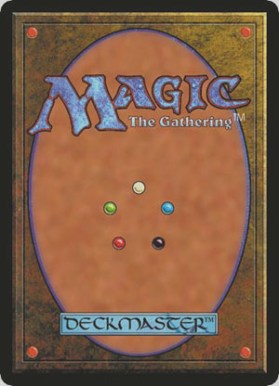
magic_the_gathering-card_back

To defeat metaphysics, we must best it at a children’s card game!

Magic: The Gathering is a collectible card game in which players play powerful spellcasters who fight by casting spells and summoning creatures. Those spells and creatures are represented by cards.

If you wanted to find which “things” exist in Magic: The Gathering, you’d probably start with the cards. And indeed, cards are pretty good candidates for fundamental “things”. As a player, you have a hand of cards, a discard pile (“graveyard”) and a deck (“library”), and all of these are indeed filled with cards.

However, not every “thing” in the game is a card. That’s because the game is in some sense limited: it needs to represent a broad set of concepts while still using physical, purchasable cards.

Suppose you have a card that represents a general. Every turn, the general recruits a soldier. You could represent the soldiers with actual cards, but they’d have to come from somewhere, and over many turns you might quickly run out.

Instead, Magic represents these soldiers with “tokens”. A token is not a card: you can’t shuffle a token into your deck or return it to your hand, and if you try to it just ceases to exist. But otherwise, the tokens behave just like other creatures: they’re both the same type of “thing”, something Magic calls a “permanent”. Permanents live in an area between players called the “battlefield”.

And it gets even more complicated! Some creatures have special abilities. When those abilities are activated, they’re treated like spells in many ways: you can cast spells in response, and even counter them with the right cards. However, they’re not spells, because they’re not cards: like tokens, you can’t shuffle them into your deck. Instead, both they and spells that have just been cast live in another area, the “stack”.

So while Magic might look like it just has one type of “thing”, cards, in fact it has three: cards, permanents, and objects on the stack.

We can contrast this with another card game, Hearthstone.

hearthstone_screenshot

Hearthstone is much like Magic. You are a spellcaster, you cast spells, you summon creatures, and those spells and creatures are represented by cards.

The difference is, Hearthstone is purely electronic. You can’t go out and buy the cards in a store, they’re simulated in the online game. And this means that Hearthstone’s metaphysics can be a whole lot simpler.

In Hearthstone, if you have a general who recruits a soldier every turn, the soldiers can be cards just like the general. You can return them to your hand, or shuffle them into your deck, just like a normal card. Your computer can keep track of them, and make sure they go away properly at the end of the game.

This means that Hearthstone doesn’t need a concept of “permanents”: everything on its “battlefield” is just a card, which can have some strange consequences. If you return a creature to your hand, and you have room, it will just go there. But if your hand is full, and the creature has nowhere to go, it will “die”, in exactly the same way it would have died in the game if another creature killed it. From the game’s perspective, the creature was always a card, and the card “died”, so the creature died.

These small differences in implementation, in the “mathematics” of the game, change the metaphysics completely. Magic has three types of “things”, Hearthstone has only one.

And card games are a special case, because in some sense they’re built to make metaphysics easy. Cards are intuitive, everyday objects, and both Magic and Hearthstone are built off of our intuitions about them, which is why I can talk about “things” in either game.

Physics doesn’t have to be built that way. Physics is meant to capture our observations, and help us make predictions. It doesn’t have to sort itself neatly into “things”. Even if it does, I hope I’ve convinced you that small changes in physics could lead to large changes in which “things” exist. Unless you’re convinced that you understand the physics of something completely, you might want to skip the metaphysics. A minor mathematical detail could sweep it all away.
Thought Experiments, Minus the Thought

My second-favorite Newton fact is that, despite inventing calculus, he refused to use it for his most famous work of physics, the Principia. Instead, he used geometrical proofs, tweaked to smuggle in calculus without admitting it.

Essentially, these proofs were thought experiments. Newton would start with a standard geometry argument, one that would have been acceptable to mathematicians centuries earlier. Then, he’d imagine taking it further, pushing a line or angle to some infinite point. He’d argue that, if the proof worked for every finite choice, then it should work in the infinite limit as well.

These thought experiments let Newton argue on the basis of something that looked more rigorous than calculus. However, they also held science back. At the time, only a few people in the world could understand what Newton was doing. It was only later, when Newton’s laws were reformulated in calculus terms, that a wider group of researchers could start doing serious physics.

What changed? If Newton could describe his physics with geometrical thought experiments, why couldn’t everyone else?

The trouble with thought experiments is that they require careful setup, setup that has to be thought through for each new thought experiment. Calculus took Newton’s geometrical thought experiments, and took out the need for thought: the setup was automatically a part of calculus, and each new researcher could build on their predecessors without having to set everything up again.

This sort of thing happens a lot in science. An example from my field is the scattering matrix, or S-matrix.

The S-matrix, deep down, is a thought experiment. Take some particles, and put them infinitely far away from each other, off in the infinite past. Then, let them approach, close enough to collide. If they do, new particles can form, and these new particles will travel out again, infinite far away in the infinite future. The S-matrix then is a metaphorical matrix that tells you, for each possible set of incoming particles, what the probability is to get each possible set of outgoing particles.

In a real collider, the particles don’t come from infinitely far away, and they don’t travel infinitely far before they’re stopped. But the distances are long enough, compared to the sizes relevant for particle physics, that the S-matrix is the right idea for the job.

Like calculus, the S-matrix is a thought experiment minus the thought. When we want to calculate the probability of particles scattering, we don’t need to set up the whole thought experiment all over again. Instead, we can start by calculating, and over time we’ve gotten very good at it.

In general, sub-fields in physics can be divided into those that have found their S-matrices, their thought experiments minus thought, and those that have not. When a topic has to rely on thought experiments, progress is much slower: people argue over the details of each setup, and it’s difficult to build something that can last. It’s only when a field turns the corner, removing the thought from its thought experiments, that people can start making real collaborative progress.

Book Review: The Invention of Science

I don’t get a lot of time to read for pleasure these days. When I do, it’s usually fiction. But I’ve always had a weakness for stories from the dawn of science, and David Wootton’s The Invention of Science: A New History of the Scientific Revolution certainly fit the bill.

517hucfpasl-_sx329_bo1204203200_

Wootton’s book is a rambling tour of the early history of science, from Brahe’s nova in 1572 to Newton’s Optics in 1704. Tying everything together is one clear, central argument: that the scientific revolution involved, not just a new understanding of the world, but the creation of new conceptual tools. In other words, the invention of science itself.

Wootton argues this, for the most part, by tracing changes in language. Several chapters have a common structure: Wootton identifies a word, like evidence or hypothesis, that has an important role in how we talk about science. He then tracks that word back to its antecedents, showing how early scientists borrowed and coined the words they needed to describe the new type of reasoning they had pioneered.

Some of the most compelling examples come early on. Wootton points out that the word “discover” only became common in European languages after Columbus’s discovery of the new world: first in Portugese, then later in the rest of Europe. Before then, the closest term meant something more like “find out”, and was ambiguous: it could refer to finding something that was already known to others. Thus, early writers had to use wordy circumlocutions like “found out that which was not known before” to refer to genuine discovery.

The book covers the emergence of new social conventions in a similar way. For example, I was surprised to learn that the first recorded priority disputes were in the sixteenth century. Before then, discoveries weren’t even typically named for their discoverers: “the Pythagorean theorem”, oddly enough, is a name that wasn’t used until after the scientific revolution was underway. Beginning with explorers arguing over the discovery of the new world and anatomists negotiating priority for identifying the bones of the ear or the “discovery” of the clitoris, the competitive element of science began to come into its own.

Along the way, Wootton highlights episodes both familiar and obscure. You’ll find Bruno and Torricelli, yes, but also disputes over whether the seas are higher than the land or whether a weapon could cure wounds it caused via the power of magnetism. For anyone as fascinated by the emergence of science as I am, it’s a joyous wealth of detail.

If I had one complaint, it would be that for a lay reader far too much of Wootton’s book is taken up by disputes with other historians. His particular foes are relativists, though he spares some paragraphs to attack realists too. Overall, his dismissals of his opponents are so pat, and his descriptions of their views so self-evidently silly, that I can’t help but suspect that he’s not presenting them fairly. Even if he is, the discussion is rather inside baseball for a non-historian like me.

I read part of Newton’s Principia in college, and I was hoping for a more thorough discussion of Newton’s role. While he does show up, Wootton seems to view Newton as a bit of an enigma: someone who insisted on using the old language of geometric proofs while clearly mastering the new science of evidence and experiment. In this book, Newton is very much a capstone, not a focus.

Overall, The Invention of Science is a great way to learn about the twists and turns of the scientific revolution. If you set aside the inter-historian squabbling (or if you like that sort of thing) you’ll find a book brim full of anecdotes from the dawn of modern thought, and a compelling argument that what we do as scientists is neither an accident of culture nor obvious common-sense, but a hard-won invention whose rewards we are still reaping today.

What Does It Mean to Know the Answer?

My sub-field isn’t big on philosophical debates. We don’t tend to get hung up on how to measure an infinite universe, or in arguing about how to interpret quantum mechanics. Instead, we develop new calculation techniques, which tends to nicely sidestep all of that.

If there’s anything we do get philosophical about, though, any question with a little bit of ambiguity, it’s this: What counts as an analytic result?

“Analytic” here is in contrast to “numerical”. If all we need is a number and we don’t care if it’s slightly off, we can use numerical methods. We have a computer use some estimation trick, repeating steps over and over again until we have approximately the right answer.

“Analytic”, then, refers to everything else. When you want an analytic result, you want something exact. Most of the time, you don’t just want a single number: you want a function, one that can give you numbers for whichever situation you’re interested in.

It might sound like there’s no ambiguity there. If it’s a function, with sines and cosines and the like, then it’s clearly analytic. If you can only get numbers out through some approximation, it’s numerical. But as the following example shows, things can get a bit more complicated.

Suppose you’re trying to calculate something, and you find the answer is some messy integral. Still, you’ve simplified the integral enough that you can do numerical integration and get some approximate numbers out. What’s more, you can express the integral as an infinite series, so that any finite number of terms will get close to the correct result. Maybe you even know a few special cases, situations where you plug specific numbers in and you do get an exact answer.

It might sound like you only know the answer numerically. As it turns out, though, this is roughly how your computer handles sines and cosines.

When your computer tries to calculate a sine or a cosine, it doesn’t have access to the exact solution all of the time. It does have some special cases, but the rest of the time it’s using an infinite series, or some other numerical trick. Type in a random sine into your calculator and it will be just as approximate as if you did a numerical integration.

So what’s the real difference?

Rather than how we get numbers out, think about what else we know. We know how to take derivatives of sines, and how to integrate them. We know how to take limits, and series expansions. And we know their relations to other functions, including how to express them in terms of other things.

If you can do that with your integral, then you’ve probably got an analytic result. If you can’t, then you don’t.

What if you have only some of the requirements, but not the others? What if you can take derivatives, but don’t know all of the identities between your functions? What if you can do series expansions, but only in some limits? What if you can do all the above, but can’t get numbers out without a supercomputer?

That’s where the ambiguity sets in.

In the end, whether or not we have the full analytic answer is a matter of degree. The closer we can get to functions that mathematicians have studied and understood, the better grasp we have of our answer and the more “analytic” it is. In practice, we end up with a very pragmatic approach to knowledge: whether we know the answer depends entirely on what we can do with it.

In Defense of Lord Kelvin, Michelson, and the Physics of Decimals

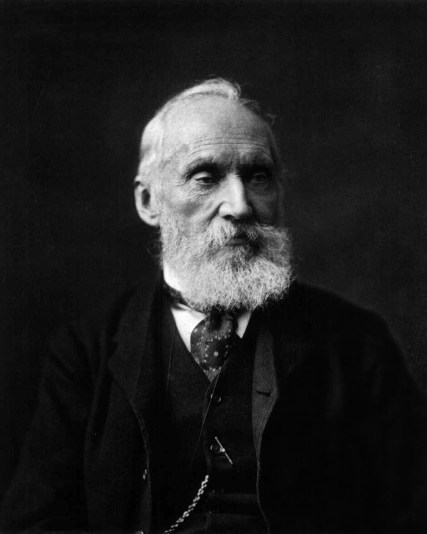
William Thompson, Lord Kelvin, was a towering genius of 19th century physics. He is often quoted as saying,

There is nothing new to be discovered in physics now. All that remains is more and more precise measurement.

lord_kelvin_photograph

Certainly sounds like something I would say!

As it happens, he never actually said this. It’s a paraphrase of a quote from Albert Michelson, of the Michelson-Morley Experiment:

While it is never safe to affirm that the future of Physical Science has no marvels in store even more astonishing than those of the past, it seems probable that most of the grand underlying principles have been firmly established and that further advances are to be sought chiefly in the rigorous application of these principles to all the phenomena which come under our notice. It is here that the science of measurement shows its importance — where quantitative work is more to be desired than qualitative work. An eminent physicist remarked that the future truths of physical science are to be looked for in the sixth place of decimals.

albert_abraham_michelson2

Now that’s more like it!

In hindsight, this quote looks pretty silly. When Michelson said that “it seems probable that most of the grand underlying principles have been firmly established” he was leaving out special relativity, general relativity, and quantum mechanics. From our perspective, the grandest underlying principles had yet to be discovered!

And yet, I think we should give Michelson some slack.

Someone asked me on twitter recently what I would choose if given the opportunity to unravel one of the secrets of the universe. At the time, I went for the wishing-for-more-wishes answer: I’d ask for a procedure to discover all of the other secrets.

I was cheating, to some extent. But I do think that the biggest and most important mystery isn’t black holes or the big bang, isn’t asking what will replace space-time or what determines the constants in the Standard Model. The most critical, most important question in physics, rather, is to find the consequences of the principles we actually know!

We know our world is described fairly well by quantum field theory. We’ve tested it, not just to the sixth decimal place, but to the tenth. And while we suspect it’s not the full story, it should still describe the vast majority of our everyday world.

If we knew not just the underlying principles, but the full consequences of quantum field theory, we’d understand almost everything we care about. But we don’t. Instead, we’re forced to calculate with approximations. When those approximations break down, we fall back on experiment, trying to propose models that describe the data without precisely explaining it. This is true even for something as “simple” as the distribution of quarks inside a proton. Once you start trying to describe materials, or chemistry or biology, all bets are off.

This is what the vast majority of physics is about. Even more, it’s what the vast majority of science is about. And that’s true even back to Michelson’s day. Quantum mechanics and relativity were revelations…but there are still large corners of physics in which neither matters very much, and even larger parts of the more nebulous “physical science”.

New fundamental principles get a lot of press, but you shouldn’t discount the physics of “the sixth place of decimals”. Most of the big mysteries don’t ask us to challenge our fundamental paradigm: rather, they’re challenges to calculate or measure better, to get more precision out of rules we already know. If a genie gave me the solution to any of physics’ mysteries I’d choose to understand the full consequences of quantum field theory, or even of the physics of Michelson’s day, long before I’d look for the answer to a trendy question like quantum gravity.

Who Needs Non-Empirical Confirmation?

I’ve figured out what was bugging me about Dawid’s workshop on non-empirical theory confirmation.

It’s not the concept itself that bothers me. While you might think of science as entirely based on observations of the real world, in practice we can’t test everything. Inevitably, we have to add in other sorts of evidence: judgments based on precedent, philosophical considerations, or sociological factors.

It’s Dawid’s examples that annoy me: string theory, inflation, and the multiverse. Misleading popularizations aside, none of these ideas involve non-empirical confirmation. In particular, string theory doesn’t need non-empirical confirmation, inflation doesn’t want it, and the multiverse, as of yet, doesn’t merit it.

In order for non-empirical confirmation to matter, it needs to affect how people do science. Public statements aren’t very relevant from a philosophy of science perspective; they ebb and flow based on how people promote themselves. Rather, we should care about what scientists assume in the course of their work. If people are basing new work on assumptions that haven’t been established experimentally, then we need to make sure their confidence isn’t misplaced.

String theory hasn’t been established experimentally…but it fails the other side of this test: almost no-one is assuming string theory is true.

I’ve talked before about theorists who study theories that aren’t true. String theory isn’t quite in that category, it’s still quite possible that it describes the real world. Nonetheless, for most string theorists, the distinction is irrelevant: string theory is a way to relate different quantum field theories together, and to formulate novel ones with interesting properties. That sort of research doesn’t rely on string theory being true, often it doesn’t directly involve strings at all. Rather, it relies on string theory’s mathematical abundance, its versatility and power as a lens to look at the world.

There are string theorists who are more directly interested in describing the world with string theory, though they’re a minority. They’re called String Phenomenologists. By itself, “phenomenologist” refers to particle physicists who try to propose theories that can be tested in the real world. “String phenomenology” is actually a bit misleading, since most string phenomenologists aren’t actually in the business of creating new testable theories. Rather, they try to reproduce some of the more common proposals of phenomenologists, like the MSSM, from within the framework of string theory. While string theory can reproduce many possible descriptions of the world (10^500 by some estimates), that doesn’t mean it covers every possible theory; making sure it can cover realistic options is an important, ongoing technical challenge. Beyond that, a minority within a minority of string phenomenologists actually try to make testable predictions, though often these are controversial.

None of these people need non-empirical confirmation. For the majority of string theorists, string theory doesn’t need to be “confirmed” at all. And for the minority who work on string phenomenology, empirical confirmation is still the order of the day, either directly from experiment or indirectly from the particle phenomenologists struggling to describe it.

What about inflation?

Cosmic inflation was proposed to solve an empirical problem, the surprising uniformity of the observed universe. Look through a few papers in the field, and you’ll notice that most are dedicated to finding empirical confirmation: they’re proposing observable effects on the cosmic microwave background, or on the distribution of large-scale structures in the universe. Cosmologists who study inflation aren’t claiming to be certain, and they aren’t rejecting experiment: overall, they don’t actually want non-empirical confirmation.

To be honest, though, I’m being a little unfair to Dawid here. The reason that string theory and inflation are in the name of his workshop aren’t because he thinks they independently use non-empirical confirmation. Rather, it’s because, if you view both as confirmed (and make a few other assumptions), then you’ve got a multiverse.

In this case, it’s again important to compare what people are doing in their actual work to what they’re saying in public. While a lot of people have made public claims about the existence of a multiverse, very few of them actually work on it. In fact, the two sets of people seem to be almost entirely disjoint.

People who make public statements about the multiverse tend to be older prominent physicists, often ones who’ve worked on supersymmetry as a solution to the naturalness problem. For them, the multiverse is essentially an excuse. Naturalness predicted new particles, we didn’t find new particles, so we need an excuse to have an “unnatural” universe, and for many people the multiverse is that excuse. As I’ve argued before, though, this excuse doesn’t have much of an impact on research. These people aren’t discouraged from coming up with new ideas because they believe in the multiverse, rather, they’re talking about the multiverse because they’re currently out of new ideas. Nima Arkani-Hamed is a pretty clear case of someone who has supported the multiverse in pieces like Particle Fever, but who also gets thoroughly excited about new ideas to rescue naturalness.

By contrast, there are many fewer people who actually work on the multiverse itself, and they’re usually less prominent. For the most part, they actually seem concerned with empirical confirmation, trying to hone tricks like anthropic reasoning to the point where they can actually make predictions about future experiments. It’s unclear whether this tiny group of people are on the right track…but what they’re doing definitely doesn’t seem like something that merits non-empirical confirmation, at least at this point.

It’s a shame that Dawid chose the focus he did for his workshop. Non-empirical theory confirmation is an interesting idea (albeit one almost certainly known to philosophy long before Dawid), and there are plenty of places in physics where it could use some examination. We seem to have come to our current interpretation of renormalization non-empirically, and while string theory itself doesn’t rely on non-empirical conformation many of its arguments with loop quantum gravity seem to rely on non-empirical considerations, in particular arguments about what is actually required for a proper theory of quantum gravity. But string theory, inflation, and the multiverse aren’t the examples he’s looking for.

What’s so Spooky about Action at a Distance?

With Halloween coming up, it’s time once again to talk about the spooky side of physics. And what could be spookier than action at a distance?

Pictured here.

Ok, maybe not an obvious contender for spookiest concept of the year. But physicists have struggled with action at a distance for centuries, and there are deep reasons why.

It all dates back to Newton. In Newton’s time, all of nature was expected to be mechanical. One object pushes another, which pushes another in turn, eventually explaining everything that every happens. And while people knew by that point that the planets were not circling around on literal crystal spheres, it was still hoped that their motion could be explained mechanically. The favored explanations of the time were vortices, whirlpools of celestial fluid that drove the planets around the Sun.

Newton changed all that. Not only did he set down a law of gravitation that didn’t use a fluid, he showed that no fluid could possibly replicate the planets’ motions. And while he remained agnostic about gravity’s cause, plenty of his contemporaries accused him of advocating “action at a distance”. People like Leibniz thought that a gravitational force without a mechanical cause would be superstitious nonsense, a betrayal of science’s understanding of the world in terms of matter.

For a while, Newton’s ideas won out. More and more, physicists became comfortable with explanations involving a force stretching out across empty space, using them for electricity and magnetism as these became more thoroughly understood.

Eventually, though, the tide began to shift back. Electricity and Magnetism were explained, not in terms of action at a distance, but in terms of a field that filled the intervening space. Eventually, gravity was too.

The difference may sound purely semantic, but it means more than you might think. These fields were restricted in an important way: when the field changed, it changed at one point, and the changes spread at a speed limited by the speed of light. A theory composed of such fields has a property called locality, the property that all interactions are fundamentally local, that is, they happen at one specific place and time.

Nowadays, we think of locality as one of the most fundamental principles in physics, on par with symmetry in space and time. And the reason why is that true action at a distance is quite a spooky concept.

Much of horror boils down to fear of the unknown. From what might lurk in the dark to the depths of the ocean, we fear that which we cannot know. And true action at a distance would mean that our knowledge might forever be incomplete. As long as everything is mediated by some field that changes at the speed of light, we can limit our search for causes. We can know that any change must be caused by something only a limited distance away, something we can potentially observe and understand. By contrast, true action at a distance would mean that forces from potentially anywhere in the universe could alter events here on Earth. We might never know the ultimate causes of what we observe; they might be stuck forever out of reach.

Some of you might be wondering, what about quantum mechanics? The phrase “spooky action at a distance” was famous because Einstein used it as an accusation against quantum entanglement, after all.

The key thing about quantum mechanics is that, as J. S. Bell showed, you can’t have locality…unless you throw out another property, called realism. Realism is the idea that quantum states have definite values for measurements before those measurements are taken. And while that sounds important, most people find getting rid of it much less scary than getting rid of locality. In a non-realistic world, at least we can still predict probabilities, even if we can’t observe certainties. In a non-local world, there might be aspects of physics that we just can’t learn. And that’s spooky.

Outreach as the End Product of Science

Sabine Hossenfelder recently wrote a blog post about physics outreach. In it, she identifies two goals: inspiration, and education.

Inspiration outreach is all about making science seem cool. It’s the IFLScience side of things, stoking the science fandom and getting people excited.

Education outreach, by contrast, is about making sure peoples’ beliefs are accurate. It teaches the audience something about the world around them, giving them a better understanding of how the world works.

In both cases, though, Sabine finds it hard to convince other scientists that outreach is valuable. Maybe inspiration helps increase grant funding, maybe education makes people vote better on scientific issues like climate change…but there isn’t a lot of research that shows that outreach really accomplishes either.

Sabine has a number of good suggestions in her post for how to make outreach more effective, but I’d like to take a step back and suggest that maybe we as a community are thinking about outreach in the wrong way. And in order to do that, I’m going to do a little outreach myself, and talk about black holes.

The black hole of physics outreach.

Black holes are collapsed stars, crushed in on themselves by their own gravity so much that one you get close enough (past the event horizon) not even light can escape. This means that if you sent an astronaut past the event horizon, there would be no way for them to communicate with you: any way they might try to get information to you would travel, at most, at the speed of light.

Einstein’s equations keep working fine past the event horizon, but despite that there are some people who view any prediction of what happens inside to be outside the scope of science. If there’s no way to report back, then how could we ever test our predictions? And if we can’t test our predictions, aren’t we missing the cornerstone of science itself?

In a rather entertaining textbook, physicists Edwin F. Taylor and John Archibald Wheeler suggest a way around this: instead of sending just one astronaut, send multiple! Send a whole community! That way, while we might not be able to test our predictions about the inside of the event horizon, the scientific community that falls in certainly can. For them, those predictions aren’t just meaningless speculation, but testable science.

If something seems unsatisfying about this, congratulations: you now understand the purpose of outreach.

As long as scientific advances never get beyond a small community, we’re like Taylor and Wheeler’s astronauts inside the black hole. We can test our predictions among each other, verify them to our heart’s content…but if they never reach the wider mass of humanity, then what have we really accomplished? Have we really created knowledge, when only a few people will ever know it?

In my Who Am I? post, I express the hope that one day the science I blog about will be as well known as electrons and protons. That might sound farfetched, but I really do think it’s possible. In one hundred years, electrons and protons went from esoteric discoveries of a few specialists to something children learn about in grade school. If science is going to live up to its purpose, if we’re going to escape the black hole of our discipline, then in another hundred years quantum field theory needs to do the same. And by doing outreach work, each of us is taking steps in that direction.

Explanations of Phenomena Are All Alike; Every Unexplained Phenomenon Is Unexplained in Its Own Way

Vladimir Kazakov began his talk at ICTP-SAIFR this week with a variant of Tolstoy’s famous opening to the novel Anna Karenina: “Happy families are all alike; every unhappy family is unhappy in its own way.” Kazakov flipped the order of the quote, stating that while “Un-solvable models are each un-solvable in their own way, solvable models are all alike.”

In talking about solvable and un-solvable models, Kazakov was referring to a concept called integrability, the idea that in certain quantum field theories it’s possible to avoid the messy approximations of perturbation theory and instead jump straight to the answer. Kazakov was observing that these integrable systems seem to have a deep kinship: the same basic methods appear to work to understand all of them.

I’d like to generalize Kazakov’s point, and talk about a broader trend in physics.

Much has been made over the years of the “unreasonable effectiveness of mathematics in the natural sciences”, most notably in physicist Eugene Wigner’s famous essay, The Unreasonable Effectiveness of Mathematics in the Natural Sciences. There’s a feeling among some people that mathematics is much better at explaining physical phenomena than one would expect, that the world appears to be “made of math” and that it didn’t have to be.

On the surface, this is a reasonable claim. Certain mathematical ideas, group theory for example, seem to pop up again and again in physics, sometimes in wildly different contexts. The history of fundamental physics has tended to see steady progress over the years, from clunkier mathematical concepts to more and more elegant ones.

Some physicists tend to be dismissive of this. Lee Smolin in particular seems to be under the impression that mathematics is just particularly good at providing useful approximations. This perspective links to his definition of mathematics as “the study of systems of evoked relationships inspired by observations of nature,” a definition to which Peter Woit vehemently objects. Woit argues what I think any mathematician would when presented by a statement like Smolin’s: that mathematics is much more than just a useful tool for approximating observations, and that contrary to physicists’ vanity most of mathematics goes on without any explicit interest in observing the natural world.

While it’s generally rude for physicists to propose definitions for mathematics, I’m going to do so anyway. I think the following definition is one mathematicians would be more comfortable with, though it may be overly broad: Mathematics is the study of simple rules with complex consequences.

We live in a complex world. The breadth of the periodic table, the vast diversity of life, the tangled webs of galaxies across the sky, these are things that display both vast variety and a sense of order. They are, in a rather direct way, the complex consequences of rules that are at heart very very simple.

Part of the wonder of modern mathematics is how interconnected it has become. Many sub-fields, once distinct, have discovered over the years that they are really studying different aspects of the same phenomena. That’s why when you see a proof of a three-hundred-year-old mathematical conjecture, it uses terms that seem to have nothing to do with the original problem. It’s why Woit, in an essay on this topic, quotes Edward Frenkel’s description of a particular recent program as a blueprint for a “Grand Unified Theory of Mathematics”. Increasingly, complex patterns are being shown to be not only consequences of simple rules, but consequences of the same simple rules.

Mathematics itself is “unreasonably effective”. That’s why, when faced with a complex world, we shouldn’t be surprised when the same simple rules pop up again and again to explain it. That’s what explaining something is: breaking down something complex into the simple rules that give rise to it. And as mathematics progresses, it becomes more and more clear that a few closely related types of simple rules lie behind any complex phenomena. While each unexplained fact about the universe may seem unexplained in its own way, as things are explained bit by bit they show just how alike they really are.

Merry Newtonmas!

Yesterday, people around the globe celebrated the birth of someone whose new perspective and radical ideas changed history, perhaps more than any other.

I’m referring, of course, to Isaac Newton.

Ho ho ho!

Born on December 25, 1642, Newton is justly famed as one of history’s greatest scientists. By relating gravity on Earth to the force that holds the planets in orbit, Newton arguably created physics as we know it.

However, like many prominent scientists, Newton’s greatness was not so much in what he discovered as how he discovered it. Others had already had similar ideas about gravity. Robert Hooke in particular had written to Newton mentioning a law much like the one Newton eventually wrote down, leading Hooke to accuse Newton of plagiarism.

Newton’s great accomplishment was not merely proposing his law of gravitation, but justifying it, in a way that no-one had ever done before. When others (Hooke for example) had proposed similar laws, they were looking for a law that perfectly described the motion of the planets. Kepler had already proposed ellipse-shaped orbits, but it was clear by Newton and Hooke’s time that such orbits did not fully describe the motion of the planets. Hooke and others hoped that if some sufficiently skilled mathematician started with the correct laws, they could predict the planets’ motions with complete accuracy.

The genius of Newton was in attacking this problem from a different direction. In particular, Newton showed that his laws of gravitation do result in (incorrect) ellipses…provided that there was only one planet.

With multiple planets, things become much more complicated. Even just two planets orbiting a single star is so difficult a problem that it’s impossible to write down an exact solution.

Sensibly, Newton didn’t try to write down an exact solution. Instead, he figured out an approximation: since the Sun is much bigger than the planets, he could simplify the problem and arrive at a partial solution. While he couldn’t perfectly predict the motions of the planets, he knew more than that they were just “approximately” ellipses: he had a prediction for how different from ellipses they should be.

That step was Newton’s great contribution. That insight, that science was able not just to provide exact answers to simpler problems but to guess how far those answers might be off, was something no-one else had really thought about before. It led to error analysis in experiments, and perturbation methods in theory. More generally, it led to the idea that scientists have to be responsible, not just for getting things “almost right”, but for explaining how their results are still wrong.

So this holiday season, let’s give thanks to the man whose ideas created science as we know it. Merry Newtonmas everyone!