Tag Archives: newton

Newtonmas and the Gift of a Physics Background

This week, people all over the world celebrated the birth of someone whose universally attractive ideas spread around the globe. I’m talking, of course about Isaac Newton.

For Newtonmas this year, I’ve been pondering another aspect of Newton’s life. There’s a story you might have heard that physicists can do basically anything, with many people going from a career in physics to a job in a variety of other industries. It’s something I’ve been trying to make happen for myself. In a sense, this story goes back to the very beginning, when Newton quit his academic job to work at the Royal Mint.

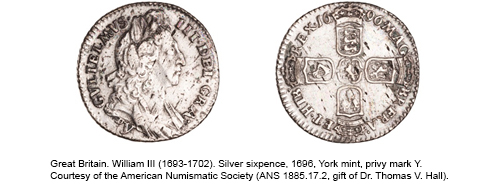
On the surface, there are a lot of parallels. At the Mint, a big part of Newton’s job was to combat counterfeiting and “clipping”, where people would carve small bits of silver off of coins. This is absolutely a type of job ex-physicists do today, at least in broad strokes. Working as Data Scientists for financial institutions, people look for patterns in transactions that give evidence of fraud.

Digging deeper, though, the analogy falls apart a bit. Newton didn’t apply any cunning statistical techniques to hunt down counterfeiters. Instead, the stories that get told about his work there are basically detective stories. He hung out in bars to catch counterfeiter gossip and interviewed counterfeiters in prison, not exactly the kind of thing you’d hire a physicist to do these days. The rest of the role was administrative: setting up new mint locations and getting people to work overtime to replace the country’s currency. Newton’s role at the mint was less like an ex-physicist going into Data Science and more like Steven Chu as Secretary of Energy: someone with a prestigious academic career appointed to a prestigious government role.

If you’re looking for a patron saint of physicists who went to industry, Newton’s contemporary Robert Hooke may be a better bet. Unlike many other scientists of the era, Hooke wasn’t independently wealthy, and for a while he was kept quite busy working for the Royal Society. But a bit later he had another, larger source of income: working as a surveyor and architect, where he designed several of London’s iconic buildings. While Newton’s work at the Mint drew on his experience as a person of power and influence, working as an architect drew much more on skills directly linked to Hooke’s work as a scientist: understanding the interplay of forces in quantitative detail.

While Newton and Hooke’s time was an era of polymaths, in some sense the breadth of skills imparted by a physics education has grown. Physicists learn statistics (which barely existed in Newton’s time) programming (which did not exist at all) and a wider range of mathematical and physical models. Having a physics background isn’t the ideal way to go into industry (that would be having an industry background). But for those of us making the jump, it’s still a Newtonmas gift to be grateful for.

Newtonmas Pageants

Newtonmas: because if you’re going to celebrate someone supposedly born on December 25, you might as well pick someone whose actual birthday was within two weeks of that.

My past Newtonmas posts have tended to be about gifts, which is a pretty easy theme. But Christmas, for some, isn’t just about Santa Claus delivering gifts, but about someone’s birth. Children put on plays acting out different characters. In Mexico, they include little devils, who try to tempt the shepherds away from visiting Jesus.

Could we do this kind of thing for Newtonmas? A Newtonmas Pageant?

The miraculous child

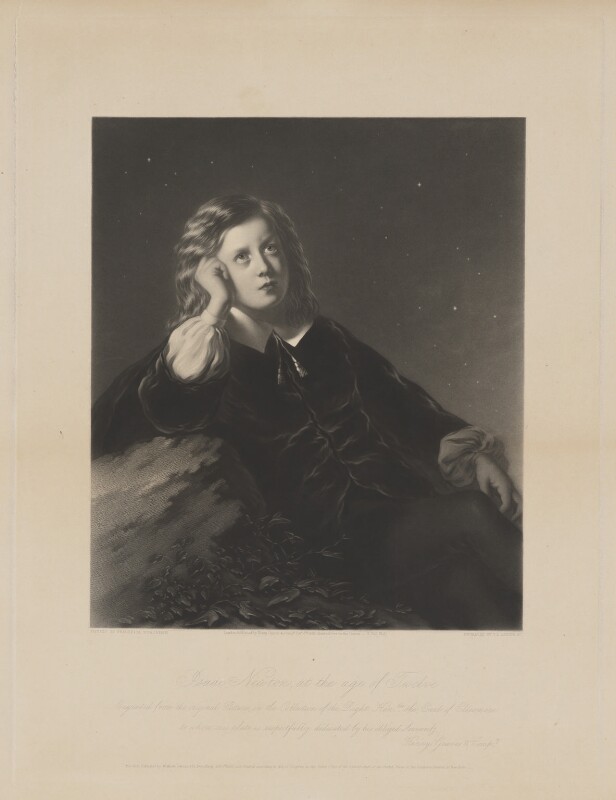
Historians do know a bit about Newton’s birth. His father (also named Isaac Newton) died two months before he was born. Newton was born prematurely, his mother apparently claimed he could fit inside a quart mug.

The mug may be surprising (it comes in quarts?), but there isn’t really enough material for a proper story here. That said, it would be kind of beside the point if there were. If we’re celebrating science, maybe the story of one particular child is not the story we should be telling.

Instead, we can tell stories about scientific ideas. These often have quite dramatic stories. Instead of running from inn to inn looking for rooms, scientists run from journal to journal trying to publish. Instead of frankincense, myrrh, and gold, there are Nobel prizes. Instead of devils tempting the shepherds away, you have tempting but unproductive ideas. For example, Newton battled ideas from Descartes and Liebniz that suggested gravity could be caused by a vortex of fluid. The idea was popular because it was mechanical-sounding: no invisible force of gravity needed. But it didn’t work, and Newton spent half of the Principia where he wrote down his new science building a theory of fluids so he could say it didn’t work.

So for this Newtonmas, tell the story of a scientific idea: one that had a difficult birth but that, eventually brought pilgrims and gifts from miles around.

Merry Newtonmas, everyone!

When Your Research Is a Cool Toy

Merry Newtonmas, everyone!

In the US, PhD students start without an advisor. As they finish their courses, different research groups make their pitch, trying to get them to join. Some promise interesting puzzles and engaging mysteries, others talk about the importance of their work, how it can help society or understand the universe.

Thinking back to my PhD, there is one pitch I remember to this day. The pitch was from the computational astrophysics group, and the message was a simple one: “we blow up stars”.

Obviously, these guys didn’t literally blow up stars: they simulated supernovas. They weren’t trying to make some weird metaphysical argument, they didn’t believe their simulation was somehow the real thing. The point they were making, instead, was emotional: blowing up stars feels cool.

Scientists can be motivated by curiosity, fame, or altruism, and these are familiar things. But an equally important motivation is a sense of play. If your job is to build tiny cars for rats, some of your motivation has to be the sheer joy of building tiny cars for rats. If you simulate supernovas, then part of your motivation can be the same as my nephew hurling stuffed animals down the stairs: that joyful moment when you yell “kaboom!”

Probably, your motivation shouldn’t just be to play with a cool toy. You need some of those “serious” scientific motivations as well. But for those of you blessed with a job where you get to say “kaboom”, you have that extra powerful reason to get up in the morning. And for those of you just starting a scientific career, may you have some cool toys under your Newtonmas tree!

Science, Gifts Enough for Lifetimes

Merry Newtonmas, Everyone!

In past years, I’ve compared science to a gift: the ideal gift for the puzzle-fan, one that keeps giving new puzzles. I think people might not appreciate the scale of that gift, though.

Bigger than all the creative commons Wikipedia images

Maybe you’ve heard the old joke that studying for a PhD means learning more and more about less and less until you know absolutely everything about nothing at all. This joke is overstating things: even when you’ve specialized down to nothing at all, you still won’t know everything.

If you read the history of science, it might feel like there are only a few important things going on at a time. You notice the simultaneous discoveries, like calculus from Newton and Liebniz and natural selection from Darwin and Wallace. You can get the impression that everyone was working on a few things, the things that would make it into the textbooks. In fact, though, there was always a lot to research, always many interesting things going on at once. As a scientist, you can’t escape this. Even if you focus on your own little area, on a few topics you care about, even in a small field, there will always be more going on than you can keep up with.

This is especially clear around the holiday season. As everyone tries to get results out before leaving on vacation, there is a tidal wave of new content. I have five papers open on my laptop right now (after closing four or so), and some recorded talks I keep meaning to watch. Two of the papers are the kind of simultaneous discovery I mentioned: two different groups noticing that what might seem like an obvious fact – that in classical physics, unlike in quantum, one can have zero uncertainty – has unexpected implications for our kind of calculations. (A third group got there too, but hasn’t published yet.) It’s a link I would never have expected, and with three groups coming at it independently you’d think it would be the only thing to pay attention to: but even in the same sub-sub-sub-field, there are other things going on that are just as cool! It’s wild, and it’s not some special quirk of my area: that’s science, for all us scientists. No matter how much you expect it to give you, you’ll get more, lifetimes and lifetimes worth. That’s a Newtonmas gift to satisfy anyone.

Newtonmas in Uncertain Times

Three hundred and eighty-two years ago today (depending on which calendars you use), Isaac Newton was born. For a scientist, that’s a pretty good reason to celebrate.

Reason’s Greetings Everyone!

Last month, our local nest of science historians at the Niels Bohr Archive hosted a Zoom talk by Jed Z. Buchwald, a Newton scholar at Caltech. Buchwald had a story to tell about experimental uncertainty, one where Newton had an important role.

If you’ve ever had a lab course in school, you know experiments never quite go like they’re supposed to. Set a room of twenty students to find Newton’s constant, and you’ll get forty different answers. Whether you’re reading a ruler or clicking a stopwatch, you can never measure anything with perfect accuracy. Each time you measure, you introduce a little random error.

Textbooks worth of statistical know-how has cropped up over the centuries to compensate for this error and get closer to the truth. The simplest trick though, is just to average over multiple experiments. It’s so obvious a choice, taking a thousand little errors and smoothing them out, that you might think people have been averaging in this way through history.

They haven’t though. As far as Buchwald had found, the first person to average experiments in this way was Isaac Newton.

What did people do before Newton?

Well, what might you do, if you didn’t have a concept of random error? You can still see that each time you measure you get a different result. But you would blame yourself: if you were more careful with the ruler, quicker with the stopwatch, you’d get it right. So you practice, you do the experiment many times, just as you would if you were averaging. But instead of averaging, you just take one result, the one you feel you did carefully enough to count.

Before Newton, this was almost always what scientists did. If you were an astronomer mapping the stars, the positions you published would be the last of a long line of measurements, not an average of the rest. Some other tricks existed. Tycho Brahe for example folded numbers together pair by pair, averaging the first two and then averaging that average with the next one, getting a final result weighted to the later measurements. But, according to Buchwald, Newton was the first to just add everything together.

Even Newton didn’t yet know why this worked. It would take later research, theorems of statistics, to establish the full justification. It seems Newton and his later contemporaries had a vague physics analogy in mind, finding a sort of “center of mass” of different experiments. This doesn’t make much sense – but it worked, well enough for physics as we know it to begin.

So this Newtonmas, let’s thank the scientists of the past. Working piece by piece, concept by concept, they gave use the tools to navigate our uncertain times.

Changing the Question

I’ve recently been reading Why Does the World Exist?, a book by the journalist Jim Holt. In it he interviews a range of physicists and philosophers, asking each the question in the title. As the book goes on, he concludes that physicists can’t possibly give him the answer he’s looking for: even if physicists explain the entire universe from simple physical laws, they still would need to explain why those laws exist. A bit disappointed, he turns back to the philosophers.

Something about Holt’s account rubs me the wrong way. Yes, it’s true that physics can’t answer this kind of philosophical problem, at least not in a logically rigorous way. But I think we do have a chance of answering the question nonetheless…by eclipsing it with a better question.

How would that work? Let’s consider a historical example.

Does the Earth go around the Sun, or does the Sun go around the Earth? We learn in school that this is a solved question: Copernicus was right, the Earth goes around the Sun.

The details are a bit more subtle, though. The Sun and the Earth both attract each other: while it is a good approximation to treat the Sun as fixed, in reality it and the Earth both move in elliptical orbits around the same focus (which is close to, but not exactly, the center of the Sun). Furthermore, this is all dependent on your choice of reference frame: if you wish you can choose coordinates in which the Earth stays still while the Sun moves.

So what stops a modern-day Tycho Brahe from arguing that the Sun and the stars and everything else orbit around the Earth?

The reason we aren’t still debating the Copernican versus the Tychonic system isn’t that we proved Copernicus right. Instead, we replaced the old question with a better one. We don’t actually care which object is the center of the universe. What we care about is whether we can make predictions, and what mathematical laws we need to do so. Newton’s law of universal gravitation lets us calculate the motion of the solar system. It’s easier to teach it by talking about the Earth going around the Sun, so we talk about it that way. The “philosophical” question, about the “center of the universe”, has been explained away by the more interesting practical question.

My suspicion is that other philosophical questions will be solved in this way. Maybe physicists can’t solve the ultimate philosophical question, of why the laws of physics are one way and not another. But if we can predict unexpected laws and match observations of the early universe, then we’re most of the way to making the question irrelevant. Similarly, perhaps neuroscientists will never truly solve the mystery of consciousness, at least the way philosophers frame it today. Nevertheless, if they can describe brains well enough to understand why we act like we’re conscious, if they have something in their explanation that looks sufficiently “consciousness-like”, then it won’t matter if they meet the philosophical requirements, people simply won’t care. The question will have been eaten by a more interesting question.

This can happen in physics by itself, without reference to philosophy. Indeed, it may happen again soon. In the New Yorker this week, Natalie Wolchover has an article in which she talks to Nima Arkani-Hamed about the search for better principles to describe the universe. In it, Nima talks about looking for a deep mathematical question that the laws of physics answer. Peter Woit has expressed confusion that Nima can both believe this and pursue various complicated, far-fetched, and at times frankly ugly ideas for new physics.

I think the way to reconcile these two perspectives is to know that Nima takes naturalness seriously. The naturalness argument in physics states that physics as we currently see it is “unnatural”, in particular, that we can’t get it cleanly from the kinds of physical theories we understand. If you accept the argument as stated, then you get driven down a rabbit hole of increasingly strange solutions: versions of supersymmetry that cleverly hide from all experiments, hundreds of copies of the Standard Model, or even a multiverse.

Taking naturalness seriously doesn’t just mean accepting the argument as stated though. It can also mean believing the argument is wrong, but wrong in an interesting way.

One interesting way naturalness could be wrong would be if our reductionist picture of the world, where the ultimate laws live on the smallest scales, breaks down. I’ve heard vague hints from physicists over the years that this might be the case, usually based on the way that gravity seems to mix small and large scales. (Wolchover’s article also hints at this.) In that case, you’d want to find not just a new physical theory, but a new question to ask, something that could eclipse the old question with something more interesting and powerful.

Nima’s search for better questions seems to drive most of his research now. But I don’t think he’s 100% certain that the old questions are wrong, so you can still occasionally see him talking about multiverses and the like.

Ultimately, we can’t predict when a new question will take over. It’s a mix of the social and the empirical, of new predictions and observations but also of which ideas are compelling and beautiful enough to get people to dismiss the old question as irrelevant. It feels like we’re due for another change…but we might not be, and even if we are it might be a long time coming.

A Newtonmas Present of Internet Content

I’m lazy this Newtonmas, so instead of writing a post of my own I’m going to recommend a few other people who do excellent work.

Quantum Frontiers is a shared blog updated by researchers connected to Caltech’s Institute for Quantum Information and Matter. While the whole blog is good, I’m going to be more specific and recommend the posts by Nicole Yunger Halpern. Nicole is really a great writer, and her posts are full of vivid imagery and fun analogies. If she’s not as well-known, it’s only because she lacks the attention-grabbing habit of getting into stupid arguments with other bloggers. Definitely worth a follow.

Recommending Slate Star Codex feels a bit strange, because it seems like everyone I’ve met who would enjoy the blog already reads it. It’s not a physics blog by any stretch, so it’s also an unusual recommendation to give here. Slate Star Codex writes about a wide variety of topics, and while the author isn’t an expert in most of them he does a lot more research than you or I would. If you’re interested in up-to-date meta-analyses on psychology, social science, and policy, pored over by someone with scrupulous intellectual honesty and an inexplicably large amount of time to indulge it, then Slate Star Codex is the blog for you.

I mentioned Piled Higher and Deeper a few weeks back, when I reviewed the author’s popular science book We Have No Idea. Piled Higher and Deeper is a webcomic about life in grad school. Humor is all about exaggeration, and it’s true that Piled Higher and Deeper exaggerates just how miserable and dysfunctional grad school can be…but not by as much as you’d think. I recommend that anyone considering grad school read Piled Higher and Deeper, and take it seriously. Grad school can really be like that, and if you don’t think you can deal with spending five or six years in the world of that comic you should take that into account.

Our Bargain

Sabine Hossenfelder has a blog post this week chastising particle physicists and cosmologists for following “upside-down Popper”, or assuming a theory is worth working on merely because it’s falsifiable. She describes her colleagues churning out one hypothesis after another, each tweaking an old idea just enough to make it falsifiable in the next experiment, without caring whether the hypothesis is actually likely to be true.

Sabine is much more of an expert in this area of physics (phenomenology) than I am, and I don’t presume to tell her she’s wrong about that community. But the problem she’s describing is part of something bigger, something that affects my part of physics as well.

There’s a core question we’d all like to answer: what should physicists work on? What criteria should guide us?

Falsifiability isn’t the whole story. The next obvious criterion is a sense of simplicity, of Occam’s Razor or mathematical elegance. Sabine has argued against the latter, which prompted a friend of mine to comment that between rejecting falsifiability and elegance, Sabine must want us to stop doing high-energy physics at all!

That’s more than a little unfair, though. I think Sabine has a reasonably clear criterion in mind. It’s the same criterion that most critics of the physics mainstream care about. It’s even the same criterion being used by the “other side”, the sort of people who criticize anything that’s not string/SUSY/inflation.

The criterion is quite a simple one: physics research should be productive. Anything we publish, anything we work on, should bring us closer to understanding the real world.

And before you object that this criterion is obvious, that it’s subjective, that it ignores the very real disagreements between the Sabines and the Luboses of the world…before any of that, please let me finish.

We can’t achieve this criterion. And we shouldn’t.

We can’t demand that all physics be productive without breaking a fundamental bargain, one we made when we accepted that science could be a career.
1200px-13_portrait_of_robert_hooke

The Hunchback of Notre Science

It wasn’t always this way. Up until the nineteenth century, “scientist” was a hobby, not a job.

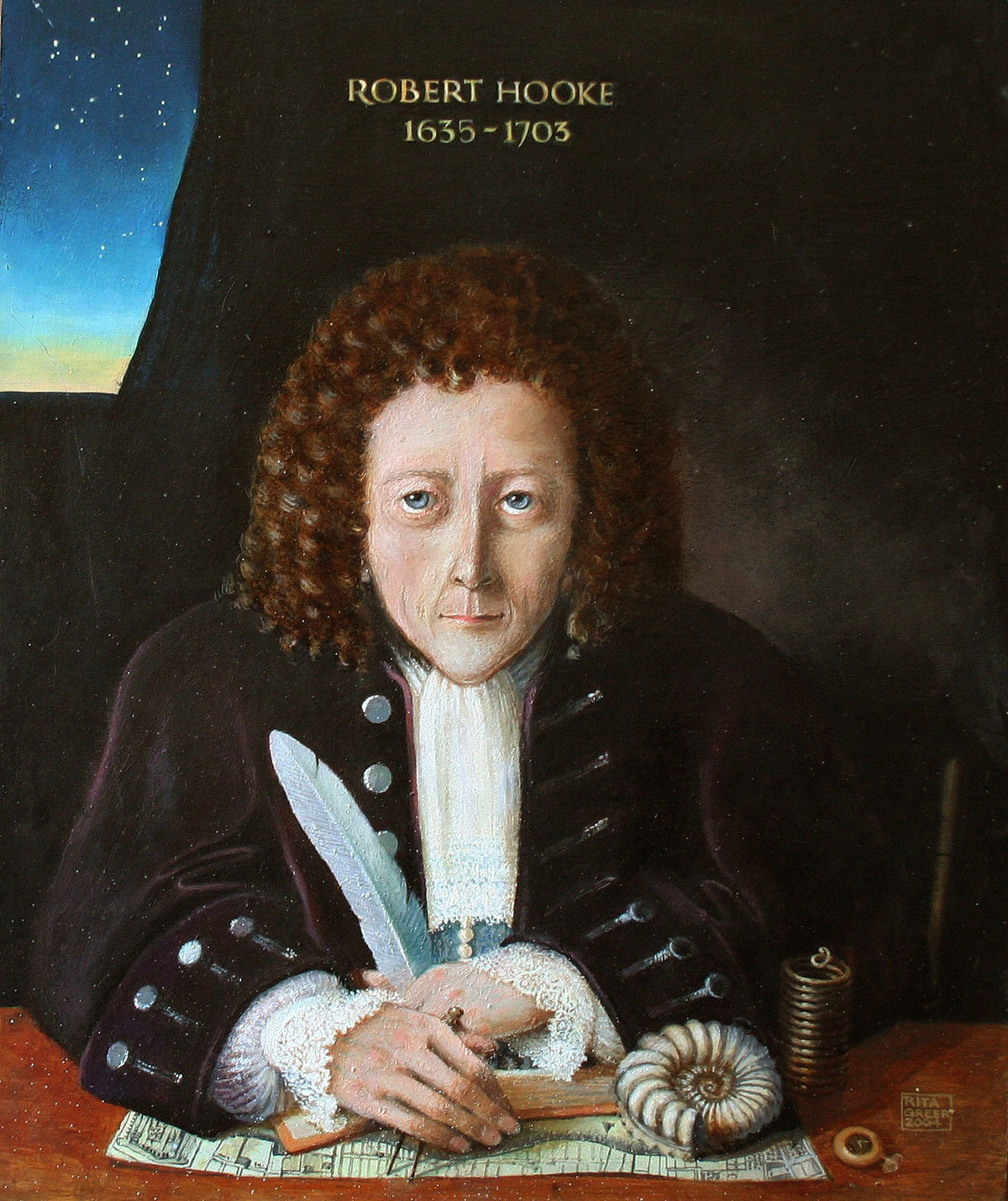
After Newton published his theory of gravity, he was famously accused by Robert Hooke of stealing the idea. There’s some controversy about this, but historians agree on a few points: that Hooke did write a letter to Newton suggesting a 1/r^2 force law, and that Hooke, unlike Newton, never really worked out the law’s full consequences.

Why not? In part, because Hooke, unlike Newton, had a job.

Hooke was arguably the first person for whom science was a full-time source of income. As curator of experiments for the Royal Society, it was his responsibility to set up demonstrations for each Royal Society meeting. Later, he also handled correspondence for the Royal Society Journal. These responsibilities took up much of his time, and as a result, even if he was capable of following up on the consequences of 1/r^2 he wouldn’t have had time to focus on it. That kind of calculation wasn’t what he was being paid for.

We’re better off than Hooke today. We still have our responsibilities, to journals and teaching and the like, at various stages of our careers. But in the centuries since Hooke expectations have changed, and real original research is no longer something we have to fit in our spare time. It’s now a central expectation of the job.

When scientific research became a career, we accepted a kind of bargain. On the positive side, you no longer have to be independently wealthy to contribute to science. More than that, the existence of professional scientists is the bedrock of technological civilization. With enough scientists around, we get modern medicine and the internet and space programs and the LHC, things that wouldn’t be possible in a world of rare wealthy geniuses.

We pay a price for that bargain, though. If science is a steady job, then it has to provide steady work. A scientist has to be able to go in, every day, and do science.

And the problem is, science doesn’t always work like that. There isn’t always something productive to work on. Even when there is, there isn’t always something productive for you to work on.

Sabine blames “upside-down Popper” on the current publish-or-perish environment in physics. If physics careers weren’t so cut-throat and the metrics they are judged by weren’t so flawed, then maybe people would have time to do slow, careful work on deeper topics rather than pumping out minimally falsifiable papers as fast as possible.

There’s a lot of truth to this, but I think at its core it’s a bit too optimistic. Each of us only has a certain amount of expertise, and sometimes that expertise just isn’t likely to be productive at the moment. Because science is a job, a person in that position can’t just go work at the Royal Mint like Newton did. (The modern-day equivalent would be working for Wall Street, but physicists rarely come back from that.) Instead, they keep doing what they know how to do, slowly branching out, until they’ve either learned something productive or their old topic becomes useful once more. You can think of it as a form of practice, where scientists keep their skills honed until they’re needed.

So if we slow down the rate of publication, if we create metrics for universities that let them hire based on the depth and importance of work and not just number of papers and citations, if we manage all of that then yes we will improve science a great deal. But Lisa Randall still won’t work on Haag’s theorem.

In the end, we’ll still have physicists working on topics that aren’t actually productive.
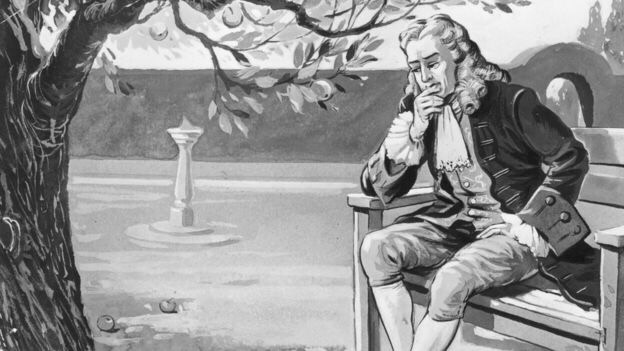
img_0622

A physicist lazing about unproductively under an apple tree

So do we have to pay physicists to work on whatever they want, no matter how ridiculous?

No, I’m not saying that. We can’t expect everyone to do productive work all the time, but we can absolutely establish standards to make the work more likely to be productive.

Strange as it may sound, I think our standards for this are already quite good, or at least better than many other fields.

First, there’s falsifiability itself, or specifically our attitude towards it.

Physics’s obsession with falsifiability has one important benefit: it means that when someone proposes a new model of dark matter or inflation that they tweaked to be just beyond the current experiments, they don’t claim to know it’s true. They just claim it hasn’t been falsified yet.

This is quite different from what happens in biology and the social sciences. There, if someone tweaks their study to be just within statistical significance, people typically assume the study demonstrated something real. Doctors base treatments on it, and politicians base policy on it. Upside-down Popper has its flaws, but at least it’s never going to kill anybody, or put anyone in prison.

Admittedly, that’s a pretty low bar. Let’s try to set a higher one.

Moving past falsifiability, what about originality? We have very strong norms against publishing work that someone else has already done.

Ok, you (and probably Sabine) would object, isn’t that easy to get around? Aren’t all these Popper-flippers pretending to be original but really just following the same recipe each time, modifying their theory just enough to stay falsifiable?

To some extent. But if they were really following a recipe, you could beat them easily: just write the recipe down.

Physics progresses best when we can generalize, when we skip from case-by-case to understanding whole swaths of cases at once. Over time, there have been plenty of cases in which people have done that, where a number of fiddly hand-made models have been summarized in one parameter space. Once that happens, the rule of originality kicks in: now, no-one can propose another fiddly model like that again. It’s already covered.

As long as the recipe really is just a recipe, you can do this. You can write up what these people are doing in computer code, release the code, and then that’s that, they have to do something else. The problem is, most of the time it’s not really a recipe. It’s close enough to one that they can rely on it, close enough to one that they can get paper after paper when they need to…but it still requires just enough human involvement, just enough genuine originality, to be worth a paper.

The good news is that the range of “recipes” we can code up increases with time. Some spaces of theories we might never be able to describe in full generality (I’m glad there are people trying to do statistics on the string landscape, but good grief it looks quixotic). Some of the time though, we have a real chance of putting a neat little bow on a subject, labeled “no need to talk about this again”.

This emphasis on originality keeps the field moving. It means that despite our bargain, despite having to tolerate “practice” work as part of full-time physics jobs, we can still nudge people back towards productivity.


One final point: it’s possible you’re completely ok with the idea of physicists spending most of their time “practicing”, but just wish they wouldn’t make such a big deal about it. Maybe you can appreciate that “can I cook up a model where dark matter kills the dinosaurs” is an interesting intellectual exercise, but you don’t think it should be paraded in front of journalists as if it were actually solving a real problem.

In that case, I agree with you, at least up to a point. It is absolutely true that physics has a dysfunctional relationship with the media. We’re too used to describing whatever we’re working on as the most important thing in the universe, and journalists are convinced that’s the only way to get the public to pay attention. This is something we can and should make progress on. An increasing number of journalists are breaking from the trend and focusing not on covering the “next big thing”, but in telling stories about people. We should do all we can to promote those journalists, to spread their work over the hype, to encourage the kind of stories that treat “practice” as interesting puzzles pursued by interesting people, not the solution to the great mysteries of physics. I know that if I ever do anything newsworthy, there are some journalists I’d give the story to before any others.

At the same time, it’s important to understand that some of the dysfunction here isn’t unique to physics, or even to science. Deep down the reason nobody can admit that their physics is “practice” work is the same reason people at job interviews claim to love the company, the same reason college applicants have to tell stirring stories of hardship and couples spend tens of thousands on weddings. We live in a culture in which nothing can ever just be “ok”, in which admitting things are anything other than exceptional is akin to calling them worthless. It’s an arms-race of exaggeration, and it goes far beyond physics.

(I should note that this “culture” may not be as universal as I think it is. If so, it’s possible its presence in physics is due to you guys letting too many of us Americans into the field.)


We made a bargain when we turned science into a career. We bought modernity, but the price we pay is subsidizing some amount of unproductive “practice” work. We can negotiate the terms of our bargain, and we should, tilting the field with incentives to get it closer to the truth. But we’ll never get rid of it entirely, because science is still done by people. And sometimes, despite what we’re willing to admit, people are just “ok”.

Thought Experiments, Minus the Thought

My second-favorite Newton fact is that, despite inventing calculus, he refused to use it for his most famous work of physics, the Principia. Instead, he used geometrical proofs, tweaked to smuggle in calculus without admitting it.

Essentially, these proofs were thought experiments. Newton would start with a standard geometry argument, one that would have been acceptable to mathematicians centuries earlier. Then, he’d imagine taking it further, pushing a line or angle to some infinite point. He’d argue that, if the proof worked for every finite choice, then it should work in the infinite limit as well.

These thought experiments let Newton argue on the basis of something that looked more rigorous than calculus. However, they also held science back. At the time, only a few people in the world could understand what Newton was doing. It was only later, when Newton’s laws were reformulated in calculus terms, that a wider group of researchers could start doing serious physics.

What changed? If Newton could describe his physics with geometrical thought experiments, why couldn’t everyone else?

The trouble with thought experiments is that they require careful setup, setup that has to be thought through for each new thought experiment. Calculus took Newton’s geometrical thought experiments, and took out the need for thought: the setup was automatically a part of calculus, and each new researcher could build on their predecessors without having to set everything up again.

This sort of thing happens a lot in science. An example from my field is the scattering matrix, or S-matrix.

The S-matrix, deep down, is a thought experiment. Take some particles, and put them infinitely far away from each other, off in the infinite past. Then, let them approach, close enough to collide. If they do, new particles can form, and these new particles will travel out again, infinite far away in the infinite future. The S-matrix then is a metaphorical matrix that tells you, for each possible set of incoming particles, what the probability is to get each possible set of outgoing particles.

In a real collider, the particles don’t come from infinitely far away, and they don’t travel infinitely far before they’re stopped. But the distances are long enough, compared to the sizes relevant for particle physics, that the S-matrix is the right idea for the job.

Like calculus, the S-matrix is a thought experiment minus the thought. When we want to calculate the probability of particles scattering, we don’t need to set up the whole thought experiment all over again. Instead, we can start by calculating, and over time we’ve gotten very good at it.

In general, sub-fields in physics can be divided into those that have found their S-matrices, their thought experiments minus thought, and those that have not. When a topic has to rely on thought experiments, progress is much slower: people argue over the details of each setup, and it’s difficult to build something that can last. It’s only when a field turns the corner, removing the thought from its thought experiments, that people can start making real collaborative progress.

Newtonmas 2015

Merry Newtonmas!

I’ll leave up my poll a bit longer, but the results are already looking pretty consistent.

A strong plurality of my readers have PhDs in high energy or theoretical physics, a little more than a quarter. Another big chunk (a bit over a fifth) are physics grad students. All together, that means almost half of my readers have some technical background in what I do.

In the comments, Cliff suggests this is a good reason to start writing more technical posts. Looking at the results, I agree, it looks like there would definitely be an audience for that sort of thing. Technical posts take a lot more effort than general audience posts, so don’t expect a lot of them…but you can definitely look forward to a few technical posts next year.

On the other hand, between people with some college physics and people who only saw physics in high school, about a third of my audience wouldn’t get much out of technical posts. Most of my posts will still be geared to this audience, since it’s kind of my brand at this point, but I do want to start experimenting with aiming a few posts to more specific segments.

Beyond that, I’ve got a smattering of readers in other parts of physics, and a few mathematicians. Aside from the occasional post defending physics notation, there probably won’t be much aimed at either group, but do let me know what I can do to make things more accessible!