Category Archives: Misc

Fear of the Dark, Physics Version

Happy Halloween! I’ve got a yearly tradition on this blog of talking about the spooky side of physics. This year, we’ll think about what happens…when you turn off the lights.

Over history, astronomy has given us larger and larger views of the universe. We started out thinking the planets, Sun, and Moon were human-like, just a short distance away. Measuring distances, we started to understand the size of the Earth, then the Sun, then realized how much farther still the stars were from us. Gradually, we came to understand that some of the stars were much farther away than others. Thinkers like Immanuel Kant speculated that “nebulae” were clouds of stars like our own Milky Way, and in the early 20th century better distance measurements confirmed it, showing that Andromeda was not a nearby cloud, but an entirely different galaxy. By the 1960’s, scientists had observed the universe’s cosmic microwave background, seeing as far out as it was possible to see.

But what if we stopped halfway?

Since the 1920’s, we’ve known the universe is expanding. Since the 1990’s, we’ve thought that that expansion is speeding up: faraway galaxies are getting farther and farther away from us. Space itself is expanding, carrying the galaxies apart…faster than light.

That ever-increasing speed has a consequence. It means that, eventually, each galaxy will fly beyond our view. One by one, the other galaxies will disappear, so far away that light will not have had enough time to reach us.

From our perspective, it will be as if the lights, one by one, started to turn out. Each faraway light, each cloudy blur that hides a whirl of worlds, will wink out. The sky will get darker and darker, until to an astronomer from a distant future, the universe will appear a strangely limited place:

A single whirl of stars, in a deep, dark, void.

Valentine’s Day Physics Poem 2025

Today is Valentine’s Day, so it’s time for the blog’s yearly tradition of posting a poem. This one is inspired by that one Robert Wilson quote.

The physicist was called 
before the big wide world and asked,
Why?

This commitment
This drive
This dream

(and as Nature is a woman, so let her be)

How does she defend?
How does she serve your interests,
home and abroad
(which may be one and the same)?

The physicist stood
before the big wide world
alone but not alone

and answered

She makes me worth defending.

A realist defends to defend
Lives to live
Survives to survive
And devours to devour
It’s dour
Mere existence
The law of “better mine than yours”

Instead, the physicist spoke of the painters,
the sculptors,
…and the poets
He spoke of dignity and honor and love and worth
Of seeing a twinkling many-faceted thing
past the curve of the road
and a future to be shared.

France for Non-EU Spouses of EU Citizens: To Get Your Rights, Don’t Follow the Rules

I’m a German citizen, my wife is not. When we moved to France, we were confused. Looking at the French government’s website, we couldn’t figure out a crucial question: when, and how, would she have the right to work?

We talked to the French embassy and EU aid organizations, got advice from my employer and blogs and Facebook groups. She’s a schoolteacher, and we wanted to make sure she was able to work when we arrived, at the beginning of the school year. We did everything we were told, filled out everything we were advised to…but still, employers weren’t sure she had the right to work.

Six months and a lot of pain later, we’ve now left France. We’ve learned a lot more about EU law and French immigration practices than we ever planned to. I’m writing this guide because I haven’t found anything quite like it, something that puts all the information we found in one place. Read this guide, and you’ll learn how the law is supposed to work, how it actually works…and what you should do if, as a non-EU spouse of an EU citizen, you still want to move to France.

How it’s supposed to work

I want to be absolutely clear here: I am not a lawyer. This is not professional legal advice. This is based on what I’ve been told by Your Europe Advice, an organization that provides free advice about EU law. It’s also based on my own reading, because the relevant law here (the EU Directive on Freedom of Movement, 2004/38/EC) is surprisingly readable.

First, the crucial question. Your spouse is an EU citizen, and you have moved together to a (different!) EU country. Do you have the right to work? Let’s check the directive:

Article 23

Related rights

Irrespective of nationality, the family members of a Union citizen who have the right of residence or the right of permanent residence in a Member State shall be entitled to take up employment or self-employment there.

Yes, you have the right to work.

You may need a visa to enter the country, but if so, it is supposed to be issued quickly and free of charge according to Article 5:

2.  Family members who are not nationals of a Member State shall only be required to have an entry visa in accordance with Regulation (EC) No 539/2001 or, where appropriate, with national law. For the purposes of this Directive, possession of the valid residence card referred to in Article 10 shall exempt such family members from the visa requirement.

Member States shall grant such persons every facility to obtain the necessary visas. Such visas shall be issued free of charge as soon as possible and on the basis of an accelerated procedure.

To make sure this is done properly, the EU recommends that you make it clear that you are applying for an entry visa as a family member of an EU citizen. These are generally short-stay Schengen visas that last 90 days.

After entering, you may be required to apply for a residence card.

Article 9

Administrative formalities for family members who are not nationals of a Member State

1.  Member States shall issue a residence card to family members of a Union citizen who are not nationals of a Member State, where the planned period of residence is for more than three months.

2.  The deadline for submitting the residence card application may not be less than three months from the date of arrival.

3.  Failure to comply with the requirement to apply for a residence card may make the person concerned liable to proportionate and non-discriminatory sanctions.

This residence card must be issued within six months, and they can only ask for a very short list of documents:

Article 10

Issue of residence cards

1.  The right of residence of family members of a Union citizen who are not nationals of a Member State shall be evidenced by the issuing of a document called ‘Residence card of a family member of a Union citizen’ no later than six months from the date on which they submit the application. A certificate of application for the residence card shall be issued immediately.

2.  For the residence card to be issued, Member States shall require presentation of the following documents:

(a) a valid passport;

(b) a document attesting to the existence of a family relationship or of a registered partnership;

(c) the registration certificate or, in the absence of a registration system, any other proof of residence in the host Member State of the Union citizen whom they are accompanying or joining;

Once you get it, the residence card is supposed to be valid for five years:

Article 11

Validity of the residence card

1.  The residence card provided for by Article 10(1) shall be valid for five years from the date of issue or for the envisaged period of residence of the Union citizen, if this period is less than five years.

Six months may sound like a long time, but if everything goes according to EU law you shouldn’t be too worried, because of this:

Article 25

General provisions concerning residence documents

1.  Possession of a registration certificate as referred to in Article 8, of a document certifying permanent residence, of a certificate attesting submission of an application for a family member residence card, of a residence card or of a permanent residence card, may under no circumstances be made a precondition for the exercise of a right or the completion of an administrative formality, as entitlement to rights may be attested by any other means of proof.

“Under no circumstances”, that’s pretty strong! You do not need your residence card either to exercise your rights (such as the right to work) or to complete any administrative formality (basically, anything the government wants you to do). You also don’t need a document certifying you’ve applied for the card. You can attest your rights by any other means of proof: for example, your marriage certificate and your spouse’s passport.

In general, you have almost all of the rights that the locals do, though for a few specific things you may have to wait:

Article 24

Equal treatment

1.  Subject to such specific provisions as are expressly provided for in the Treaty and secondary law, all Union citizens residing on the basis of this Directive in the territory of the host Member State shall enjoy equal treatment with the nationals of that Member State within the scope of the Treaty. The benefit of this right shall be extended to family members who are not nationals of a Member State and who have the right of residence or permanent residence.

2.  By way of derogation from paragraph 1, the host Member State shall not be obliged to confer entitlement to social assistance during the first three months of residence or, where appropriate, the longer period provided for in Article 14(4)(b), nor shall it be obliged, prior to acquisition of the right of permanent residence, to grant maintenance aid for studies, including vocational training, consisting in student grants or student loans to persons other than workers, self-employed persons, persons who retain such status and members of their families.

All of that is pretty clear, and there are some nice guides on the EU website that walk you through a lot of it.

I suspect that no EU country perfectly implements these rules. It’s a lot easier to require a residence card for something than to allow people to show up with just their marriage certificate. But there is a lot of variation in which rights are involved, and in how quickly and reliably things are processed. So next, let’s look at how France does it.

How France says it works

If you’re trying to move to France, the most intuitive thing to do is to check the French government’s website, service-public.fr, and see what it has to say. You’ll find confirmation of some of these points: that you must apply for a residence permit within three months, that they must grant it within six months unless they have a very good reason not to.

That page takes you to the page on residence cards, which describes part of the process of applying for one. Following the pages, you can eventually find the following steps:

  1. Apply via ANEF, the Administration Numérique des Étrangers en France. You’ll have to upload several documents: a scan of your passport, something proving your residence in France (they have a list), an official photo (there are machines called Photomatons in France that do this), a scan of your spouse’s passport and your marriage certificate, and some proof that your spouse has legal residence in France (for example, their employment contract). You have to do this after entering the country. So unlike a normal visa, this can’t be started early!
  2. ANEF gives you a document called an attestation de pre-depôt. This certifies that you have submitted your application, but nothing more than that. It explicitly says it doesn’t attest to the regularity of your stay, or let you re-enter France if you leave.
  3. ANEF then is supposed to forward your case to your local government: a prefecture or sub-prefecture.
  4. The prefecture or sub-prefecture, once they open your file, will give you access to an online space where they can send and receive documents. This online space is supposed to come with an attestation de prolongation. This is a document that attests that you are legally in the country for three months while they process your case, but still does not attest that you have the right to work, register for healthcare, return to the country if you leave, or really anything else. If you go past the three months, they’re supposed to issue you another one.
  5. They might ask you for more documents, or to clarify things.
  6. Once they’ve processed your case, they give you a way (that can vary by prefecture) to set up an appointment to do biometrics. You show up with the documents they ask for and they take your fingerprints.
  7. They give you an attestation de decision favorable. This one explicitly gives you the right to work.
  8. Once your residence card is ready, they let you set up an appointment to pick it up.

Note that, despite the EU rules, it’s not until step 7 that you get a document saying you have the right to work. Instead, employers might think that you need a work authorization, a document that is complicated to apply for because it requires the employer demonstrate that there are no suitable French candidates for the position. The page on work authorizations lists a number of exceptions…but not for spouses of EU citizens, nor for the short-term Schengen visa you might have if you followed the normal rules.

Even if an employer understands the rules, they still might be worried. It might not be clear to them how to fill out the paperwork to hire you without one of the documents listed on service-public.fr. They might also be worried that the government will punish them. In France, if you claim to be a spouse of an EU citizen but turn out to be lying, your employer can be punished with very steep fines, or even in some cases jail time! So employers can be very reluctant to hire you if you don’t have some French document that explicitly says you have the right to work.

With all that, maybe you still want to try to do things this way. We still did, or at least, we couldn’t think of a better option. My wife applied with ANEF when we entered France, and we hoped things would go reasonably quickly.

How it actually works

Things do not go reasonably quickly.

The system ANEF uses to register non-EU spouses of EU nationals is quite new, and still buggy. Applications can be lost. Ours was sent to the wrong office, and not processed for some time.

The prefectures and sub-prefectures also take quite long to process things. They aim to finish in three months, but the average is typically much higher. If you check your prefecture, they may have published their average delays for recent years. Ours was around five months.

You may not have the ability to directly check on any of these things. ANEF told us they had no information, the prefecture told us they couldn’t answer our questions. We had to go through a variety of aid organizations to get any information at all.

The prefectures might ask you for documents you don’t actually need. They might want you to certify your marriage in your spouse’s home country if it was made elsewhere, or apostilled if your country does the apostille.

They might also give you a residence card that only lasts one year, instead of five, or charge you to pick it up, when they’re not supposed to.

Is it possible you get processed quickly and correctly? Yes, it’s possible. Some people do get the attestation de prolongation immediately, and not after five months. We had friends who were processed in two months, getting the card in three…after applying some political pressure behind the scenes, in a well-rated prefecture.

(Check your prefecture or sub-prefecture on Google maps, they have star ratings!)

Of the steps above, it took five months for us to get to step 4. We got up to step 6. before we gave up and left the country.

If you don’t want to do that, you need another approach.

What you should actually do

Talk to people in France, and they’ll be confused by all this. Most of them think you have to go through a very different process, one where you get a long-stay visa before entering the country, which explicitly gives the right to work.

That’s because that is actually the official process…for spouses of French people. EU Countries are allowed to have different immigration rules for their own citizens’ spouses from the general rules, and France does. Most bureaucrats you run into in France, and many employers, will assume you are supposed to get a long-stay visa, and that if you didn’t you’re doing something wrong. In particular, the bureaucrats in charge of registering you for health coverage will often assume this, so until you get your residence card you may need to pay full price for your healthcare.

Here’s the thing, though: why not get a long-stay visa?

This is a visa called type D. These visas cost money, they aren’t generally free. You can’t always get one: while the embassy is required by EU law to give you a short-stay visa, they aren’t required to give you a long-stay visa.

But long stay visas can explicitly give the right to work. They don’t expire in three months, before most prefectures will have processed your files. And they are what most French people expect you to have.

So that’s our advice. If you really want to move to France with your EU spouse, and you’re not an EU citizen yourself…then don’t go until you have a type D, long-stay, VLS-TS visa.

It’s not what you’re supposed to do. But until the system changes, it could save you five months of pain.


Valentine’s Day Physics Poem 2024

It’s that time of year again! In one of this blog’s yearly traditions, I’m posting a poem mixing physics and romance. For those who’d like to see more, you can find past years’ poems here.

Modeling Together

Together, we set out to model the world, and learn something new.

The Physicist said,
“My model is simple, the model of fundamental things. Particles go in, particles go out. For each configuration, a probability. For each calculation, an approximation. I can see the path, clear as day. I just need to fix the parameters.”

The Engineer responded,
“I will trust you, because you are a Physicist. You dream of greater things, and have given me marvels. But my models are the models of everything else. Their parameters are countless as waves of the ocean, and all complex things are their purview. Their only path is to learn, and learn more, and see where learning takes you.”

The Physicist followed his model, and the Engineer followed along. With their money and sweat, cajoling and wheedling, they built a grand machine, all to the Physicist’s specifications. And according to the Physicist’s path, parameters begun to be fixed.

But something was missing.

The Engineer asked,
“What are we learning, following your path? We have spent and spent, but all I see is your machine. What marvels will it give us? What children will it feed?”

The Physicist considered, and said,
“You must wait for the marvels, and wait for the learning. New things take time. But my path is clear, my model is the only choice.”

The Engineer, with patience, responded,
“I will trust you, because you are a Physicist, and know the laws of your world. But my models are the models of everything else, and there is always another choice.”

Months went by, and they fed more to the machine. More energy, more time, more insight, more passion. Parameters tightened, and they hoped for marvels.

And they learned, one by one, that the marvels would not come. The machine would not spare them toil, would not fill the Engineer’s pockets or feed the starving, would not fill the world with art and mystery and value.

And the Engineer asked,
“Without these marvels, must we keep following your path? Should we not go out into the world, and learn another?”

And the Physicist thought, and answered,
“You must wait a little longer. For my model is the only model I have known, the only path I know to follow, and I am loathe to abandon it.”

And the Engineer, generously, responded,
“I will trust you, because you are a Physicist, down to the bone. But my models are the models of everything else, of chattering voices and adaptable answers. And you can always learn another path.”

More months went by. The machine gave less and less, and took more and more for the giving. Energy was dear, and time more so, and the waiting was its own kind of emptiness.

The Engineer, silently, looked to the Physicist.

The Physicist said,
“I will trust you. Because you are an Engineer, yes, and your models are the models of everything else. And because, through these months, you have trusted me. I am ready to learn, and learn more, and try something new. Let us try a new model, and see where it leads.”

The simplest model says that one and one is two, and two is greater. We are billions of parameters, and can miss the simple things. But time,
                                                           And learning,
Can fix parameters,
And us.

My Secret, Cap

I’d been meaning, for a while now, to write a post about how I got my permanent job. It lands a bit differently now that I’ve given that job up, but I think the post is still worth making.

Note that, while I know how things felt like, I don’t have “inside information” here. I don’t know why the hiring committee chose me, I never really got to the point where I could comfortably ask that. And I didn’t get to the point where I was on a hiring committee myself, so I never saw from the inside how they work.

Even if I had, “how I got a job” isn’t the kind of thing that has one simple answer. Academic jobs aren’t like commercial airlines or nuclear power plants, where every fail-safe has to go wrong to cause disaster. They aren’t like the highest reaches of competition in things like athletics, where a single mistake will doom you. They’re a mess of circumstances, dozens of people making idiosyncratic decisions, circumstances and effort pulling one way or another. There’s nothing you can do to guarantee yourself a job, nothing you can do so badly to screw up your chance of ever finding one, and no-one who can credibly calculate your chances.

What I can tell you is what happened, and what I eventually did differently. I started applying for permanent and tenure-track jobs in Fall 2019. I applied to four jobs that year, plus one fixed-term one: I still had funding for the next year, so I could afford to be picky. The next year, my funding was going to run out, so I applied more widely. I sent twenty-three applications, some to permanent or tenure-track jobs, but some to shorter-term positions. I got one tenure-track interview (where I did terribly), and two offers for short-term positions. I ended up turning both down after getting a surprise one-year extension where I was.

The next year was a blur of applications. From August 2021 to June 2022, I applied to at least one job every month, 45 jobs in total, and got either rejected or ghosted by all of them. I got a single interview, for a temporary position (where I again did pretty poorly). I was exhausted and heartsick, and when I was offered another one-year extension I didn’t know what to think about it.

So, I took a breath, and I stopped.

I talked to a trusted mentor, who mentioned my publications had slowed. To remedy that, I went back to three results and polished them up, speeding them out to the arXiv paper server in September. Readers of this blog know them as my cabinet of curiosities.

I got some advice from family, and friends of family. I’m descended from a long line of scientists, so this is more practically useful than it would be for most.

More important than either of those, though, I got some therapy. I started thinking about what I cared about, what mattered to me. And I think that there, from that, I figured out my real secret, the thing that ended up making the biggest difference. It wasn’t something I did, but how I thought and felt about it.

My secret to finding an academic job? Knowing you don’t need one.

I’m not saying I didn’t want the position. There were things I wanted to accomplish, things that get a lot easier with the right permanent academic job. But I realized that if I didn’t get it, it wasn’t the end of the world. I had other things I could look into, other paths that would make me happy. On one level, I almost relished the idea of the search not working, of getting some time to rediscover myself and learn something new.

If you’ve ever been lonely, someone has warned you against appearing too desperate. This always seemed patently unfair, as if people are bigoted against those who need companionship the most. But from this job search, I’ve realized there’s another reason.

During that year of applications, the most exhausting part was tailoring. In order for an application to have a chance, I’d need to look up what the other professors in the place I was applying did, come up with a story for how we might collaborate, and edit those stories in to my application materials. This took time, but worse, it felt demeaning. I was applying because I wanted a job, any job, not because I wanted to work with those particular people. It felt like I was being forced to pretend to be someone else, to feign interest in the interests of more powerful people, again and again, when almost all of them weren’t even going to consider my application in the first place.

Then, after realizing I didn’t need the jobs? I tailored more.

I read up on the research the other profs were doing. I read up on the courses the department taught, and the system to propose new courses. I read up on the outreach projects, and even the diversity initiatives.

How did I stand that, how did I stomach it? Because my motivation was different.

Once I knew I didn’t need the job, I read with a very different question in mind: not “how do I pretend I’m good enough for the job”, but, “is the job good enough for me?”

In that final search, I applied to a lot fewer positions: just ten, in the end. But for each position, I was able to find specific reasons why it would be good for me, for the goals I had and what I wanted to accomplish. I was able to tolerate the reading, to get through the boilerplate and even write a DEI essay I wasn’t totally ashamed of, because I looked at each step as a filter: not a filter that would filter me out, but a filter that would get rid of jobs that I didn’t actually want.

I don’t know for certain if this helped: academic jobs are still as random as they come, and in the end I still only got one interview. But it felt like it helped. It gave me a confidence others lacked. It let me survive applying that one more time. And because I asked the right questions, questions based on what I actually cared about, I flattered people much more effectively than I could have done by intentionally trying to flatter them.

(I think that’s an insight that carries over to dating too, by the way. Someone trying to figure out what they want is much more appealing than someone just trying to get anyone they can, because the former asks the right questions.)

In the end, I suspect my problem is that I didn’t take this attitude far enough. I got excited that I was invited to interview, excited that everyone seemed positive and friendly, and I stopped asking the right questions. I didn’t spend time touring the area, trying to figure out if there were good places to live and functional transit. I pushed aside warning signs, vibes in the group and bureaucracy in the approach. I didn’t do the research I should have to figure out if my wife and I could actually make it work.

And I’m paying for it. Going back to Denmark after six months in France is not nearly as easy, not nearly as straightforward, as just not accepting the job and looking for industry jobs in Copenhagen would have been. There’s what my wife endured in those six months, of course. But also, we won’t have the same life that we did. My wife had to quit her job, a very good long-term role. She’ll have to find something else, taking a step back in her career. We were almost able to apply for permanent residency. We should talk to an immigration lawyer, but I’m guessing we’ll have to start again from scratch. We were saving up for an apartment, but Danish banks get skittish about giving loans if you’re new to the country. (Though as I’ve learned on my job search, some of these banks are considering changing how they evaluate credit risk…so maybe there’s some hope?)

So my secret is also my warning. Whatever you’re searching for in life, remember that you can always do without it. Figure out what works for you. Don’t get locked into assuming you only have one option, that you have to accept any offer you get. You have choices, you have options. And you can always try something new.

Newtonmas Pageants

Newtonmas: because if you’re going to celebrate someone supposedly born on December 25, you might as well pick someone whose actual birthday was within two weeks of that.

My past Newtonmas posts have tended to be about gifts, which is a pretty easy theme. But Christmas, for some, isn’t just about Santa Claus delivering gifts, but about someone’s birth. Children put on plays acting out different characters. In Mexico, they include little devils, who try to tempt the shepherds away from visiting Jesus.

Could we do this kind of thing for Newtonmas? A Newtonmas Pageant?

The miraculous child

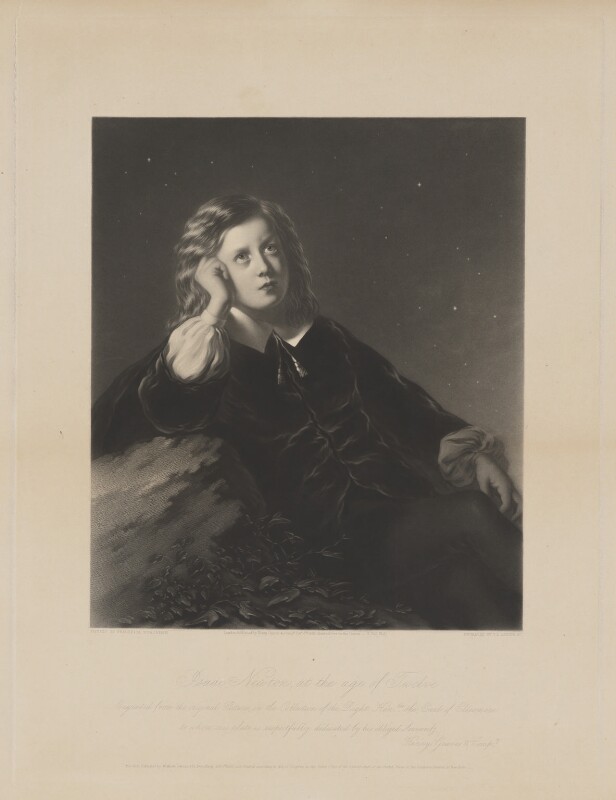
Historians do know a bit about Newton’s birth. His father (also named Isaac Newton) died two months before he was born. Newton was born prematurely, his mother apparently claimed he could fit inside a quart mug.

The mug may be surprising (it comes in quarts?), but there isn’t really enough material for a proper story here. That said, it would be kind of beside the point if there were. If we’re celebrating science, maybe the story of one particular child is not the story we should be telling.

Instead, we can tell stories about scientific ideas. These often have quite dramatic stories. Instead of running from inn to inn looking for rooms, scientists run from journal to journal trying to publish. Instead of frankincense, myrrh, and gold, there are Nobel prizes. Instead of devils tempting the shepherds away, you have tempting but unproductive ideas. For example, Newton battled ideas from Descartes and Liebniz that suggested gravity could be caused by a vortex of fluid. The idea was popular because it was mechanical-sounding: no invisible force of gravity needed. But it didn’t work, and Newton spent half of the Principia where he wrote down his new science building a theory of fluids so he could say it didn’t work.

So for this Newtonmas, tell the story of a scientific idea: one that had a difficult birth but that, eventually brought pilgrims and gifts from miles around.

Merry Newtonmas, everyone!

Congratulations to Pierre Agostini, Ferenc Krausz and Anne L’Huillier!

The 2023 Physics Nobel Prize was announced this week, awarded to Pierre Agostini, Ferenc Krausz and Anne L’Huillier for figuring out how to generate extremely fast (hundreds of attoseconds) pulses of light.

Some physicists try to figure out the laws of physics themselves, or the behavior of big photogenic physical systems like stars and galaxies. Those people tend to get a lot of press, but most physicists don’t do that kind of work. Instead, most physicists try to accomplish new things with old physical laws: taking light, electrons, and atoms and doing things nobody thought possible. While that may sound like engineering, the work these physicists do lies beyond the bounds of what engineers are comfortable with: there’s too much uncertainty, too little precedent, and the applications are still far away. The work is done with the goal of pushing our capabilities as far as we can, accomplishing new things and worrying later about what they’re good for.

(Somehow, they still tend to be good for something, often valuable things. Knowing things pays off!)

Anne L’Huillier began the story in 1987, shining infrared lasers through noble gases and seeing the gas emit unexpected new frequencies. As physicists built on that discovery, it went from an academic observation to a more and more useful tool, until in 2001 Pierre Agostini and Ferenc Krausz, with different techniques both based on the same knowledge, managed to produce pulses of light only a few hundred attoseconds long.

(“Atto” is one of the SI prefixes. They go milli, micro, nano, pico, femto, atto. Notice that “nano” is in the middle there: an attosecond is as much smaller than a nanosecond as a nanosecond is from an ordinary second.)

This is cool just from the point of view of “humans doing difficult things”, but it’s also useful. Electrons move on attosecond time-scales. If you can send pulses of light at attosecond speed, you’ve got a camera fast enough to capture how electrons move in real time. You can figure out how they traverse electronics, or how they slosh back and forth in biological molecules.

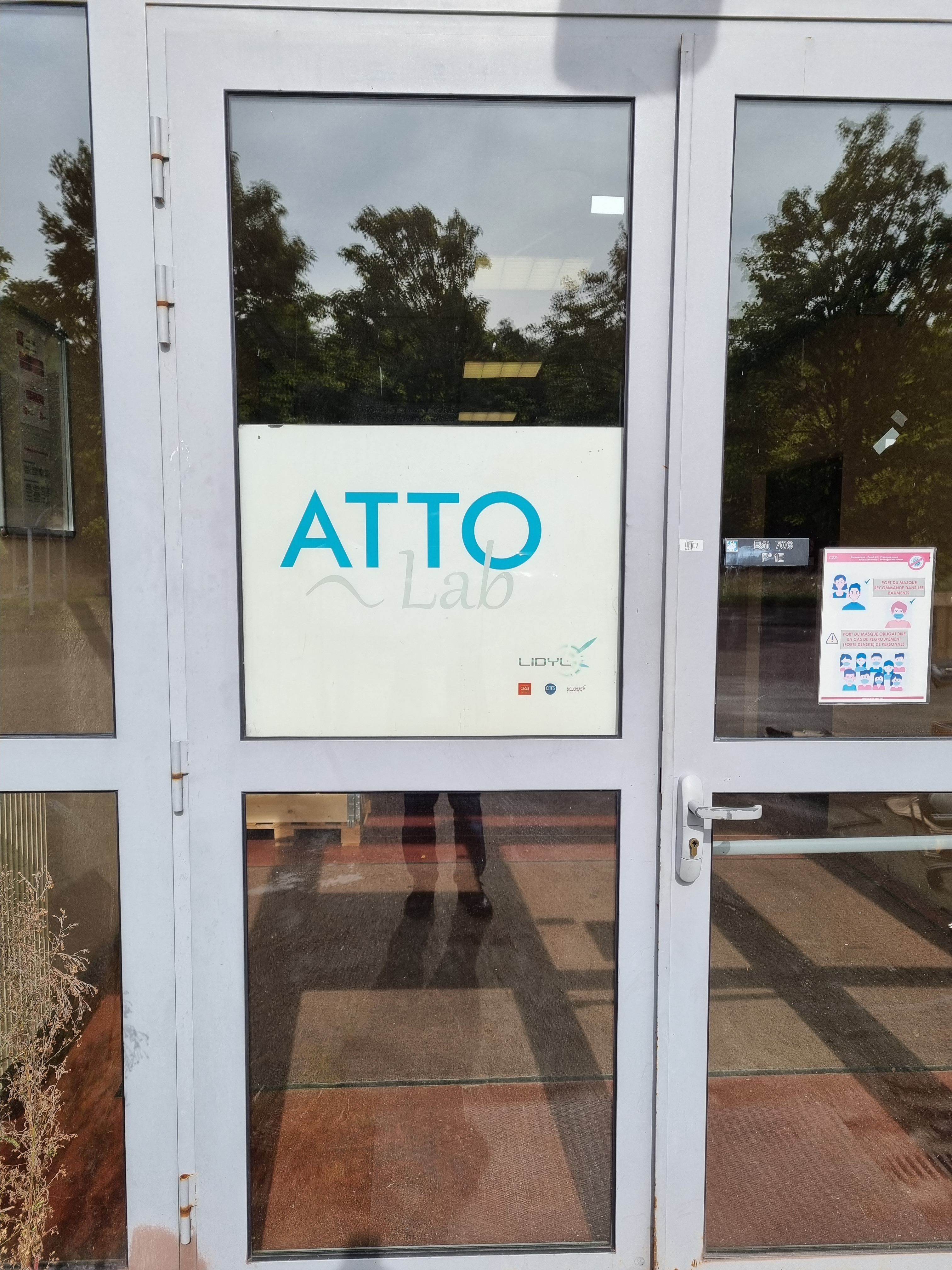
This year’s prize has an extra point of interest for me, as both Anne L’Huillier and Pierre Agostini did their prize-winning work at CEA Paris-Saclay, where I just started work last month. Their groups would eventually evolve into something called Attolab, I walk by their building every day on the way to lunch.

Cosmology and the Laws of Physics

Suppose you were an unusual sort of person: one who wanted, above all else, to know the laws of physics. Not content with the rules governing just one sort of thing, a star or an atom or a galaxy, you want to know the fundamental rules behind everything in the universe.

A good reductionist, you know that smaller things are more fundamental: the rules of the parts of things determine the rules of the whole. Knowing about quantum mechanics, you know that the more precisely you want to pin down something’s position, the more uncertain its momentum will be. And aware of special relativity, you know that terms like “small thing” or “high momentum” are relative: things can look bigger or smaller, faster or slower, depending on how they move relative to you. If you want to find the most fundamental things then, you end up needing not just small things or high momenta, but a lot of energy packed into a very small space.

You can get this in a particle collider, and that’s why they’re built. By colliding protons or electrons, you can cram a lot of energy into a very small space, and the rules governing that collision will be some of the most fundamental rules you have access to. By comparing your measurements of those collisions with your predictions, you can test your theories and learn more about the laws of physics.

If you really just wanted to know the laws of physics, then you might thing cosmology would be less useful. Cosmology is the science of the universe as a whole, how all of the stars and galaxies and the space-time around them move and change over the whole history of the universe. Dealing with very large distances, cosmology seems like it should take you quite far away from universal reductionist physical law.

If you thought that, you’d be missing one essential ingredient: the Big Bang. In the past, the universe was (as the song goes) in a hot dense state. The further back in time you look, the hotter and denser it gets. Go far enough back, and you find much higher energies, crammed into much smaller spaces, than we can make in any collider here on Earth. That means the Big Bang was governed by laws much more fundamental than the laws we can test here on Earth. And since the Big Bang resulted in the behavior of the universe as a whole, by observing that behavior we can learn more about those laws.

So a cosmologist can, in principle, learn quite a lot about fundamental physics. But cosmology is in many ways a lot harder than working with colliders. In a collider, we can clash protons together many times a second, with measurement devices right next to the collision. In cosmology, we have in a sense only one experiment, the universe we live in. We have to detect the evidence much later than the Big Bang itself, when the cosmic microwave background has cooled down and the structure of the universe has been warped by all the complexities of star and galaxy formation. Because we have only one experiment, all we can do is compare different sections of the sky, but there is only so much sky we can see, and as a consequence there are real limits on how much we can know.

Still, it’s worth finding out what we can know.m Cosmology is the only way at the moment we can learn about physics at very high energies, and thus learn the most fundamental laws. So if you’re someone who cares a lot about that sort of thing, it’s worth paying attention to!

Why You Might Want to Inspire Kids to Be Physicists (And What Movies You’d Make as a Result)

Since the new Oppenheimer biopic came out, people have been making fun of this tweet by Sam Altman:

Expecting a movie about someone building an immensely destructive weapon, watching it plunge the world into paranoia, then getting mercilessly hounded about it to be an inspiration seems…a bit unrealistic? But everyone has already made that point. What I found more interesting was a blog post a couple days ago by science blogger Chad Orzel. Orzel asks, suppose you did want to make a movie inspiring kids to go into physics: how would you do it? I commented on his post with my own take on the question, then realized it might be nice as a post here.

If you want to inspire kids to go into physics with a movie, what do you do? Well, you can start by asking, why do you want kids to go into physics? Why do you want more physicists?

Maybe you believe that more physicists are needed to understand the fundamental laws of the universe. The quest of fundamental physics may be worthwhile in its own right, or may be important because understanding the universe gives us more tools to manipulate it. You might even think of Oppenheimer’s story in that way: because physicists understood the nature of the atom, they could apply that knowledge to change the world, racing to use it to defeat the Nazis and later convinced to continue to avoid a brutal invasion of Japan. (Whether the bomb was actually necessary to do this is still, of course, quite controversial.)

If that’s why you want more kids to be physicists, then you want a story like that. You could riff off of Ashoke Sen’s idea that physics may be essential to save humanity. The laws of physics appear to be unstable, such that at some point the world will shift and a “bubble”, expanding at the speed of light, will rewrite the rules in a way that would destroy all life as we know it. The only way to escape would be to travel faster than light, something that is possible because the universe itself expands at those speeds. By scattering “generation ships” in different directions, we could ensure that some of humanity would survive any such “bubble”: but only if we got the physics right.

A movie based on that idea could look a bit like the movie Cloud Atlas, with connected characters spanning multiple time periods. Scientists in the modern day investigate the expanding universe, making plans that refugees in a future generation ship must carry out. If you want to inspire kids with the idea that physics could save the world, you could get a lot of mileage out of a story that could actually be true.

On the other hand, maybe you don’t care so much about fundamental physics. Maybe you want more physicists because they’re good at solving a variety of problems. They help to invent new materials, to measure things precisely, to predict the weather, change computation, and even contribute to medicine. Maybe you want to tell a story about that.

(Maybe you even want these kids to go farther afield, and study physics without actually becoming physicists. Sam Altman is not a physicist, and I’ve heard he’s not very interested in directing his philanthropic money to increasing the number of jobs for physicists. On the other hand, the AI industry where he is a central player does hire a lot of ex-physicists.)

The problem, as Orzel points out, is that those stories aren’t really stories about physicists. They’re stories about engineering and technology, and a variety of other scientists, because a wide variety of people contribute to these problems. In order to tell a story that inspires people to be physicists, you need a story that highlights something unique that they bring to the table.

Orzel gets close to what I think of as the solution, by bringing up The Social Network. Altman was also mocked for saying that The Social Network motivated kids to found startups: the startup founders in that movie are not exactly depicted as good people. But in reality, it appears that the movie did motivate people to found startups. Stories about badass amoral jerks are engaging, and it’s easy to fantasize about having that kind of power and ability. There’s a reason that The Imitation Game depicted Alan Turing, a man known for his gentle kindness, as brusque and arrogant.

If you want to tell a story about physicists, it’s actually pretty easy, because physicists can be quite arrogant! There is a stereotype of physicists walking into another field, deciding they know everything they need to know, and lecturing the experts about how they should be doing their jobs. This really does happen, and sometimes it’s exactly as dumb as it sounds…but sometimes the physicists are right! Orzel brings up Feynman’s role in figuring out how the Challenger space shuttle blew up, an example of precisely this kind of success.

So if you want kids to grow up to be generalist physicists, people who solve all sorts of problems for all sorts of people, you need to tell them a story like that. One with a Sherlock-esque physicist who runs around showing how much smarter they are than everyone else. You need to make a plot where they physicist waves around “physicist tools”, like dimensional analysis, Fermi estimates, and thermodynamics, and uses them to uncover a mystery, showing a bunch of engineers or biologists just how much cooler they are.

If you do that, you probably could inspire some kids to become physicists. You’ll need a new movie to inspire them to be engineers or biologists, though!

En France!

I don’t have a lot to say this week. I’ve been busy moving, in preparation for my new job in the Fall. Moving internationally hasn’t left a lot of time, or mental space, for science, or even for taking a nice photo for this post! But I’ll pick up again next week, with Amplitudes, my sub-field’s big yearly conference.