This week, people all over the world celebrated the birth of someone whose universally attractive ideas spread around the globe. I’m talking, of course about Isaac Newton.
For Newtonmas this year, I’ve been pondering another aspect of Newton’s life. There’s a story you might have heard that physicists can do basically anything, with many people going from a career in physics to a job in a variety of other industries. It’s something I’ve been trying to make happen for myself. In a sense, this story goes back to the very beginning, when Newton quit his academic job to work at the Royal Mint.
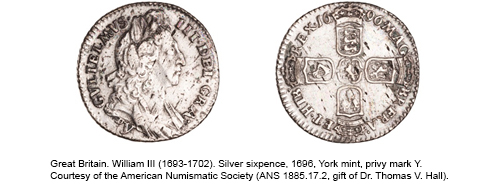
On the surface, there are a lot of parallels. At the Mint, a big part of Newton’s job was to combat counterfeiting and “clipping”, where people would carve small bits of silver off of coins. This is absolutely a type of job ex-physicists do today, at least in broad strokes. Working as Data Scientists for financial institutions, people look for patterns in transactions that give evidence of fraud.
Digging deeper, though, the analogy falls apart a bit. Newton didn’t apply any cunning statistical techniques to hunt down counterfeiters. Instead, the stories that get told about his work there are basically detective stories. He hung out in bars to catch counterfeiter gossip and interviewed counterfeiters in prison, not exactly the kind of thing you’d hire a physicist to do these days. The rest of the role was administrative: setting up new mint locations and getting people to work overtime to replace the country’s currency. Newton’s role at the mint was less like an ex-physicist going into Data Science and more like Steven Chu as Secretary of Energy: someone with a prestigious academic career appointed to a prestigious government role.
If you’re looking for a patron saint of physicists who went to industry, Newton’s contemporary Robert Hooke may be a better bet. Unlike many other scientists of the era, Hooke wasn’t independently wealthy, and for a while he was kept quite busy working for the Royal Society. But a bit later he had another, larger source of income: working as a surveyor and architect, where he designed several of London’s iconic buildings. While Newton’s work at the Mint drew on his experience as a person of power and influence, working as an architect drew much more on skills directly linked to Hooke’s work as a scientist: understanding the interplay of forces in quantitative detail.
While Newton and Hooke’s time was an era of polymaths, in some sense the breadth of skills imparted by a physics education has grown. Physicists learn statistics (which barely existed in Newton’s time) programming (which did not exist at all) and a wider range of mathematical and physical models. Having a physics background isn’t the ideal way to go into industry (that would be having an industry background). But for those of us making the jump, it’s still a Newtonmas gift to be grateful for.
 4 gravitons
He was a very successful mint director. But, not all of his side quests were as fruitful. For example, he devoted a huge amount of time and effort and thought to Unitarian theology.
LikeLike
Yeah, I guess that didn’t end up impacting modern Unitarians very much?
LikeLike
Just so.
LikeLike