Monthly Archives: October 2021

Serial Killers and Grad School Horror Stories

It’s time for my yearly Halloween post. My regular readers know what to expect: a horror trope and a physics topic, linked by a tortured analogy. And this year, the pun is definitely intended.

Horror movies have a fascination with serial killers. Over the years, they’ve explored every possible concept: from gritty realism to the supernatural, crude weapons to sophisticated traps, motivations straightforward to mysterious, and even killers who are puppets.
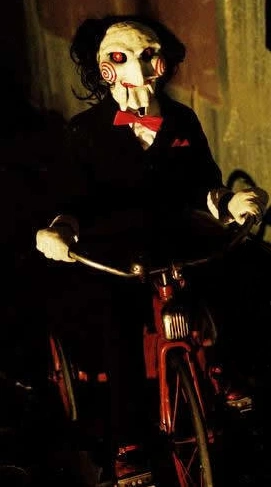
Yes I know Billy is not actually the killer in the Saw films

One common theme of all fictional serial killers is power. Serial killers are scary because they have almost all the power in a situation, turned to alien and unpredictable goals. The protagonists of a horror film are the underdogs, never knowing whether the killer will pull out some new ability or plan that makes everything they try irrelevant. Even if they get the opportunity to negotiate, the power imbalance means that they can’t count on getting what they need: anything the killer agrees will be twisted to serve their own ends.

Academics tell their own kind of horror stories. Earlier this month, the historian Brett Deveraux had a blog post about graduate school, describing what students go through to get a PhD. As he admits, parts of his story only apply to the humanities. STEM departments have more money, and pay their students a bit better. It’s not a lot better (I was making around $20,000 a year at Stony Brook), but it’s enough that I’ve never heard of a student taking out a loan to make ends meet. (At most, people took on tutoring jobs for a bit of extra cash.) We don’t need to learn new languages, and our degrees take a bit less time: six or seven years for an experimental physicist, and often five for a theoretical physicist. Finally, the work can be a lot less lonely, especially for those who work in a lab.

Still, there is a core in common, and that core once again is power. Universities have power, of course: and when you’re not a paying customer but an employee with your career on the line, that power can be quite scary. But the person with the most power over a PhD student is their advisor. Deveraux talks compellingly about the difference that power can make: how an advisor who is cruel, or indifferent, or just clueless, can make or break not just your career but your psychological well-being. The lucky students, like Deveraux and me, find supportive mentors who help us survive and move forward. The unlucky students leave with scars, even if those scars aren’t jigsaw-shaped.

Neither Deveraux or I have experience with PhD programs in Europe, which are quite different in structure from those in the US. But the power imbalance is still there, and still deadly, and so despite the different structure, I’ve seen students here break down, scarred in the same way.

Deveraux frames his post as advice for those who want to go to grad school, and his first piece of advice is “Have you tried wanting something else?” I try to echo that when I advise students. I don’t always succeed: there’s something exciting about a young person interested in the same topics we’re interested in, willing to try to make a life of it. But it is important to know what you’re getting into, and to know there’s a big world out there of other options. If, after all that, you decide to stick through it, just remember: power matters. If you give someone power over you, try to be as sure as you can that it won’t turn into a horror story.
In Uppsala for Elliptics 2021

I’m in Uppsala in Sweden this week, at an actual in-person conference.

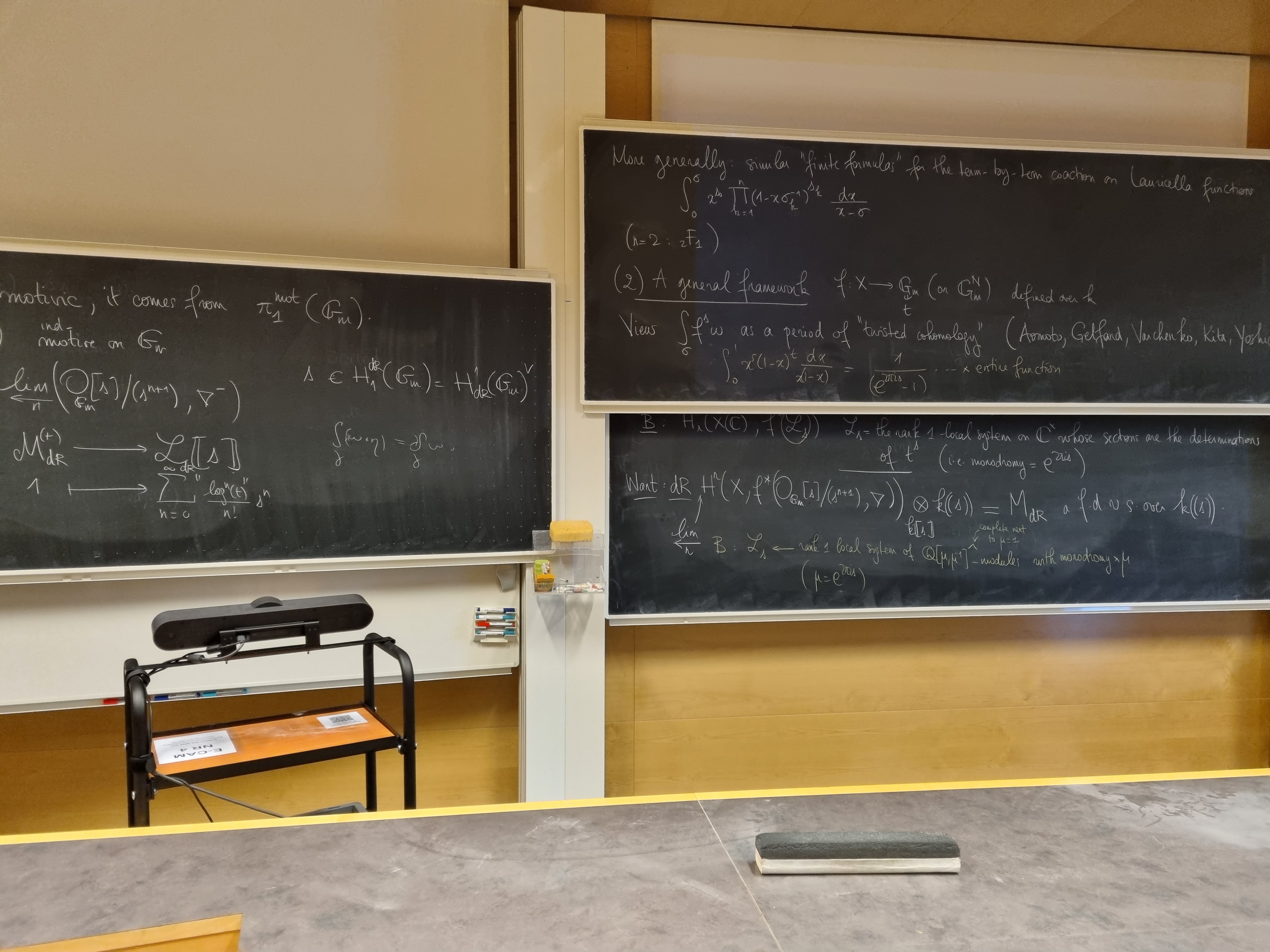
With actual blackboards!

Elliptics started out as a series of small meetings of physicists trying to understand how to make sense of elliptic integrals in calculations of colliding particles. It grew into a full-fledged yearly conference series. I organized last year, which naturally was an online conference. This year though, the stage was set for Uppsala University to host in person.

I should say mostly in person. It’s a hybrid conference, with some speakers and attendees joining on Zoom. Some couldn’t make it because of travel restrictions, or just wanted to be cautious about COVID. But seemingly just as many had other reasons, like teaching schedules or just long distances, that kept them from coming in person. We’re all wondering if this will become a long-term trend, where the flexibility of hybrid conferences lets people attend no matter their constraints.

The hybrid format worked better than expected, but there were still a few kinks. The audio was particularly tricky, it seemed like each day the organizers needed a new microphone setup to take questions. It’s always a little harder to understand someone on Zoom, especially when you’re sitting in an auditorium rather than focused on your own screen. Still, technological experience should make this work better in future.

Content-wise, the conference began with a “mini-school” of pedagogical talks on particle physics, string theory, and mathematics. I found the mathematical talks by Erik Panzer particularly nice, it’s a topic I still feel quite weak on and he laid everything out in a very clear way. It seemed like a nice touch to include a “school” element in the conference, though I worry it ate too much into the time.

The rest of the content skewed more mathematical, and more string-theoretic, than these conferences have in the past. The mathematical content ranged from intriguing (including an interesting window into what it takes to get high-quality numerics) to intimidatingly obscure (large commutative diagrams, category theory on the first slide). String theory was arguably under-covered in prior years, but it felt over-covered this year. With the particle physics talks focusing on either general properties with perhaps some connections to elliptics, or to N=4 super Yang-Mills, it felt like we were missing the more “practical” talks from past conferences, where someone was computing something concrete in QCD and told us what they needed. Next year is in Mainz, so maybe those talks will reappear.

Outreach Talk on Math’s Role in Physics

Tonight is “Culture Night” in Copenhagen, the night when the city throws open its doors and lets the public in. Museums and hospitals, government buildings and even the Freemasons, all have public events. The Niels Bohr Institute does too, of course: an evening of physics exhibits and demos, capped off with a public lecture by Denmark’s favorite bow-tie wearing weirder-than-usual string theorist, Holger Bech Nielsen. In between, there are a number of short talks by various folks at the institute, including yours truly.

In my talk, I’m going to try and motivate the audience to care about math. Math is dry of course, and difficult for some, but we physicists need it to do our jobs. If you want to be precise about a claim in physics, you need math simply to say what you want clearly enough.

Since you guys likely don’t overlap with my audience tonight, it should be safe to give a little preview. I’ll be using a few examples, but this one is the most complicated:

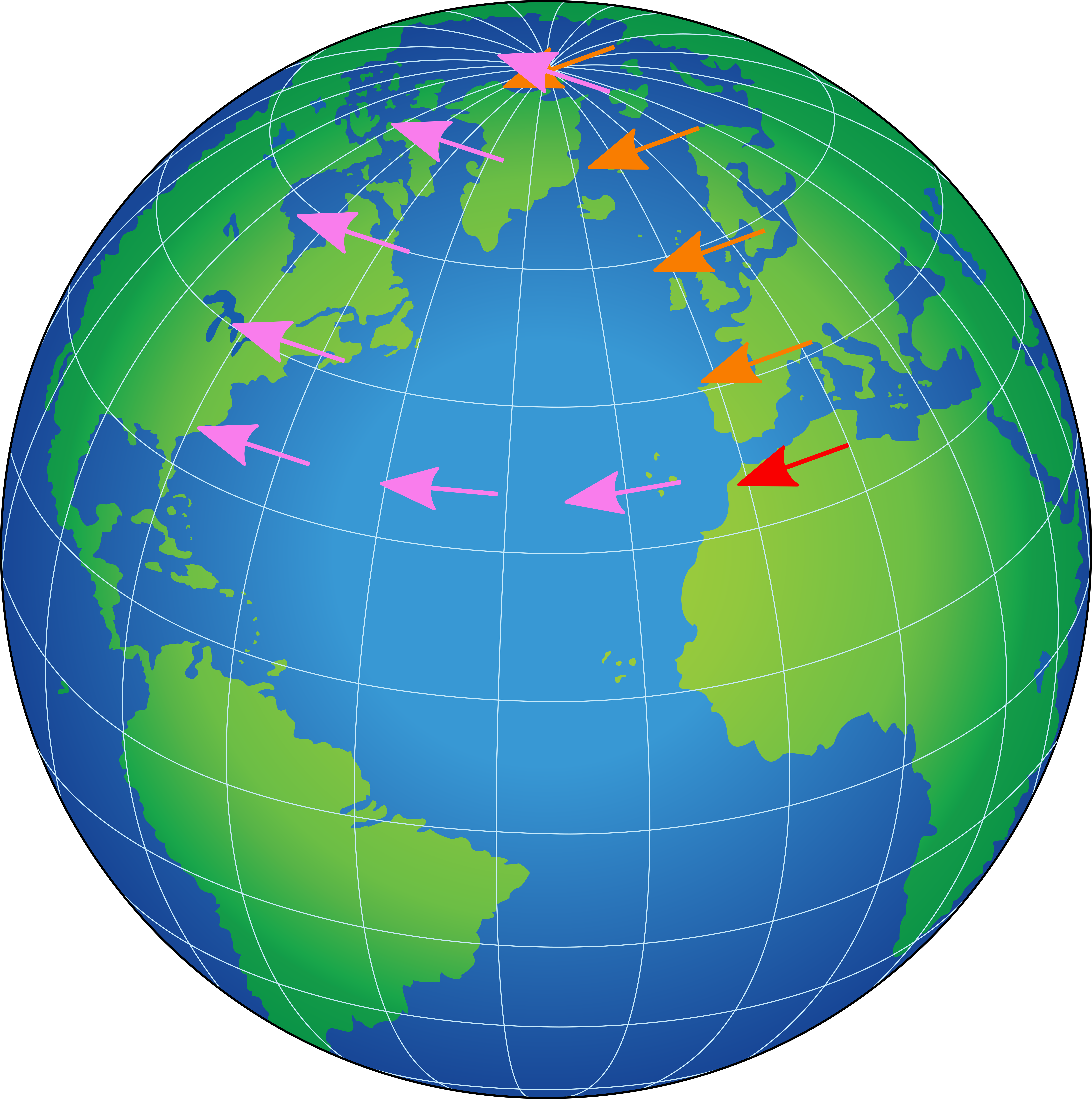
I’ll be telling a story I stole from chapter seven of the web serial Almost Nowhere. (That link is to the first chapter, by the way, in case you want to read the series without spoilers. It’s very strange, very unique, and at least in my view quite worth reading.) You follow a warrior carrying a spear around a globe in two different paths. The warrior tries to always point in the same direction, but finds that the two different paths result in different spears when they meet. The story illustrates that such a simple concept as “what direction you are pointing” isn’t actually so simple: if you want to think about directions in curved space (like the surface of the Earth, but also, like curved space-time in general relativity) then you need more sophisticated mathematics (a notion called parallel transport) to make sense of it.

It’s kind of an advanced concept for a public talk. But seeing it show up in Almost Nowhere inspired me to try to get it across. I’ll let you know how it goes!

By the way, if you are interested in learning the kinds of mathematics you need for theoretical physics, and you happen to be a Bachelor’s student planning to pursue a PhD, then consider the Perimeter Scholars International Master’s Program! It’s a one-year intensive at the Perimeter Institute in Waterloo, Ontario, in Canada. In a year it gives you a crash course in theoretical physics, giving you tools that will set you ahead of other beginning PhD students. I’ve witnessed it in action, and it’s really remarkable how much the students learn in a year, and what they go on to do with it. Their early registration deadline is on November 15, just a month away, so if you’re interested you may want to start thinking about it.

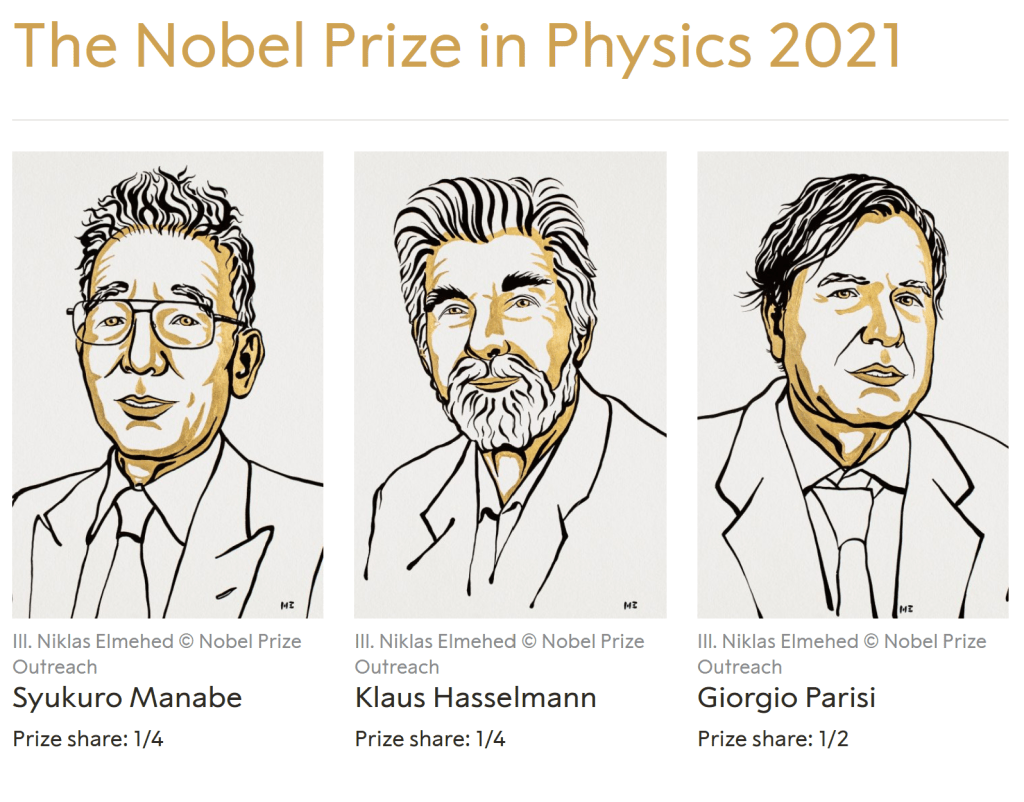
Congratulations to Syukuro Manabe, Klaus Hasselmann, and Giorgio Parisi!

The 2021 Nobel Prize in Physics was announced this week, awarded to Syukuro Manabe and Klaus Hasselmann for climate modeling and Giorgio Parisi for understanding a variety of complex physical systems.

Before this year’s prize was announced, I remember a few “water cooler chats” about who might win. No guess came close, though. The Nobel committee seems to have settled in to a strategy of prizes on a loosely linked “basket” of topics, with half the prize going to a prominent theorist and the other half going to two experimental, observational, or (in this case) computational physicists. It’s still unclear why they’re doing this, but regardless it makes it hard to predict what they’ll do next!

When I read the announcement, my first reaction was, “surely it’s not that Parisi?” Giorgio Parisi is known in my field for the Altarelli-Parisi equations (more properly known as the DGLAP equations, the longer acronym because, as is often the case in physics, the Soviets got there first). These equations are in some sense why the scattering amplitudes I study are ever useful at all. I calculate collisions of individual fundamental particles, like quarks and gluons, but a real particle collider like the LHC collides protons. Protons are messy, interacting combinations of quarks and gluons. When they collide you need not merely the equations describing colliding quarks and gluons, but those that describe their messy dynamics inside the proton, and in particular how those dynamics look different for experiments with different energies. The equation that describes that is the DGLAP equation.

As it turns out, Parisi is known for a lot more than the DGLAP equation. He is best known for his work on “spin glasses”, models of materials where quantum spins try to line up with each other, never quite settling down. He also worked on a variety of other complex systems, including flocks of birds!

I don’t know as much about Manabe and Hasselmann’s work. I’ve only seen a few talks on the details of climate modeling. I’ve seen plenty of talks on other types of computer modeling, though, from people who model stars, galaxies, or black holes. And from those, I can appreciate what Manabe and Hasselmann did. Based on those talks, I recognize the importance of those first one-dimensional models, a single column of air, especially back in the 60’s when computer power was limited. Even more, I recognize how impressive it is for someone to stay on the forefront of that kind of field, upgrading models for forty years to stay relevant into the 2000’s, as Manabe did. Those talks also taught me about the challenge of coupling different scales: how small effects in churning fluids can add up and affect the simulation, and how hard it is to model different scales at once. To use these effects to discover which models are reliable, as Hasselmann did, is a major accomplishment.

Breaking Out of “Self-Promotion Voice”

What do TED talks and grant applications have in common?

Put a scientist on a stage, and what happens? Some of us panic and mumble. Others are as smooth as a movie star. Most, though, fall back on a well-practiced mode: “self-promotion voice”.

A scientist doing self-promotion voice is easy to recognize. We focus on ourselves, of course (that’s in the name!), talking about all the great things we’ve done. If we have to mention someone else, we make sure to link it in some way: “my colleague”, “my mentor”, “which inspired me to”. All vulnerability is “canned” in one way or another: “challenges we overcame”, light touches on the most sympathetic of issues. Usually, we aren’t negative towards our colleagues either: apart from the occasional very distant enemy, everyone is working with great scientific virtue. If we talk about our past, we tell the same kinds of stories, mentioning our youthful curiosity and deep buzzwordy motivations. Any jokes or references are carefully pruned, made accessible to the lowest-common-denominator. This results in a standard vocabulary: see a metaphor, a quote, or a turn of phrase, and you’re bound to see it in talks again and again and again. Things get even more repetitive when you take into account how often we lean on the voice: a given speech or piece will be assembled from elementary pieces, snippets of practiced self-promotion that we pour in like packing peanuts after a minimal edit, filling all available time and word count.

“My passion for teaching manifests…”

Packing peanuts may not be glamorous, but they get the job done. A scientist who can’t do “the voice” is going to find life a lot harder, their negativity or clumsiness turning away support when they need it most. Except for the greatest of geniuses, we all have to learn a bit of self-promotion to stay employed.

We don’t have to stop there, though. Self-promotion voice works, but it’s boring and stilted, and it all looks basically the same. If we can do something a bit more authentic then we stand out from the crowd.

I’ve been learning this more and more lately. My blog posts have always run the gamut: some are pure formula, but the ones I’m most proud of have a voice all their own. Over the years, I’ve been pushing my applications in that direction. Each grant and job application has a bit of the standard self-promotion voice pruned away, and a bit of another voice (my own voice?) sneaking in. This year, as I send out applications, I’ve been tweaking things. I almost hope the best jobs come late in the year, my applications will be better then!