Monthly Archives: March 2016

Four Gravitons and Some Wildly Irresponsible Amplitudes Predictions

My post on the “physics of decimals” a couple of weeks back caught physics blogger Luboš Motl’s attention, with predictable results. Mostly, this led to a rather unproductive debate about semantics, but he did bring up one thing that I think deserves some further clarification.

In my post, I asked you to imagine asking a genie for the full consequences of quantum field theory. Short of genie-based magic, is this the sort of thing I think it’s at all possible to know?

robinwilliams_aladdin

A Candle of Invocation? Sure, why not.

In a word, no.

The world is messy, not the sort of thing that tends to be described by neat exact solutions. That’s why we use approximations, and it’s why physicists can’t just step in and solve biology or psychology by deriving everything from first principles.

That said, the nice thing about approximations is that there’s often room for improvement. Sometimes this is quantitative, literally pushing to the next order of decimals, while sometimes it’s qualitative, viewing problems from a new perspective and attacking them from a new approach.

I’d like to give you some idea of the sorts of improvements I think are possible. I’ll focus on scattering amplitudes, since they’re my field. In order to be precise, I’ll be using technical terms here without much explanation; if you’re curious about something specific go ahead and ask in the comments. Finally, there are no implied time-scales here: I’ll be rating things based on whether I think they’re likely to eventually be understood, not on how long it will take us to get there.

Let’s begin with the most likely category:

Probably going to happen:

Mathematicians characterize the set of n-point cluster polylogarithms whose collinear limits are well-defined (n-1)-point cluster polylogarithms.

The seven-loop N=8 supergravity integrand is found, and the coefficient of its potential divergence is evaluated.

The dual Amplituhedron is found.

A general procedure is described for re-summing the L-loop coefficient of the Pentagon OPE for any L into a polylogarithmic form, at least at six points.

We figure out what the heck is up with the MHV-NMHV relation we found here.

Likely to happen, but there may be unforeseen complications:

N=8 supergravity is found to be finite at seven loops.

A symbol bootstrap becomes workable for QCD amplitudes at two or three loops, perhaps involving Landau singularities.

Something like a symbol bootstrap becomes workable for elliptic integrals, though it may only pass a “physicist” level of rigor.

Analogues to all of the work up to the actual Amplituhedron itself are performed for non-planar N=4 super Yang-Mills.

Quite possible, but I’m likely overoptimistic:

The space of n-point cluster polylogarithms whose collinear limits are well-defined (n-1)-point cluster polylogarithms that also obey the first entry condition and some number of final entry conditions turns out to be well-constrained enough that some all-loop all-point statements can be made, at least for MHV.

The enhanced cancellations observed in supergravity theories are understood, and used to provide a strong argument that N=8 supergravity is perturbatively finite.

All-multiplicity analytic QCD results at two loops, for at least the simpler helicity configurations.

The volume of the dual Amplituhedron is characterized by mathematicians and the connection to cluster polylogarithms is fully explored.

A non-planar Amplituhedron is found.

Less likely, but if all of the above happens I would not be all that surprised:

A way is found to double-copy the non-planar Amplituhedron to get an N=8 supergravity Amplituhedron.

The enhanced cancellations in N=8 supergravity turn out to be something “deep”: perhaps they are derivable from string theory, or provide a novel constraint on quantum gravity theories.

Various all-loop statements about the polylogarithms present in N=4 are used to make more restricted all-loop statements about QCD.

The Pentagon OPE is re-summed for finite coupling, if not into known functions than into a form that admits good numerics and various analytic manipulations. Alternatively, the sorts of functions that the Pentagon OPE can sum to are characterized and a bootstrap procedure becomes viable for them.

Irresponsible speculations, suited to public talks or grant applications:

The N=8 Amplituhedron leads to some sort of reformulation of space-time in a way that solves various quantum gravity paradoxes.

The sorts of mathematical objects found in the finite-coupling resummation of the Pentagon OPE lead to a revival of the original analytic S-matrix program, now with an actual chance to succeed.

Extremely unlikely:

Analytic all-loop QCD results.

Magical genie land:

Analytic finite coupling QCD results.

It Was Thirty Years Ago Yesterday, Parke and Taylor Taught the Band to Play…

Just a short post this week. I’m at MHV@30, a conference at Fermilab in honor of Parke and Taylor’s landmark paper from March 17, 1986. I don’t have time to write up an explanation of their work’s importance, but luckily I already have.

It’s my first time visiting Fermilab. They took us on a tour of their neutrino detectors 100m underground. Since we theorists don’t visit experiments very often, it was an unusual experience.

IMG_20160317_135147031

In case you wanted to know what a neutrino beam looks like, look at the target.

The fun thing about these kinds of national labs is the sheer variety of research, from the most abstract theory to the most grounded experiments, that spring from the same core goals. Physics almost always involves a diversity of viewpoints and interests, and that’s nowhere more obvious than here.

In Defense of Lord Kelvin, Michelson, and the Physics of Decimals

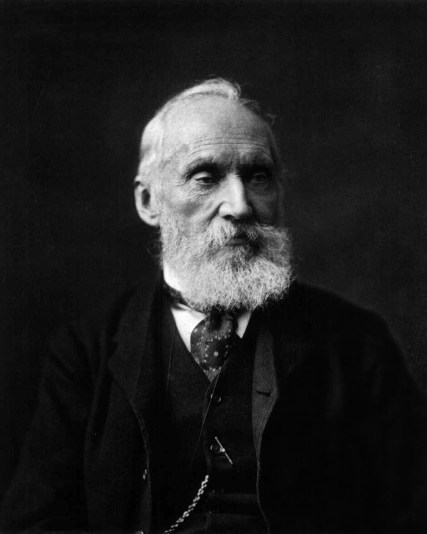
William Thompson, Lord Kelvin, was a towering genius of 19th century physics. He is often quoted as saying,

There is nothing new to be discovered in physics now. All that remains is more and more precise measurement.

lord_kelvin_photograph

Certainly sounds like something I would say!

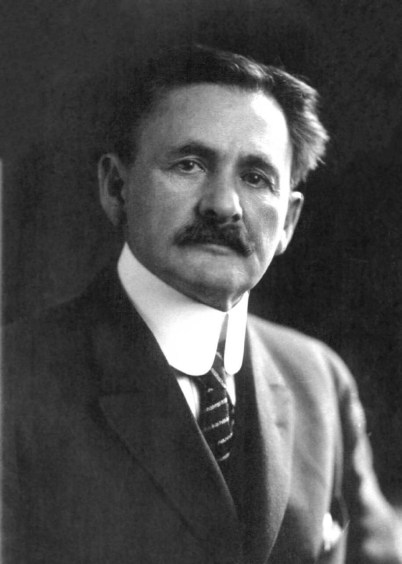
As it happens, he never actually said this. It’s a paraphrase of a quote from Albert Michelson, of the Michelson-Morley Experiment:

While it is never safe to affirm that the future of Physical Science has no marvels in store even more astonishing than those of the past, it seems probable that most of the grand underlying principles have been firmly established and that further advances are to be sought chiefly in the rigorous application of these principles to all the phenomena which come under our notice. It is here that the science of measurement shows its importance — where quantitative work is more to be desired than qualitative work. An eminent physicist remarked that the future truths of physical science are to be looked for in the sixth place of decimals.

albert_abraham_michelson2

Now that’s more like it!

In hindsight, this quote looks pretty silly. When Michelson said that “it seems probable that most of the grand underlying principles have been firmly established” he was leaving out special relativity, general relativity, and quantum mechanics. From our perspective, the grandest underlying principles had yet to be discovered!

And yet, I think we should give Michelson some slack.

Someone asked me on twitter recently what I would choose if given the opportunity to unravel one of the secrets of the universe. At the time, I went for the wishing-for-more-wishes answer: I’d ask for a procedure to discover all of the other secrets.

I was cheating, to some extent. But I do think that the biggest and most important mystery isn’t black holes or the big bang, isn’t asking what will replace space-time or what determines the constants in the Standard Model. The most critical, most important question in physics, rather, is to find the consequences of the principles we actually know!

We know our world is described fairly well by quantum field theory. We’ve tested it, not just to the sixth decimal place, but to the tenth. And while we suspect it’s not the full story, it should still describe the vast majority of our everyday world.

If we knew not just the underlying principles, but the full consequences of quantum field theory, we’d understand almost everything we care about. But we don’t. Instead, we’re forced to calculate with approximations. When those approximations break down, we fall back on experiment, trying to propose models that describe the data without precisely explaining it. This is true even for something as “simple” as the distribution of quarks inside a proton. Once you start trying to describe materials, or chemistry or biology, all bets are off.

This is what the vast majority of physics is about. Even more, it’s what the vast majority of science is about. And that’s true even back to Michelson’s day. Quantum mechanics and relativity were revelations…but there are still large corners of physics in which neither matters very much, and even larger parts of the more nebulous “physical science”.

New fundamental principles get a lot of press, but you shouldn’t discount the physics of “the sixth place of decimals”. Most of the big mysteries don’t ask us to challenge our fundamental paradigm: rather, they’re challenges to calculate or measure better, to get more precision out of rules we already know. If a genie gave me the solution to any of physics’ mysteries I’d choose to understand the full consequences of quantum field theory, or even of the physics of Michelson’s day, long before I’d look for the answer to a trendy question like quantum gravity.

Things You Don’t Know about the Power of the Dark Side

Last Wednesday, Katherine Freese gave a Public Lecture at Perimeter on the topic of Dark Matter and Dark Energy. The talk should be on Perimeter’s YouTube page by the time this post is up.

Answering twitter questions during the talk made me realize that there’s a lot the average person finds confusing about Dark Matter and Dark Energy. Freese addressed much of this pretty well in her talk, but I felt like there was room for improvement. Rather than try to tackle it myself, I decided to interview an expert on the Dark Side of the universe.

darth_vader

Twitter doesn’t know the power of the dark side!

Lord Vader, some people have a hard time distinguishing Dark Matter and Dark Energy. What do you have to say to them?

Fools! Light side astronomers call “dark” that which they cannot observe and cannot understand. “Fear” and “anger” are different heights of emotion, but to the Jedi they are only the path to the Dark Side. Dark Energy and Dark Matter are much the same: both distinct, both essential to the universe, and both “dark” to the telescopes of the light.

Let’s start with Dark Matter. Is it really matter?

You ask an empty question. “Matter” has been defined in many ways. When we on the Dark Side refer to Dark Matter, we merely mean to state that it behaves much like the matter you know: it is drawn to and fro by gravity, sloshing about.

It is distinct from your ordinary matter in that two of the forces of nature, the strong nuclear force and electromagnetism, do not concern it. Ordinary matter is bound together in the nuclei of atoms by the strong force, or woven into atoms and molecules by electromagnetism. This makes it subject to all manner of messy collisions.

Dark Matter, in contrast, is pure, partaking neither of nuclear nor chemical reactions. It passes through each of us with no notice. Only the weak nuclear force and gravity affect it. The latter has brought it slowly into clumps and threads through the universe, each one a vast nest for groupings of stars. Truly, Dark Matter surrounds us, penetrates us, and binds the galaxy together.

Could Dark Matter be something we’re more familiar with, like neutrinos or black holes? What about a modification of gravity?

Many wondered as much, when the study of the Dark Side was young. They were wrong.

The matter you are accustomed to composes merely a twentieth of the universe, while Dark Matter is more than a quarter. There is simply not enough of these minor contributions, neutrinos and black holes, to account for the vast darkness that surrounds the galaxy, and with each astronomer’s investigation we grow more assured.

As for modifying gravity, do you seek to modify a fundamental Force?

If so, you should be wary. Forces, by their nature, are accompanied by particles, and gravity is no exception. Take care that your tinkering does not result in a new sort of particle. If so, you may be unknowingly walking the path of the Dark Side, for your modification may be just another form of Dark Matter.

What sort of things could Dark Matter be? Can Dark Matter decay into ordinary matter? Could there be anti-Dark Matter?

As of yet, your scientists are still baffled by the nature of Dark Matter. Still, there are limits. Since only rare events could produce it from ordinary matter, the universe’s supply of Dark Matter must be ancient, dating back to the dawn of the cosmos. In that case, it must decay only slowly, if at all. Similarly, if Dark Matter had antimatter forms then its interactions must be so weak that it has not simply annihilated with its antimatter half across the universe. So while either is possible, it may be simpler for your theorists if Dark Matter did not decay, and was its own antimatter counterpart. On the other hand, if Dark Matter did undergo such reactions, your kind may one day be able to detect it.

Of course, as a master of the Dark Side I know the true nature of Dark Matter. However, I could only impart it to a loyal apprentice…

Yeah, I think I’ll pass on that. They say you can only get a job in academia when someone dies, but unlike the Sith they don’t mean it literally.

Let’s move on to Dark Energy. What can you tell us about it?

Dark “Energy”, like Dark Matter, is named for what people on your Earth cannot comprehend. Nothing, not even Dark Energy, is “made of energy”. Dark Energy is “energy” merely because it behaves unlike matter.

Matter, even Dark Matter, is drawn together by the force of gravity. Under its yoke, the universe would slow down in its expansion and eventually collapse into a crunch, like the throat of an incompetent officer.

However, the universe is not collapsing, but accelerating, galaxies torn away from each other by a force that must compose more than two thirds of the universe. It is rather like the Yuuzhan Vong, a mysterious force from outside the galaxy that scouts persistently under- or over-estimate.

Umm, I’m pretty sure the Yuuzhan Vong don’t exist anymore, since Disney got rid of the Expanded Universe.

That perfidious Mouse!

Well folks, Vader is now on a rampage of revenge in the Disney offices, so I guess we’ll have to end the interview. Tune in next week, and until then, may the Force be with you!