
The 2023 Physics Nobel Prize was announced this week, awarded to Pierre Agostini, Ferenc Krausz and Anne L’Huillier for figuring out how to generate extremely fast (hundreds of attoseconds) pulses of light.

Some physicists try to figure out the laws of physics themselves, or the behavior of big photogenic physical systems like stars and galaxies. Those people tend to get a lot of press, but most physicists don’t do that kind of work. Instead, most physicists try to accomplish new things with old physical laws: taking light, electrons, and atoms and doing things nobody thought possible. While that may sound like engineering, the work these physicists do lies beyond the bounds of what engineers are comfortable with: there’s too much uncertainty, too little precedent, and the applications are still far away. The work is done with the goal of pushing our capabilities as far as we can, accomplishing new things and worrying later about what they’re good for.
(Somehow, they still tend to be good for something, often valuable things. Knowing things pays off!)
Anne L’Huillier began the story in 1987, shining infrared lasers through noble gases and seeing the gas emit unexpected new frequencies. As physicists built on that discovery, it went from an academic observation to a more and more useful tool, until in 2001 Pierre Agostini and Ferenc Krausz, with different techniques both based on the same knowledge, managed to produce pulses of light only a few hundred attoseconds long.
(“Atto” is one of the SI prefixes. They go milli, micro, nano, pico, femto, atto. Notice that “nano” is in the middle there: an attosecond is as much smaller than a nanosecond as a nanosecond is from an ordinary second.)
This is cool just from the point of view of “humans doing difficult things”, but it’s also useful. Electrons move on attosecond time-scales. If you can send pulses of light at attosecond speed, you’ve got a camera fast enough to capture how electrons move in real time. You can figure out how they traverse electronics, or how they slosh back and forth in biological molecules.
This year’s prize has an extra point of interest for me, as both Anne L’Huillier and Pierre Agostini did their prize-winning work at CEA Paris-Saclay, where I just started work last month. Their groups would eventually evolve into something called Attolab, I walk by their building every day on the way to lunch.
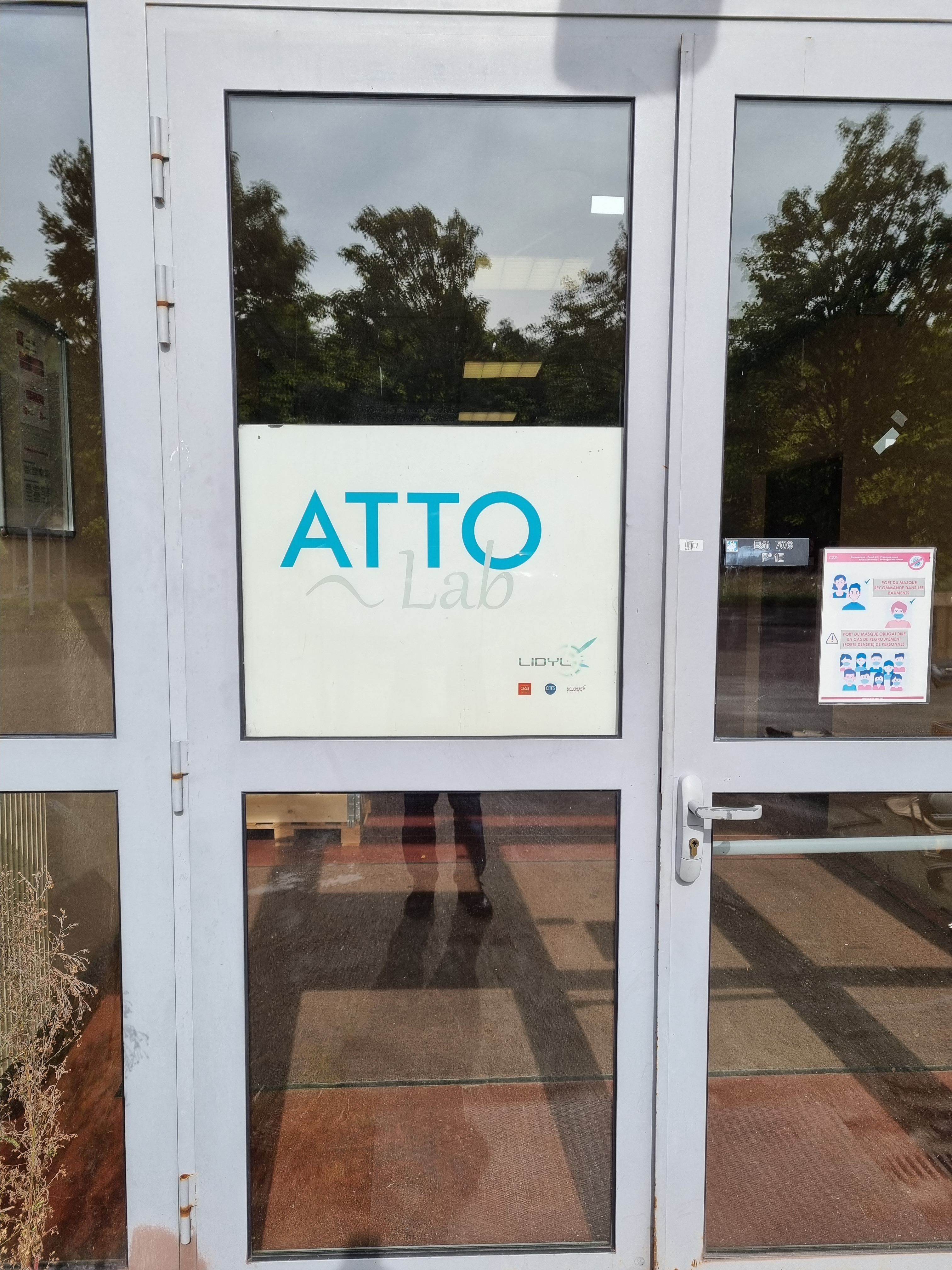
 4 gravitons