I’m taking a pedagogy course at the moment, a term-long follow-up to the one-week intro course I took in the spring. The course begins with yet another pedagogical innovation, a “pre-project”. Before the course has really properly started, we get assembled into groups and told to investigate our students. We are supposed to do interviews on a few chosen themes, all with the objective of getting to know our students better. I’m guessing the point is to sharpen our goals, so that when we start learning pedagogy we’ll have a clearer idea of what problems we’d like to solve.
The more I think about this the more I’m looking forward to it. When I TAed in the past, some of the students were always a bit of a mystery. They sat in the back, skipped assignments, and gradually I saw less and less of them. They didn’t go to office hours or the help room, and I always wondered what happened. When in the course did they “turn off”, when did we lose them? They seemed like a kind of pedagogical dark matter, observable only by their presence on the rosters. I’m hoping to detect a little of that dark matter here.
As it’s a group project, we came up with a theme as a group, and questions to support that theme (in particular, we’re focusing on the different experiences between Danes and international students). Since the topic is on my mind in general though, I thought it would be fun to reach out to you guys. Educators in the comments: if you could ask your students one question, what would it be? Students, what is one thing you think your teachers are missing?
As the saying goes, it is better not to see laws or sausages being made. You’d prefer to see the clean package on the outside than the mess behind the scenes.
The same is true of science. A good paper tells a nice, clean story: a logical argument from beginning to end, with no extra baggage to slow it down. That story isn’t a lie: for any decent paper in theoretical physics, the conclusions will follow from the premises. Most of the time, though, it isn’t how the physicist actually did it.
The way we actually make discoveries is messy. It involves looking for inspiration in all the wrong places: pieces of old computer code and old problems, trying to reproduce this or that calculation with this or that method. In the end, once we find something interesting enough, we can reconstruct a clearer, cleaner, story, something actually fit to publish. We hide the original mess partly for career reasons (easier to get hired if you tell a clean, heroic story), partly to be understood (a paper that embraced the mess of discovery would be a mess to read), and partly just due to that deep human instinct to not let others see us that way.
The trouble is, some of that “mess” is useful, even essential. And because it’s never published or put into textbooks, the only way to learn it is word of mouth.
A lot of these messy tricks involve numerics. Many theoretical physics papers derive things analytically, writing out equations in symbols. It’s easy to make a mistake in that kind of calculation, either writing something wrong on paper or as a bug in computer code. To correct mistakes, many things are checked numerically: we plug in numbers to make sure everything still works. Sometimes this means using an approximation, trying to make sure two things cancel to some large enough number of decimal places. Sometimes instead it’s exact: we plug in prime numbers, and can much more easily see if two things are equal, or if something is rational or contains a square root. Sometimes numerics aren’t just used to check something, but to find a solution: exploring many options in an easier numerical calculation, finding one that works, and doing it again analytically.
“Ansatze” are also common: our fancy word for an educated guess. These we sometimesadmit, when they’re at the core of a new scientific idea. But the more minor examples go un-mentioned. If a paper shows a nice clean formula and proves it’s correct, but doesn’t explain how the authors got it…probably, they used an ansatz. This trick can go hand-in-hand with numerics as well: make a guess, check it matches the right numbers, then try to see why it’s true.
The messy tricks can also involve the code itself. In my field we often use “computer algebra” systems, programs to do our calculations for us. These systems are programming languages in their own right, and we need to write computer code for them. That code gets passed around informally, but almost never standardized. Mathematical concepts that come up again and again can be implemented very differently by different people, some much more efficiently than others.
I don’t think it’s unreasonable that we leave “the mess” out of our papers. They would certainly be hard to understand otherwise! But it’s a shame we don’t publish our dirty tricks somewhere, even in special “dirty tricks” papers. Students often start out assuming everything is done the clean way, and start doubting themselves when they notice it’s much too slow to make progress. Learning the tricks is a big part of learning to be a physicist. We should find a better way to teach them.
In past years, I’ve compared science to a gift: the ideal gift for the puzzle-fan, one that keeps giving new puzzles. I think people might not appreciate the scale of that gift, though.
Bigger than all the creative commons Wikipedia images
Maybe you’ve heard the old joke that studying for a PhD means learning more and more about less and less until you know absolutely everything about nothing at all. This joke is overstating things: even when you’ve specialized down to nothing at all, you still won’t know everything.
If you read the history of science, it might feel like there are only a few important things going on at a time. You notice the simultaneous discoveries, like calculus from Newton and Liebniz and natural selection from Darwin and Wallace. You can get the impression that everyone was working on a few things, the things that would make it into the textbooks. In fact, though, there was always a lot to research, always many interesting things going on at once. As a scientist, you can’t escape this. Even if you focus on your own little area, on a few topics you care about, even in a small field, there will always be more going on than you can keep up with.
This is especially clear around the holiday season. As everyone tries to get results out before leaving on vacation, there is a tidal wave of new content. I have five papers open on my laptop right now (after closing four or so), and some recorded talks I keep meaning to watch. Two of the papers are the kind of simultaneous discovery I mentioned: two differentgroups noticing that what might seem like an obvious fact – that in classical physics, unlike in quantum, one can have zero uncertainty – has unexpected implications for our kind of calculations. (A third group got there too, but hasn’t published yet.) It’s a link I would never have expected, and with three groups coming at it independently you’d think it would be the only thing to pay attention to: but even in the same sub-sub-sub-field, there are other things going on that are just as cool! It’s wild, and it’s not some special quirk of my area: that’s science, for all us scientists. No matter how much you expect it to give you, you’ll get more, lifetimes and lifetimes worth. That’s a Newtonmas gift to satisfy anyone.
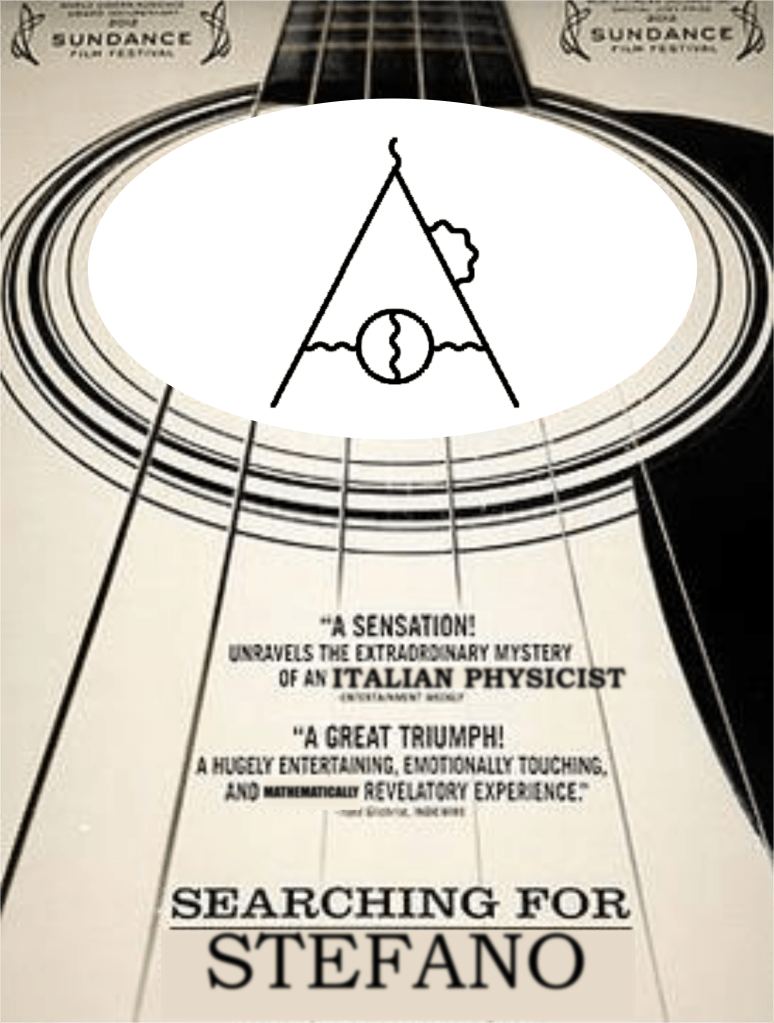
On Monday, Quanta magazine released an article on a man who transformed the way we do particle physics: Stefano Laporta. I’d tipped them off that Laporta would make a good story: someone who came up with the bread-and-butter algorithm that fuels all of our computations, then vanished from the field for ten years, returning at the end with an 1,100 digit masterpiece. There’s a resemblance to Searching for Sugar Man, fans and supporters baffled that their hero is living in obscurity.
If anything, I worry I under-sold the story. When Quanta interviewed me, it was clear they were looking for ties to well-known particle physics results: was Laporta’s work necessary for the Higgs boson discovery, or linked to the controversy over the magnetic moment of the muon? I was careful, perhaps too careful, in answering. The Higgs, to my understanding, didn’t require so much precision for its discovery. As for the muon, the controversial part is a kind of calculation that wouldn’t use Laporta’s methods, while the un-controversial part was found numerically by a group that doesn’t use his algorithm either.
With more time now, I can make a stronger case. I can trace Laporta’s impact, show who uses his work and for what.
In particle physics, we have a lovely database called INSPIRE that lists all our papers. Here is Laporta’s page, his work sorted by number of citations. When I look today, I find his most cited paper, the one that first presented his algorithm, at the top, with a delightfully apt 1,001 citations. Let’s listen to a few of those 1,001 tales, and see what they tell us.
Once again, we’ll sort by citations. The top paper, “Higgs boson production at hadron colliders in NNLO QCD“, is from 2002. It computes the chance that a particle collider like the LHC could produce a Higgs boson. It in turn has over a thousand citations, headlined by two from the ATLAS and CMS collaborations: “Observation of a new particle in the search for the Standard Model Higgs boson with the ATLAS detector at the LHC” and “Observation of a New Boson at a Mass of 125 GeV with the CMS Experiment at the LHC“. Those are the papers that announced the discovery of the Higgs, each with more than twelve thousand citations. Later in the list, there are design reports: discussions of why the collider experiments are built a certain way. So while it’s true that the Higgs boson could be seen clearly from the data, Laporta’s work still had a crucial role: with his algorithm, we could reassure experimenters that they really found the Higgs (not something else), and even more importantly, help them design the experiment so that they could detect it.
The next paper tells a similar story. A different calculation, with almost as many citations, feeding again into planning and prediction for collider physics.
After that, more applications: fundamental quantities for collider physics, pieces of math that are used again and again. In particular, they are referenced again and again by the Particle Data Group, who collect everything we know about particle physics.
Further down still, and we get to specific code: FIRE and Reduze, programs made by others to implement Laporta’s algorithm, each with many uses in its own right.
All that, just from one of Laporta’s papers.
His ten-year magnum opus is more recent, and has fewer citations: checking now, just 139. Still, there are stories to tell there too.
I mentioned earlier 1,100 digits, and this might confuse some of you. The most precise prediction in particle physics has ten digits of precision, the magnetic behavior of the electron. Laporta’s calculation didn’t change that, because what he calculated isn’t the only contribution: he calculated Feynman diagrams with four “loops”, which is its own approximation, one limited in precision by what might be contributed by more loops. The current result has Feynman diagrams with five loops as well (known to much less than 1,100 digits), but the diagrams with six or more are unknown, and can only be estimated. The result also depends on measurements, which themselves can’t reach 1,100 digits of precision.
So why would you want 1,100 digits, then? In a word, mathematics. The calculation involves exotic types of numbers called periods, more complicated cousins of numbers like pi. These numbers are related to each other, often in complicated and surprising ways, ways which are hard to verify without such extreme precision. An older result of Laporta’s inspired the physicist David Broadhurst and mathematician Anton Mellit to conjecture newrelations between this type of numbers, relations that were only later proven using cutting-edge mathematics. The new result has inspired mathematicians too: Oliver Schnetz found hints of a kind of “numerical footprint”, special types of numbers tied to the physics of electrons. It’s a topic I’ve investigated myself, something I think could lead to much more efficient particle physics calculations.
In addition to being inspired by Laporta’s work, Broadhurst has advocated for it. He was the one who first brought my attention to Laporta’s story, with a moving description of welcoming him back to the community after his ten-year silence, writing a letter to help him get funding. I don’t have all the details of the situation, but the impression I get is that Laporta had virtually no academic support for those ten years: no salary, no students, having to ask friends elsewhere for access to computer clusters.
When I ask why someone with such an impact didn’t have a professorship, the answer I keep hearing is that he didn’t want to move away from his home town in Bologna. If you aren’t an academic, that won’t sound like much of an explanation: Bologna has a university after all, the oldest in the world. But that isn’t actually a guarantee of anything. Universities hire rarely, according to their own mysterious agenda. I remember another colleague whose wife worked for a big company. They offered her positions in several cities, including New York. They told her that, since New York has many universities, surely her husband could find a job at one of them? We all had a sad chuckle at that.
For almost any profession, a contribution like Laporta’s would let you live anywhere you wanted. That’s not true for academia, and it’s to our loss. By demanding that each scientist be able to pick up and move, we’re cutting talented people out of the field, filtering by traits that have nothing to do with our contributions to knowledge. I don’t know Laporta’s full story. But I do know that doing the work you love in the town you love isn’t some kind of unreasonable request. It’s a request academia should be better at fulfilling.
I remember, a while back, visiting a friend in his office. He had just became a professor, and was still setting things up. I noticed a list on the chalkboard, taking up almost one whole side. Taking a closer look, I realized that list was a list of projects. To my young postdoc eyes, the list was amazing: how could one person be working on so many things?
There’s an idiom in English, “too many irons in the fire”. You can imagine a blacksmith forging many things at once, each piece of iron taking focus from the others. Too many, and a piece might break, or otherwise fail.
Perhaps the irons in the fire are fire irons
In theoretical physics, a typical PhD publishes three papers before they graduate. That usually means one project at a time, maybe two. For someone used to one or two irons in the fire, so many at a time seems an impossible feat.
Scientists grow over their careers, though, and in more than one way. What seems impossible can eventually be business as usual.
First, as your skill grows, you become more efficient. A lot of scientific work is a kind of debugging: making mistakes, and figuring out how to fix them. The more experience you have, the more you know what kinds of mistakes you might make, and the better you will be at avoiding them. (Never perfect, of course: scientists always have to debug something.)
Second, your collaborations grow. The more people you work with, the more you can share these projects, each person contributing their own piece. With time, you start supervising as well: Masters students, PhD students, postdocs. Each one adds to the number of irons you can manage in your fire. While for bad supervisors this just means having their name on lots of projects, the good supervisors will be genuinely contributing to each one. That’s yet another kind of growth: as you get further along, you get a better idea of what works and what doesn’t, so even in a quick meeting you can solve meaningful problems.
Third, you grow your system. The ideas you explore early on blossom into full-fledged methods, tricks which you can pull out again and again when you need them. The tricks combine, forming new, bigger tricks, and eventually a long list of projects becomes second nature, a natural thing your system is able to do.
As you grow as a scientist, you become more than just one researcher, one debugger at a laptop or pipetter at a lab bench. You become a research program, one that manifests across many people and laptops and labs. As your expertise grows, you become a kind of living exchange of ideas, concepts flowing through you when needed, building your own scientific world.
It’s time for my yearly Halloween post. My regular readers know what to expect: a horror trope and a physics topic, linked by a tortured analogy. And this year, the pun is definitely intended.
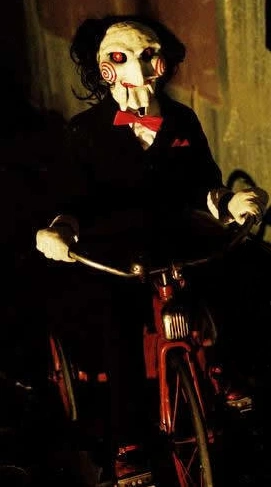
Horror movies have a fascination with serial killers. Over the years, they’ve explored every possible concept: from gritty realism to the supernatural, crude weapons to sophisticated traps, motivations straightforward to mysterious, and even killers who are puppets.
Yes I know Billy is not actually the killer in the Saw films
One common theme of all fictional serial killers is power. Serial killers are scary because they have almost all the power in a situation, turned to alien and unpredictable goals. The protagonists of a horror film are the underdogs, never knowing whether the killer will pull out some new ability or plan that makes everything they try irrelevant. Even if they get the opportunity to negotiate, the power imbalance means that they can’t count on getting what they need: anything the killer agrees will be twisted to serve their own ends.
Academics tell their own kind of horror stories. Earlier this month, the historian Brett Deveraux had a blog post about graduate school, describing what students go through to get a PhD. As he admits, parts of his story only apply to the humanities. STEM departments have more money, and pay their students a bit better. It’s not a lot better (I was making around $20,000 a year at Stony Brook), but it’s enough that I’ve never heard of a student taking out a loan to make ends meet. (At most, people took on tutoring jobs for a bit of extra cash.) We don’t need to learn new languages, and our degrees take a bit less time: six or seven years for an experimental physicist, and often five for a theoretical physicist. Finally, the work can be a lot less lonely, especially for those who work in a lab.
Still, there is a core in common, and that core once again is power. Universities have power, of course: and when you’re not a paying customer but an employee with your career on the line, that power can be quite scary. But the person with the most power over a PhD student is their advisor. Deveraux talks compellingly about the difference that power can make: how an advisor who is cruel, or indifferent, or just clueless, can make or break not just your career but your psychological well-being. The lucky students, like Deveraux and me, find supportive mentors who help us survive and move forward. The unlucky students leave with scars, even if those scars aren’t jigsaw-shaped.
Neither Deveraux or I have experience with PhD programs in Europe, which are quite different in structure from those in the US. But the power imbalance is still there, and still deadly, and so despite the different structure, I’ve seen students here break down, scarred in the same way.
Deveraux frames his post as advice for those who want to go to grad school, and his first piece of advice is “Have you tried wanting something else?” I try to echo that when I advise students. I don’t always succeed: there’s something exciting about a young person interested in the same topics we’re interested in, willing to try to make a life of it. But it is important to know what you’re getting into, and to know there’s a big world out there of other options. If, after all that, you decide to stick through it, just remember: power matters. If you give someone power over you, try to be as sure as you can that it won’t turn into a horror story.
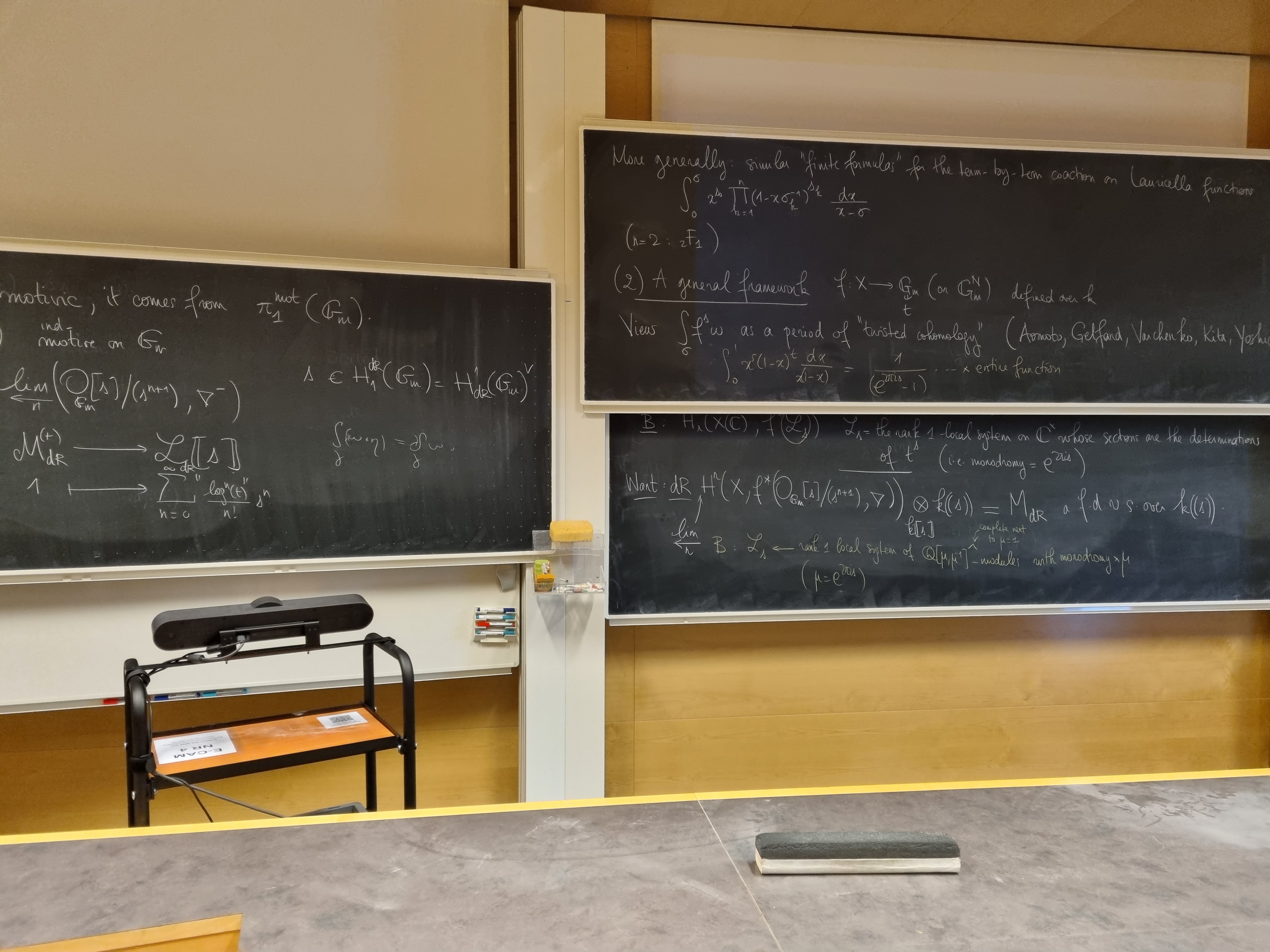
I’m in Uppsala in Sweden this week, at an actual in-person conference.
With actual blackboards!
Elliptics started out as a series of small meetings of physicists trying to understand how to make sense of elliptic integrals in calculations of colliding particles. It grew into a full-fledged yearly conference series. I organized last year, which naturally was an online conference. This year though, the stage was set for Uppsala University to host in person.
I should say mostly in person. It’s a hybrid conference, with some speakers and attendees joining on Zoom. Some couldn’t make it because of travel restrictions, or just wanted to be cautious about COVID. But seemingly just as many had other reasons, like teaching schedules or just long distances, that kept them from coming in person. We’re all wondering if this will become a long-term trend, where the flexibility of hybrid conferences lets people attend no matter their constraints.
The hybrid format worked better than expected, but there were still a few kinks. The audio was particularly tricky, it seemed like each day the organizers needed a new microphone setup to take questions. It’s always a little harder to understand someone on Zoom, especially when you’re sitting in an auditorium rather than focused on your own screen. Still, technological experience should make this work better in future.
Content-wise, the conference began with a “mini-school” of pedagogical talks on particle physics, string theory, and mathematics. I found the mathematical talks by Erik Panzer particularly nice, it’s a topic I still feel quite weak on and he laid everything out in a very clear way. It seemed like a nice touch to include a “school” element in the conference, though I worry it ate too much into the time.
The rest of the content skewed more mathematical, and more string-theoretic, than these conferences have in the past. The mathematical content ranged from intriguing (including an interesting window into what it takes to get high-quality numerics) to intimidatingly obscure (large commutative diagrams, category theory on the first slide). String theory was arguably under-covered in prior years, but it felt over-covered this year. With the particle physics talks focusing on either general properties with perhaps some connections to elliptics, or to N=4 super Yang-Mills, it felt like we were missing the more “practical” talks from past conferences, where someone was computing something concrete in QCD and told us what they needed. Next year is in Mainz, so maybe those talks will reappear.
What do TED talks and grant applications have in common?
Put a scientist on a stage, and what happens? Some of us panic and mumble. Others are as smooth as a movie star. Most, though, fall back on a well-practiced mode: “self-promotion voice”.
A scientist doing self-promotion voice is easy to recognize. We focus on ourselves, of course (that’s in the name!), talking about all the great things we’ve done. If we have to mention someone else, we make sure to link it in some way: “my colleague”, “my mentor”, “which inspired me to”. All vulnerability is “canned” in one way or another: “challenges we overcame”, light touches on the most sympathetic of issues. Usually, we aren’t negative towards our colleagues either: apart from the occasional very distant enemy, everyone is working with great scientific virtue. If we talk about our past, we tell the same kinds of stories, mentioning our youthful curiosity and deep buzzwordy motivations. Any jokes or references are carefully pruned, made accessible to the lowest-common-denominator. This results in a standard vocabulary: see a metaphor, a quote, or a turn of phrase, and you’re bound to see it in talks again and again and again. Things get even more repetitive when you take into account how often we lean on the voice: a given speech or piece will be assembled from elementary pieces, snippets of practiced self-promotion that we pour in like packing peanuts after a minimal edit, filling all available time and word count.
“My passion for teaching manifests…”
Packing peanuts may not be glamorous, but they get the job done. A scientist who can’t do “the voice” is going to find life a lot harder, their negativity or clumsiness turning away support when they need it most. Except for the greatest of geniuses, we all have to learn a bit of self-promotion to stay employed.
We don’t have to stop there, though. Self-promotion voice works, but it’s boring and stilted, and it all looks basically the same. If we can do something a bit more authentic then we stand out from the crowd.
I’ve been learning this more and more lately. My blog posts have always run the gamut: some are pure formula, but the ones I’m most proud of have a voice all their own. Over the years, I’ve been pushing my applications in that direction. Each grant and job application has a bit of the standard self-promotion voice pruned away, and a bit of another voice (my own voice?) sneaking in. This year, as I send out applications, I’ve been tweaking things. I almost hope the best jobs come late in the year, my applications will be better then!
A couple weeks back someone linked to this blog with a problem. A non-academic, he had done some mathematical work but didn’t feel it was ready to publish. He reached out to a nearby math department and asked what they would charge to help him clean up the work. If the price was reasonable, he’d do it, if not at least he’d know what it would cost.
Neither happened. He got no response, and got more and more frustrated.
For many of you, that result isn’t a big surprise. My academic readers are probably cringing at the thought of getting an email like that. But the guy’s instinct here isn’t too off-base. Certainly, in many industries that kind of email would get a response with an actual quote. Academia happens to be different, in a way that makes the general rule not really apply.
There’s a community called Effective Altruists that evaluate charities. They have a saying, “Money is the Unit of Caring”. The point of the saying isn’t that people with more money care more, or anything like that. Rather, it’s a reminder that, whatever a charity wants to accomplish, more money makes it easier. A lawyer could work an hour in a soup kitchen, but if they donated the proceeds of an hour’s work the soup kitchen could hire four workers instead. Food banks would rather receive money than food, because the money lets them buy whatever they need in bulk. As the Simpsons meme says, “money can be exchanged for goods and services”.
If you pay a charity, or a business, it helps them achieve what they want to do. If you pay an academic, it gets a bit more complicated.
The problem is that for academics, time matters a lot more than our bank accounts. If we want to settle down with a stable job, we need to spend our time doing things that look good on job applications: writing papers, teaching students, and so on. The rest of the time gets spent resting so we have the energy to do all of that.
(What about tenured professors? They don’t have to fight for their own jobs…but by that point, they’ve gotten to know their students and other young people in their sub-field. They want them to get jobs too!)
Money can certainly help with those goals, but not personal money: grant money. With grant money we can hire students and postdocs to do some of that work for us, or pay our own salary so we’re easier for a university to hire. We can buy equipment for those who need that sort of thing, and get to do more interesting science. Rather than “Money is the Unit of Caring”, for academics, “Grant Money is the Unit of Caring”.
Personal money, in contrast, just matters for our rest time. And unless we have expensive tastes, we usually get paid enough for that.
(The exception is for extremely underpaid academics, like PhD students and adjuncts. For some of them money can make a big difference to their quality of life. I had quite a few friends during my PhD who had side gigs, like tutoring, to live a bit more comfortably.)
This is not to say that it’s impossible to pay academics to do side jobs. People do. But when it works, it’s usually due to one of these reasons:
It’s fun. Side work trades against rest time, but if it helps us rest up then it’s not really a tradeoff. Even if it’s a little more boring that what we’d rather do, if it’s not so bad the money can make up the difference.
It looks good on a CV. This covers most of the things academics are sometimes paid to do, like writing articles for magazines. If we can spin something as useful to our teaching or research, or as good for the greater health of the field (or just for our “personal brand”), then we can justify doing it.
It’s a door out of academia. I’ve seen the occasional academic take time off to work for a company. Usually that’s a matter of seeing what it’s like, and deciding whether it looks like a better life. It’s not really “about the money”, even in those cases.
So what if you need an academic’s help with something? You need to convince them it’s worth their time. Money could do it, but only if they’re living precariously, like some PhD students. Otherwise, you need to show that what you’re asking helps the academic do what they’re trying to do: that it is likely to move the field forward, or that it fulfills some responsibility tied to their personal brand. Without that, you’re not likely to hear back.
In science, every project is different. Sometimes, my collaborators and I have a clear enough goal, and a clear enough way to get there. There are always surprises along the way, of course, but nonetheless we keep a certain amount of structure. That can mean dividing tasks (“you find the basis, I’ll find the constraints”), or it can mean everyone doing the same work in parallel, like a group of students helping each other with homework.
Recently, I’ve experienced a different kind of collaboration. The goals are less clear, and the methods are more…playful.
Oh, are you building a sandcastle? Or a polylogarithm?
A big task improves with collaboration: you can divide it up. A delicate task improves with collaboration: you can check each other’s work. An unclear task also improves with collaboration: you can explore more ground.
Picture a bunch of children playing in a sandbox. The children start out sitting by themselves, each digging in the sand. Some are building castles, others dig moats, or search for buried treasure, or dinosaur bones. As the children play, their games link up: the moat protects the castle, the knights leave for treasure, the dinosaur awakens and attacks. The stories feed back on one another, and the game grows.
The project I’m working on now is a bit like that sandbox. Each of us has our own ideas about what we’d like to build, and each experiments with them. We see what works and what doesn’t, which castles hold and which fall over. We keep an eye on what each other are doing, and adjust: if that castle is close to done, maybe a moat would improve the view. Piece by piece, the unclear task becomes clearer. Our individual goals draw us in different directions, but what we discover in the end brings us back together, richer for our distant discoveries.
Working this way requires a lot of communication! In the past, I was mystified when I saw other physicists spend hours talking at a blackboard. I thought that must be a waste of time: surely they’d get more done if they sat at their desks and worked things out, rather than having to talk through every step. Now I realize they were likely part of a different kind of collaboration: not dividing tasks or working in parallel on a clear calculation, but exploring different approaches. In these collaborations, those long chats are a kind of calibration: by explaining what you’re trying to do, you see whether it makes sense to your collaborators. You can drop the parts that don’t make sense and build in some of your collaborators’ ideas. In the end you begin to converge, to something that everyone can endorse. Your sandcastles meet up, your stories become one story. When everything looks good, you’re ready to call over your mom (or in this case, the arXiv) and show it off.




 4 gravitons