
The paper I talked about last week was frustratingly short. That’s not because the authors were trying to hide anything, or because they were lazy. It’s just that these days, that’s how the game is played.
Twitter started out with a fun gimmick: all posts had to be under 140 characters. The restriction inspired some great comedy, trying to pack as much humor as possible into a bite-sized format. Then, Twitter somehow became the place for journalists to discuss the news, tech people to discuss the industry, and politicians to discuss politics. Now, the length limit fuels conflict, an endless scroll of strong opinions without space for nuance.
Physics has something like this too.
In the 1950’s, it was hard for scientists to get the word out quickly about important results. The journal Physical Review had a trick: instead of normal papers, they’d accept breaking news in the form of letters to the editor, which they could publish more quickly than the average paper. In 1958, editor Samuel Goudsmit founded a new journal, Physical Review Letters (or PRL for short), that would publish those letters all in one place, enforcing a length limit to make them faster to process.
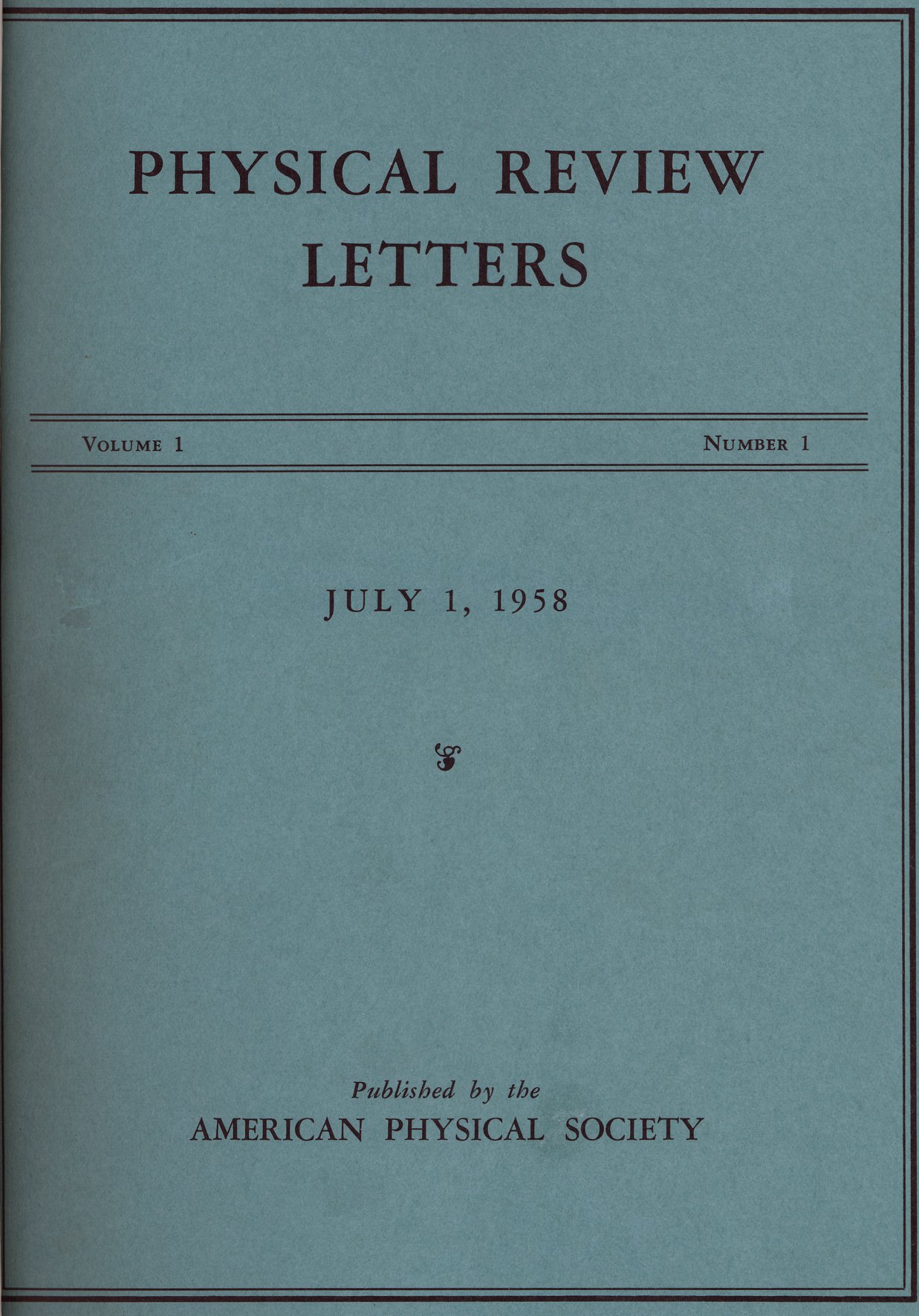
The new journal was a hit, and soon played host to a series of breakthrough results, as scientists chose it as a way to get their work out fast. That popularity created a problem, though. As PRL’s reputation grew, physicists started trying to publish there not because their results needed to get out fast, but because just by publishing in PRL, their papers would be associated with all of the famous breakthroughs the journal had covered. Goudsmit wrote editorials trying to slow this trend, but to no avail.
Now, PRL is arguably the most prestigious journal in physics, hosting over a quarter of Nobel prize-winning work. Its original motivation is no longer particularly relevant: the journal is not all that much faster than other journals in its area, if at all, and is substantially slower than the preprint server arXiv, which is where physicists actually read papers in practice.
The length limit has changed over the years, but not dramatically. It now sits at 3,750 words, typically allowing a five-or-six page article in tight two-column text.
If you see a physics paper on arXiv.org that fits the format, it’s almost certainly aimed at PRL, or one of the journals with similar policies that it inspired. It means the authors think their work is cool enough to hang out with a quarter of all Nobel-winning results, or at least would like it to be.
And that, in turn, means that anyone who wants to claim that prestige has to be concise. They have to leave out details (often, saving them for a later publication in a less-renowned journal). The results have to lean, by the journal’s nature, more to physicist-clickbait and a cleaned-up story than to anything their colleagues can actually replicate.
Is it fun? Yeah, I had some PRLs in my day. It’s a rush, shining up your work as far as it can go, trimming down complexities into six pages of essentials.
But I’m not sure it’s good for the field.
 4 gravitons